How Do Active and Passive Components Differ in Electronics
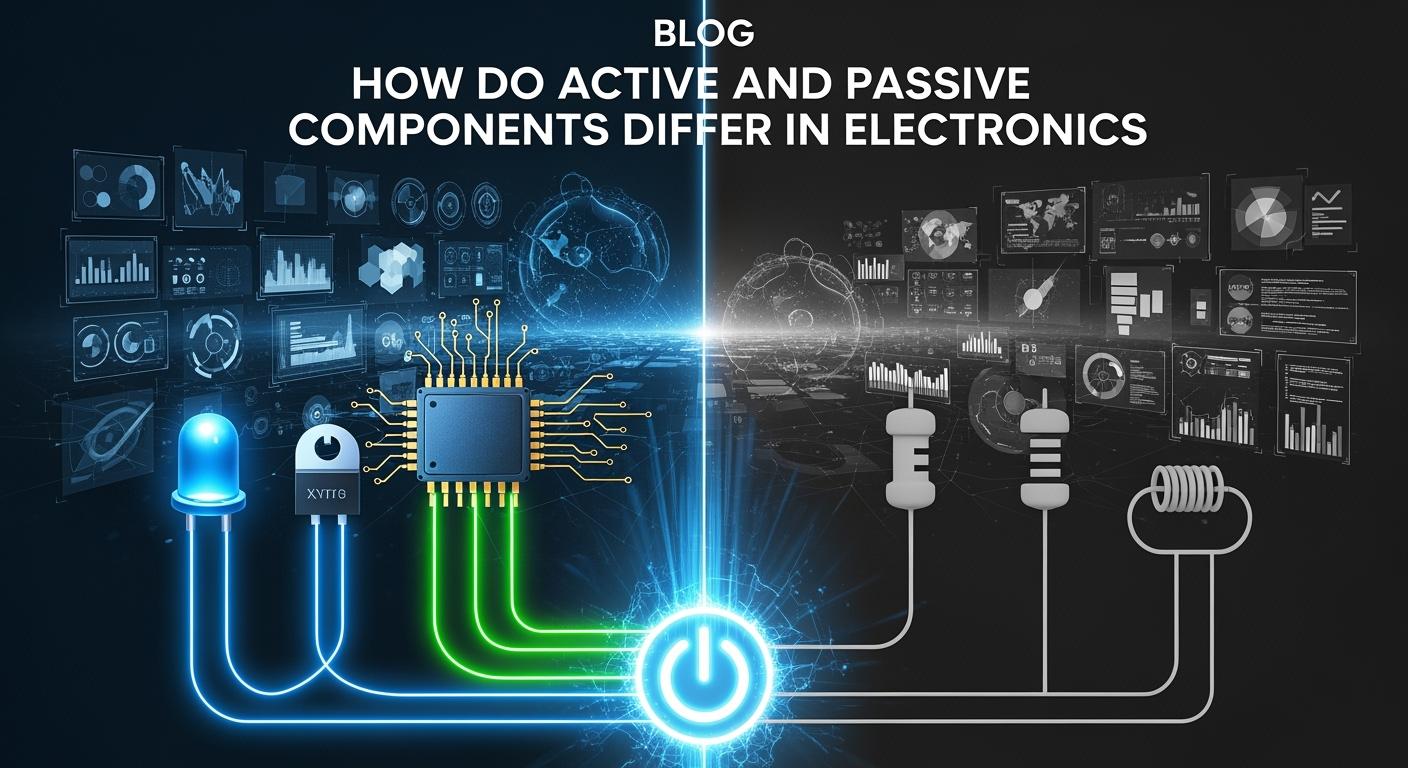
You can see a big difference between active and passive components when you look at electronic devices. Active Components need power from outside to make signals stronger or change them. Passive components do not need extra power. They use their own physical features to handle energy.
You use simple parts like resistors and capacitors to control the flow of current and keep energy. But you need transistors or ICs to make signals stronger.
Here is a quick look at how many are in a smartphone:
Component Type | Quantity in a Smartphone |
|---|---|
Active ICs | 15-20 |
Passive | Over 1,000 |
Active components need power and do hard jobs.
Passive components block, clean, or hold energy.
Key Takeaways
Active components need outside power to work. They can make signals stronger and help control energy in devices.
Passive components work without extra power. They store, filter, or handle energy but do not make signals stronger.
Knowing what active and passive components do helps you design better circuits. It also helps you fix problems in electronics.
Active components are things like transistors and integrated circuits. Passive components are things like resistors and capacitors.
Picking the right components for your project is very important. It helps you build electronic devices that work well and last long.
Active Components Overview
What Are Active Components
Active components are in almost every electronic device you use. These parts need power from outside to work. They can make signals stronger or change them. Sometimes, they even create new signals. You see active components in radios, computers, and smartphones. They do more than just let energy pass. They control energy in the device.
Here is a table that shows what makes an active component special:
Characteristic | Description |
|---|---|
External Power Supply | Active components need power from outside to work. |
Energy Production | They make energy as current or voltage. |
Power Gain | Active components can make more power in a circuit. |
Current Control | They can control how much current flows. |
Energy Conversion | Active components take energy in different forms and give it as electrical energy. |
How Active Components Work
Active components act like workers in a circuit. They use power from a source to do jobs. They can make signals louder or turn currents on and off. For example, transistors boost weak signals so you can hear music. Diodes let current go one way, which keeps devices safe. Field-effect transistors control current with a small voltage. Bipolar junction transistors switch or make signals stronger. Integrated circuits put many active parts in one chip. This makes gadgets smaller and smarter.
Active components control how much current flows and when it moves. You need these parts to make devices work right. Transformers only move energy, but active components can change and control it.
Examples of Active Components
There are many kinds of active components in electronics. Here are some common ones:
Transistors (like field-effect transistor and bipolar junction transistors)
Diodes (such as LEDs)
Integrated circuits
Relays
Oscillators
Transistors and diodes are in almost every modern device. Transformers change voltage, but they are not active components. You use active devices to make signals stronger, switch them, and process them. Most active components are made from semiconductors. This lets you build advanced technology.
Passive Electronic Components Overview
What Are Passive Components
Passive components are in almost every electronic device. They do not need power from outside to work. They handle energy by storing, releasing, or blocking it. Passive components cannot make signals stronger. They help control and manage how electricity moves. Most passive components work both ways, so you can connect them either way. Some have special markings that show how to connect them. You find passive devices in many systems. They help with filtering, matching, and power management.
Tip: Passive components do not make energy. They only store, release, or use it up.
Here are some main features of passive components:
They work without outside power.
They cannot make signals stronger or create them.
They store or use up energy.
They often work both ways.
You use them for filtering, matching, and power decoupling.
How Passive Components Work
When you add passive components to a circuit, they react to electrical signals in simple ways. Resistors limit how much current flows. They help set voltage levels. Capacitors store and release electrical charge. They also filter out noise and keep power supplies steady. Inductors store energy in a magnetic field. They slow down sudden changes in current. Passive devices do not control or boost signals. They help manage energy and keep circuits working well. You find passive components in analog and digital circuits. They help with signal processing, filtering, and noise reduction.
Examples of Passive Components
You see many kinds of passive components in electronics today. The most common ones are resistors, capacitors, and inductors. Each type does a special job in your devices. The table below shows how these passive components work and where you might find them:
Component | Function | Example Applications |
|---|---|---|
Resistors | Limit and control electric current, protect sensitive parts, set voltage levels | Computers, TVs, smartphones |
Capacitors | Store and release energy, filter noise, smooth voltage changes, help timing | Power supplies, camera flashes, audio equipment |
Inductors | Store energy in magnetic fields, reduce noise, filter signals, manage energy flow | Radio transmitters, power supplies, speakers |
Transformers | Move energy between circuits, change voltage levels | Chargers, power adapters, audio systems |
Ferrite Beads | Block high-frequency noise, make signals better | Laptop chargers, USB cables, audio cables |
You use passive components in smartphones, laptops, cars, and medical equipment. Capacitors and resistors help with filtering and power management. Inductors and transformers manage energy flow and cut down noise. Passive devices help make electronics stable and reliable.
Key Differences Between Active and Passive Components
Power and Energy Handling
Active and passive components handle power in different ways. Active components need power from outside, like a battery or plug. They can make signals stronger and control how energy moves. Passive components do not need extra power. They use the energy already in the circuit. You use passive parts to store, filter, or use up energy.
Component Type | Energy Handling Capabilities | Practical Applications |
|---|---|---|
Active | Needs outside power; can make signals stronger | Audio amplification, power supply circuits, communication systems |
Passive | Works without outside power; controls signals without making them stronger | Filtering, impedance matching, signal conditioning |
You use active components to boost signals or switch currents. Passive components help manage energy and keep circuits steady. When you build a circuit, you must pick parts that give power or parts that only take it.
Tip: Active components need voltage sources and current sources to work. Passive components use the energy already in the circuit.
Signal Amplification and Control
Active components can make signals stronger and control them. You use things like transistors and integrated circuits to boost weak signals. These parts change how current flows and turn signals on and off. Passive components cannot make signals stronger. They only filter, store, or use up energy. You use resistors, capacitors, and inductors to shape signals.
Active components can make signals stronger and switch currents. You use them to boost audio or process digital data.
Passive components cannot make signals stronger. They help filter noise, store energy, and divide voltage.
Active devices use energy from voltage sources or current sources to boost signals.
Passive devices shape signals but do not add power.
You see the difference when you need to control or boost signals. Active parts make circuits work. Passive parts help and keep the circuit steady.
Circuit Function and Role
You need to know what each component does in a circuit. Active components control and make electrical signals stronger. They give and take power, so they are important for signal processing and switching. Passive components help the circuit. They keep voltage steady, store energy, and filter signals. Passive parts do not need outside power.
Component Type | Role in Circuit Operation | Examples |
|---|---|---|
Active | Control and make electrical signals stronger | Transistors, Integrated Circuits |
Passive | Help and keep the circuit steady without outside power | Resistors, Capacitors, Inductors |
You use active components to control and change current flow. You use passive components for filtering, storing energy, and dividing voltage. The difference between active and passive components changes how circuits work. Active parts make signals clear and help with heat. Passive parts control current and store energy.
Note: When you pick parts for a new electronic product, you must think about power supply efficiency, heat, size, output power, and cost. These things help you choose between active and passive components.
Modern devices are smaller because of miniaturization. Putting active and passive components together in a small package, called a system in a package, helps you build smaller and better products. This makes heat management easier and protects against damage.
You must know the main differences between active and passive components to design good circuits. Knowing how each type handles power, boosts signals, and helps the circuit work lets you fix problems and build better electronic devices.
Applications and Importance
Uses of Active Components
Active components are in many things you use every day. They help electronics work the right way. Transistors make weak signals stronger in radios and speakers. You need ics to turn currents on and off in computers. Voltage regulators keep power steady in chargers and adapters. Microprocessors and ics handle data in phones and tablets. Sensor interfaces read signals from things like temperature sensors.
Here is a table that shows where you use active components:
Application | Description |
|---|---|
Signal Amplification | Makes weak signals stronger in radios and audio devices. |
Switching Operations | Transistors act as switches in computers and digital gadgets. |
Power Regulation | Voltage regulators keep power steady in chargers and adapters. |
Data Processing | Integrated circuits and microprocessors handle data in many devices. |
Sensor Interfaces | Reads signals from sensors like temperature monitors. |
Active components are also in power supply circuits. They change how much current flows by changing their impedance. These parts give and take power to help other parts work. You need them to make power stronger or change it.
Uses of Passive Components
You find passive components in every electronic circuit. Resistors slow down current and keep parts safe. Capacitors hold energy and block noise. Inductors control how energy moves and stop sudden changes in current. Transformers move energy between circuits and change voltage. Ferrite beads stop high-frequency noise and make signals better.
You use passive components for power management, filtering, and signal conditioning. These parts help keep circuits working well and safe. You see them in computers, TVs, phones, and audio gear. Passive components help your devices work smoothly.
Why the Difference Matters
It is important to know the difference between active and passive components. If you know how each part works, you can build better circuits. You can fix problems faster and make devices last longer. Active components make signals stronger and control current. Passive components filter, store, and manage energy.
Tip: When you pick parts for a project, think about what each one does. This helps you build circuits that work well and last longer.
Knowing how to use active and passive components helps you make smart choices. You use ics to handle data and control signals. You use passive parts to keep circuits steady. This knowledge makes fixing problems easier and helps your electronics work better.
You have learned how active and passive components work. Active components need power to work and can make signals stronger or control them. Passive components do not need extra power. They can store, filter, or use energy.
Knowing these differences helps you pick the right parts for your projects. You can make better circuits and fix problems more quickly. When you understand what each part does, you can build smarter and more dependable devices.
FAQ
What is the main difference between active and passive components?
The main difference is how they use power. Active components need extra power to work. They can make signals stronger. Passive components use energy already in the circuit. They cannot boost signals.
Can you use only passive components in a circuit?
You can make simple circuits with just passive components. These circuits cannot make signals stronger or control them. For more advanced jobs, you need active components.
Why do smartphones have more passive components than active ones?
Smartphones have lots of passive components. They filter, store, and manage energy. There are fewer active components. Active parts do harder jobs like processing and making signals stronger.
How do you identify active and passive components?
Check if the component needs extra power. If it does, it is active. If it works without extra power, it is passive.
See Also
Exploring Solder Paste Types and Component Variations in SMT
Acquiring Electronic Components for Effective PCBA Production
Defining PCBA: What It Means in Electronics
Evaluating Advantages and Disadvantages of SMD vs Through-Hole
