Understanding Passive Components in Printed Circuit Board Assemblies
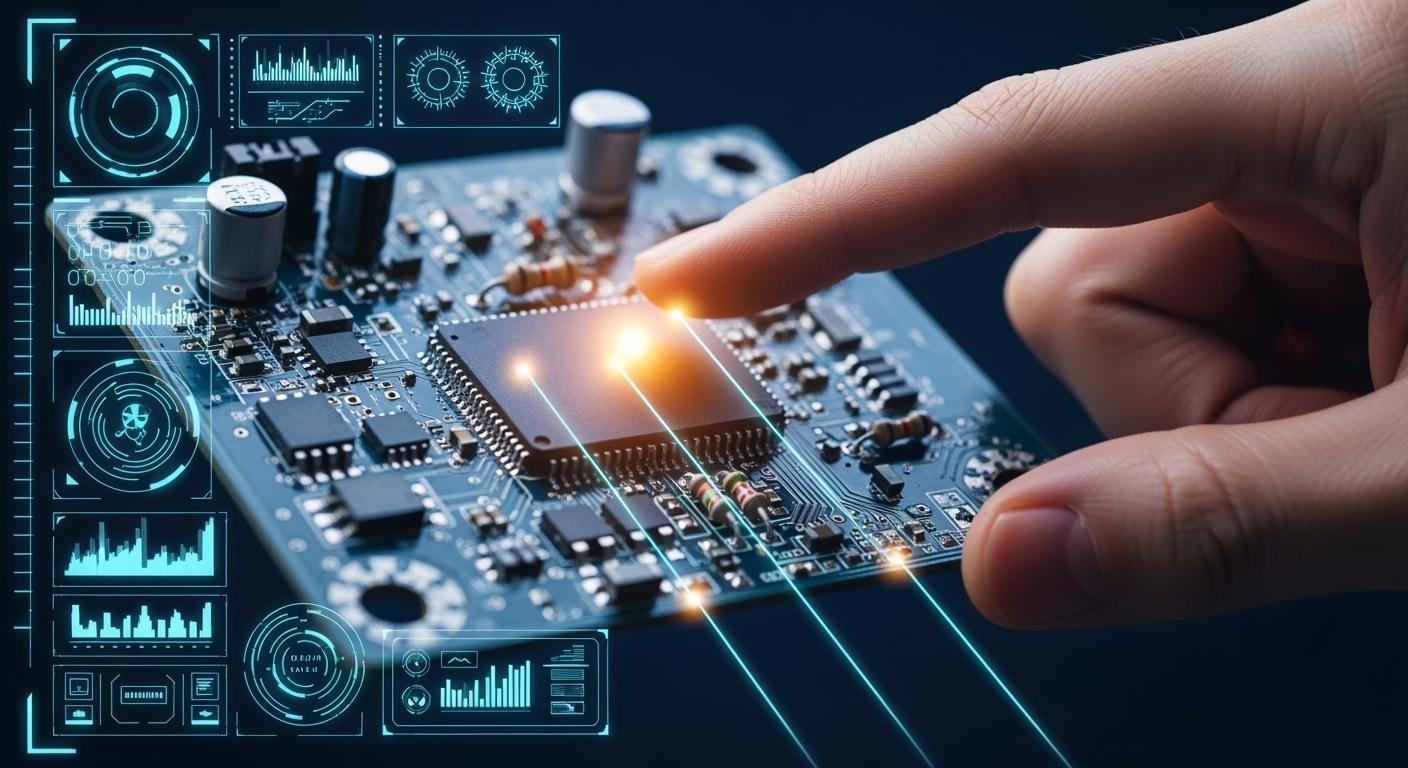
You see passive components every time you look at circuit boards. These parts do not need extra power to work. They make up about 31.4% of all the parts in modern printed circuit boards. There are a few main types, and each has its own job:
Component Type | Characteristics |
|---|---|
Resistors | Slow down current and stop too much flow. |
Capacitors | Hold and give back energy, block unwanted signals. |
Inductors | Keep energy in a magnetic field, stop fast signals. |
Transformers | Keep circuits safe and match voltages. |
Diodes | Let current go in just one way. |
Passive components are not like active parts. They cannot make or increase energy; they only hold, slow down, or clean it. Imagine voltage is like water pressure in a tank. A resistor is like a skinny pipe that slows the water. A capacitor is like a small battery that saves energy for later.
Key Takeaways
Passive components, such as resistors and capacitors, do not need extra power to work. They help control energy in circuits and keep things safe.
Resistors slow down the current and protect important parts from harm. Always check their values so parts do not get too hot.
Capacitors hold and release energy fast. They help keep voltage steady and remove unwanted noise from signals.
Inductors keep energy in a magnetic field. They work with capacitors to clean up signals and stop interference.
Using embedded passive technology can save space on circuit boards. It also helps performance by needing fewer outside parts.
What Are Passive Components
Definition in Circuit Boards
Passive components are found on almost every circuit board. These parts do not need extra power to work. They only take in energy. They can use up, hold, or store energy in electric or magnetic fields. Passive circuit board components do not make signals stronger. You use passive electronic components to control how energy moves in pcbs.
Passive circuit board components help you handle energy without extra power. They keep your circuits working safely and correctly.
Core Characteristics
You can tell passive circuit board components by these features:
Passive components work without extra power.
They cannot make signals stronger or control them.
Their main jobs are to store, control, or use up energy.
Passive circuit board components do not make power gain.
They cannot control how current moves. They change how circuits work by storing or moving energy.
Passive circuit board components help store energy, control voltage, control current, and filter signals.
You need them to shape how voltage and current move in pcbs.
Embedded Passive Technology
You can make pcbs smaller and better with embedded passive technology. This way, you put passive circuit board components like resistors and capacitors inside the board layers. This helps the board work better at high speeds. It also makes the board more reliable because there are fewer solder points. Embedded passive technology means you need fewer parts on top of the board. You can make more complex pcbs in less space. This saves room, sometimes up to half, which is important for tiny systems.
Types of Passive Components
You can find a few main passive components on every circuit board. Each one does a special job to help your circuit work well and stay safe. Here are the most common circuit board components you will see:
Resistors
Resistors control how much current moves in a circuit. They protect sensitive parts from too much current. There are two main types: through-hole and surface-mount. Through-hole resistors make a strong connection. Surface-mount resistors save space and help machines put them on boards. Resistance is measured in ohms. You can pick from carbon, metal film, or wire-wound types. These circuit board components help limit current, divide voltage, and balance loads.
Tip: Resistors keep devices safe by lowering voltage and stopping too much current.
Capacitors
Capacitors store and give back energy fast. You use these circuit board components to keep voltage steady and protect signals. Capacitors can move signals, block noise, and smooth out voltage spikes. There are different types like aluminum electrolytic, ceramic, tantalum, and film capacitors. Each type is good for something. Ceramic capacitors are good for high-frequency signals. Electrolytic capacitors can hold more energy.
Inductors
Inductors keep energy in a magnetic field. You use these circuit board components to handle changes in current and filter signals. Inductors smooth out signals and block noise you do not want. There are iron core, air core, ferrite core, and toroidal core inductors. Each type is used for a different job. Inductors often work with capacitors to make filters and handle AC signals.
Inductors help with:
Filtering signals
Storing energy
Matching impedance
Stopping EMI
Transformers
Transformers change voltage and keep parts of a circuit safe from each other. You use these circuit board components to change voltage, keep things apart, and move signals. Transformers come in through-hole, surface-mount, planar, and signal types. Each one is used for a different need. Planar transformers are flat and work well in small power supplies. Transformers also help match impedance and fix signals.
Other Types
You might also see other circuit board components like diodes and fuses. Diodes let current go only one way, which keeps your circuit safe. Fuses break the circuit if too much current flows, so your devices do not get hurt.
Note: All types of passive components work together to shape, clean, and control electrical energy in your circuit board.
How Passive Components Work
Energy Behavior
You can learn about passive components by seeing how they use energy. Each type handles energy in its own way. Some keep energy for a short time. Some use it up right away. Others hold it and give it back later. The table below shows what each main type does with energy:
Component | Energy Behavior |
|---|---|
Resistor | Turns electrical energy into heat and does not keep it. |
Inductor | Holds energy in a magnetic field and can give it back, but does not make new energy. |
Capacitor | Keeps energy as an electric charge between its plates. |
Resistors change electrical energy into heat. You use them to slow or control current. Inductors keep energy in a magnetic field. They can give this energy back when the circuit needs it. Capacitors keep energy as an electric charge. They can let this energy out fast to help with voltage changes. This is how passive components work in your circuit.
Role in Circuit Boards
You find passive components almost everywhere on a circuit board. They help keep your devices safe and working well. Here is how they help in power supply circuits and protect important parts:
Transformers lower voltage so your devices get the right power.
Capacitors smooth out bumps in current and keep voltage steady.
These parts work with voltage regulators to give a steady output. This keeps chips and other electronics safe.
When you use passive components the right way, you stop voltage spikes. This keeps your devices from breaking. You also help your circuit last longer and work better. If you want to see passive components in action, look at any power supply. You will see capacitors and resistors working together to keep things safe.
Tip: Always check the values of your passive components before you put them in your circuit. The right values help you stop problems like overheating or losing signals.
Embedded Passive Technology
You can make your circuit boards smaller and stronger with embedded passive technology. This means you put resistors, capacitors, and inductors inside the board layers. You do not need as many parts on top. This saves space and makes your board thinner.
Benefit | Description |
|---|---|
Enhanced Miniaturization | Makes smaller and thinner boards by putting parts inside the PCB. |
Cuts down extra signals, so your board works better at high speeds. | |
Better Thermal Management | Helps heat move away through the board, so it stays cooler. |
Cost Efficiency in Production | Makes building boards faster and cheaper for big projects. |
When you use embedded passive technology, you can save up to half the space on your board. You also make your board stronger because there are fewer solder joints to break. This is very important for small things like smartphones and tablets. You also get better speed because signals stay clean. If you want to know how passive components work in new electronics, you should learn about embedded passive technology.
Application of Passive Components
Real-World Uses
You use passive components in many things every day. These parts help your electronics work safely and last longer. Here are some examples:
Smartphones and laptops have small, cheap passive components.
Cars use strong capacitors and sealed connectors for hard conditions.
Factories need passive components for steady power and signal control.
Capacitors and inductors help tune signals in radios.
Power supplies use resistors and capacitors to control current before it gets to chips.
Computers need passive components to keep signals clear and strong.
Tip: If you open a device, you will see these parts working together to keep everything running well.
Selection Considerations
Picking the right passive components for your circuit boards is important. You must think about different things for each type:
For resistors, check resistance, power, tolerance, and how heat changes them.
For capacitors, look at capacitance, voltage, ESR, ripple current, and dielectric type.
For inductors, think about inductance, current, quality, and self-resonant frequency.
For transformers, focus on turns ratio, frequency, and power handling.
Always remember the job of your board, the conditions it faces, the size and cost of parts, and how long they need to last.
Choosing carefully helps you stop problems and makes your design work better.
Impact on Performance
How you use passive components changes how well your circuit boards work. Your choices affect speed, safety, and how easy it is to build your device. For example:
Embedded resistors control current and set the right resistance, which keeps circuits steady.
Embedded capacitors store and give back energy, making devices work better and cutting noise.
When resistors and capacitors work together, they can make things run better and last longer.
You may have problems like hard manufacturing, heat, and signal quality in crowded designs. Good planning helps you fix these problems and get the best from your passive components.
Passive vs Active Components
Key Differences
It is important to know how passive and active components are different. Active components, like transistors and integrated circuits, need power from outside the circuit. They can make signals stronger and control how current moves. Passive components, such as resistors and capacitors, do not need extra power. They only store, use, or control energy in the circuit.
Here is a table that shows the main differences:
Feature | Active Components | Passive Components |
|---|---|---|
External Source Requirement | Needs power from outside | Does not need outside power |
Gain | Can make signals stronger (gain > 1) | Cannot make signals stronger (gain < 1) |
Energy Role | Gives energy to the circuit | Stores or uses energy |
Power Injection | Adds power to the circuit | Uses power already in the circuit |
Energy Production | Makes energy in voltage or current | Stores energy in voltage or current |
Functionality | Gives power gain | Does not give power gain |
Current Control | Can control how current moves | Cannot control how current moves |
Active components cost more and are fewer in number. They make up about 90% of the total cost, but only 13% of all the parts. Passive components are cheaper and used more often. They are 10% of the cost, but 87% of the parts. This means passive parts are used a lot more.
Complementary Roles
You cannot build a working circuit with just one type of component. Both passive and active components are needed. Here is how they help each other:
Active components need power to work. They control and boost signals.
Passive components do not need extra power. They store, filter, and manage energy.
If you do not have active components, your circuit will not turn on or do its main job.
If you do not have passive components, your circuit will not be stable or safe.
In an audio amplifier, active parts make the sound louder. Passive parts help control and shape the sound.
Inductors block noise to protect active parts.
Transformers move power so active parts get the right voltage.
You can see both types of components in every device. They work together to help your circuit board work well and last longer.
You now know passive components change how circuits work. They can store energy, control voltage, and manage current. They also help clean up signals. These parts do not need extra power to do their jobs. If you know what they do, you can make better PCBs.
Component | Function |
|---|---|
Resistors | Control electricity flow |
Capacitors | Store and release energy |
Inductors | Filter noise and match impedance |
To get better, try using design tools and software. You can learn about things like embedded components and HDI technology. Keep studying, and you will get really good at using passive components in circuit boards. 🚀
FAQ
What is a passive component?
You use passive components to handle energy in a circuit. These parts do not need extra power to work. They can store, take in, or let out energy. You see them in almost every electronic device.
Why do you need resistors in a circuit board?
Resistors help limit how much current moves in a circuit. They protect small parts from too much current. You also use them to split voltage and keep loads even. If you do not use resistors, your circuit can get too hot or stop working.
How do capacitors improve signal quality?
Capacitors block noise you do not want and smooth out voltage changes. You use them to keep signals steady and protect your devices from sudden spikes.
Can you mix passive and active components?
Yes, you always use both passive and active components together. Passive parts help manage energy in the circuit. Active parts make signals stronger or control them. Both types are needed to make your circuit work well.
See Also
Understanding SMT And DIP Assembly In PCBA Processes
Differentiating Solder Paste Types In Surface Mount Technology
Design Considerations For PCB Boards In SMT Production
