PCBA for PLC and Motion Control Systems
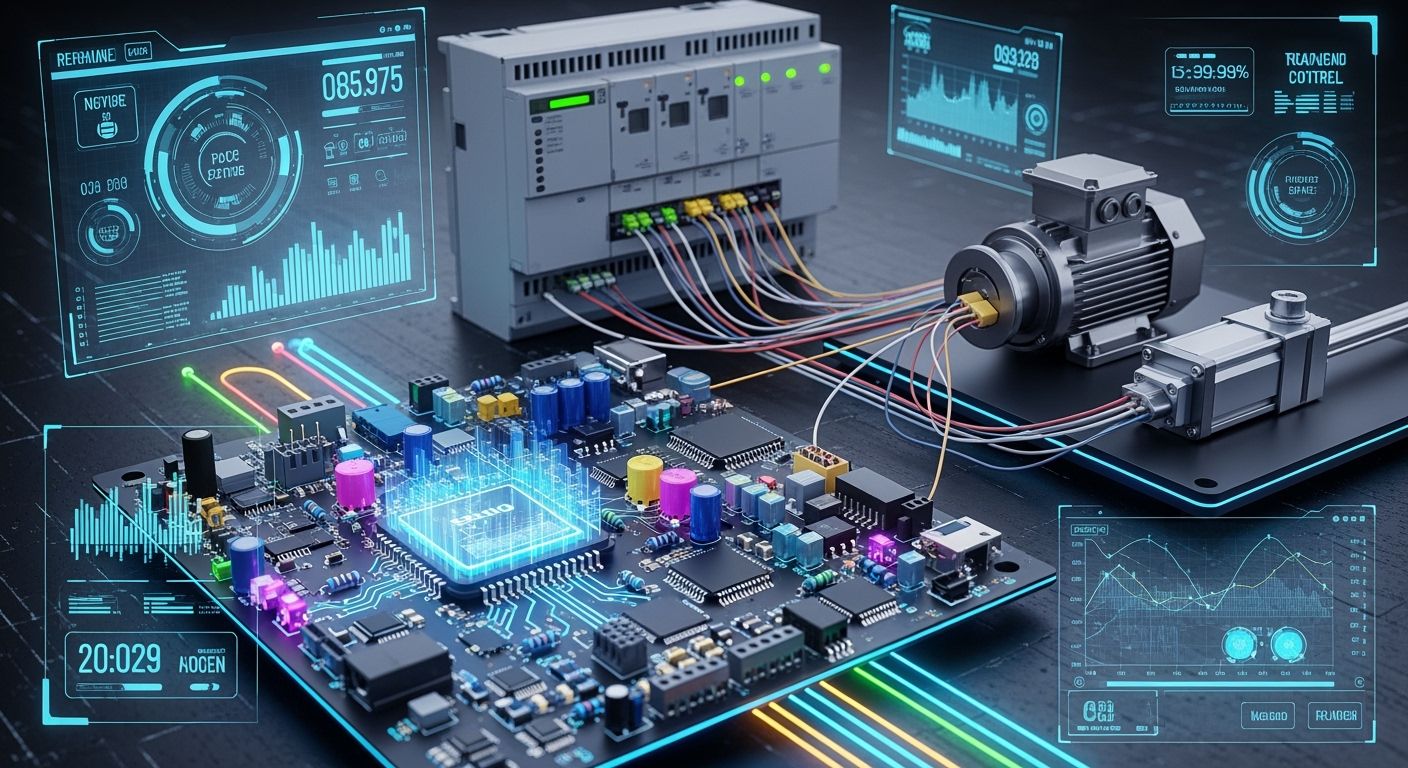
You use PCBA to control PLC and Motion Control Systems. These systems help factories work better. PCBA makes sure everything works exactly and safely. You need strong PCBA because factories can get very hot or shake a lot. These tough places can make systems stop working. Good PCBA keeps your machines working well. It also stops you from spending lots of money on repairs. High-quality PCBA keeps your automation working without problems.
Benefit | Impact in Industrial Automation |
|---|---|
Harsh Operating Environments | PCBA stands up to heat, shaking, dust, and water. |
System Stability | PCBA keeps the whole system working well. |
Maintenance Costs | Good PCBA means fewer expensive repair visits. |
Key Takeaways
PCBA is very important for PLC and motion control systems. It helps these systems work well in tough factory places.
Good PCBA lowers repair costs by stopping problems before they happen. It also helps machines last longer.
Making PCBA with the right design and materials makes the system more stable. It also keeps it safe from heat, dust, and water.
Using new technology like AI and IoT can help fix problems before they get worse. This also makes the whole system work better.
Checking and taking care of PCBA often helps find problems early. This keeps things running smoothly and stops long breaks.
PCBA in PLC and Motion Control Systems
PLC Integration with PCBA
You need printed circuit board assembly to help your plc work in factories. The assembly is the main part of your plc motion control hardware. It links logic circuits, communication modules, and power management parts together. With a strong assembly, your plc can read data, control machines, and check sensors.
PCBA lets your plc:
Watch and control equipment as it works.
Connect to things like sensors, actuators, and robots.
Do hard jobs, like starting motors or reading sensor data.
Logic circuits on the assembly work with binary data. These circuits use logic gates to do their jobs. There are two kinds of logic circuits: combinational and sequential. Combinational circuits do simple jobs. Sequential circuits handle harder tasks. This setup helps your plc motion control system run many types of machines.
You also have to think about power management. A tough assembly design keeps your plc working in hard places. Fast processing helps your plc motion control system react quickly. More input and output options let you control more devices at once.
When you design your assembly, you should think about:
I/O assignment and wiring for clear signals.
Where to put contacts and coils to stop crosstalk.
Keeping analog signals clean with good grounding and shielding.
Safety features like emergency stops with strong isolation.
Cooling with copper pours and heatsinks.
These steps help your plc motion control system stay safe and work well.
Motion Controller Functions
Motion control systems need the assembly to make movement smooth and exact. Your motion control hardware gets signals from controllers, works with them, and sends commands to motors. This lets you control speed, direction, and position very well.
Motion controllers use smart algorithms, like PID and adaptive control, to keep machines steady. The assembly puts these algorithms together with strong hardware. This helps your motion control system change quickly when load or speed changes.
You need to watch how the assembly affects accuracy and speed. The table below shows how different features help your motion control system:
Aspect | Contribution to Accuracy and Responsiveness |
|---|---|
Current Sensing | Shunt-based measurement gives high bandwidth and accuracy, which is important for good control. |
Signal Integrity | PCB layout must keep analog signals clean to stop noise that hurts control. |
Integration of Control Tech | Advanced control methods like DSPs and FPGAs give better timing for faster response. |
Your assembly must also work with fast communication. Common protocols are EtherNet/IP, Modbus TCP, EtherCAT, and PROFINET IRT. EtherNet/IP is good for using many brands together. Modbus TCP is simple and easy. EtherCAT is best for fast motion control. PROFINET IRT is used a lot in factories.
Robots and high-precision machines need your assembly to read sensor data fast. This helps your motion control system keep motors in the right spot. You must stop interference and handle fast signals to do this. Motion controllers in your system make smooth moves and quick responses. They also keep many axes working together, which is important for hard jobs.
Industrial Reliability Factors
Your assembly faces many problems in factories. Water can make metal parts rust. Dust and dirt can cause short circuits. Hot and cold can crack solder or break parts. Chemicals can slowly damage materials.
To protect your plc motion control system, you use special materials and designs:
Conformal coatings keep out water and dust.
Corrosion-resistant finishes, like ENIG or OSP, protect metal parts.
Vibration-resistant designs help your assembly last longer.
Strong materials, like FR4-TG170 or Rogers RO4350B, work well in tough places.
Heavy copper PCBs can handle lots of power without getting too hot.
You must design your assembly to survive these hard places. This keeps your plc motion control system working and cuts down on downtime. When you use the right materials and design, your printed circuit board assembly will last longer and need less fixing.
Tip: Always check your assembly for signs of damage or wear. Fixing problems early can stop bigger issues and keep your motion control systems working well.
Key Components of Motion Control PCBA
Motor Drivers and Servo Control
Motor drivers help your motion control system move things. They send power to motors. This lets you change speed, direction, and torque. Servo motor controllers are good for robots that need to be exact. Stepper motor controllers are used in machines like 3D printers. Some driver boards are L293D, BTS7960B, and TB6612FNG. Each board works for different jobs, from small robots to big CNC machines.
Motion control pcbs must handle lots of power and quick signals. Good design keeps signals clean and motors safe. You can use special ways like sinusoidal PWM or space vector PWM. These make motors run smoother and quieter. You need to watch for heat. Thick copper and thermal vias help keep the board cool. Good grounding and shielding stop electrical noise from hurting your motion control.
Critical Factors | Description |
|---|---|
Signal Integrity | Controlled-impedance traces prevent errors in high-frequency signals. |
Thermal Management | Copper thickness and thermal vias keep components from overheating. |
EMI/EMC Mitigation | Good grounding and shielding reduce electrical noise. |
Material Selection | High-Tg materials improve stability and reliability. |
Sensor and Feedback Circuits
Sensors give feedback to your motion control system. This helps it be accurate. Encoders track position. Absolute encoders tell the exact spot all the time. Incremental encoders need a reset when you start. Magnetic encoders do not touch parts, so they last longer. They fit in small spaces. Sin/Cos encoders give high resolution for very precise jobs.
Feedback circuits connect sensors to your board. They help your system know if a motor is in the right place. A built-in PID controller adjusts the motor output to match the target. The system records data like position and current. This lets you check how well your motion control works and fix problems fast.
Communication Interfaces
Your motion control system needs to talk to other devices. You use interfaces like Ethernet, CAN, and RS-485. High-speed digital I/O lines send signals quickly. Good PCBA design keeps signals strong and clear. You must use impedance control and careful routing to stop data loss. Low-loss materials and signal checks make sure your motion control system sends and gets data without errors.
Component Type | Description |
|---|---|
Passive Components | Resistors, capacitors, and inductors control signals. |
Active Components | ICs, diodes, and transistors manage current and amplify signals. |
Connectors and Interfaces | Link your board to other parts for power and data. |
Specialized Elements | Crystals, sensors, and heat sinks improve precision and performance. |
Tip: Always pick the right communication interface for your system. Fast and reliable data keeps your motion control working well.
PLC PCBA Design and Troubleshooting
Layout and Component Selection
You need a smart plan when you design a plc board. Start by dividing your layout into sections. This modular design makes it easy to expand or fix your plc later. Arrange parts so you can reach them for repairs. Good space use lets you add more features in the future. Always follow industry standards to make sure your plc works with other systems.
Modular design helps with upgrades and repairs.
Ergonomic layouts keep your plc safe and easy to use.
Good airflow and cooling stop your plc from overheating.
Standard parts make your plc easier to sell and support.
Pick high-quality parts for your plc. These parts last longer and resist damage from heat or chemicals. Choose strong materials for the board and solder mask. This keeps your plc working in tough places.
EMI, Thermal, and Safety
Factories can be harsh. Your plc faces heat, vibration, and electrical noise. Use stainless steel or anodized aluminum cases to protect your plc from damage. Pick connectors that resist corrosion, like MIL-spec or IP68-rated types. Miniaturized drives help your plc make less heat.
To stop electrical noise, add EMI filters. These filters can cut downtime and keep your plc running. Check your filters often and use monitoring tools to spot problems early. For heat, use cooling channels and heat sinks. In cold places, add insulation or heaters to keep your plc safe. Cover your board with conformal coatings to block dust and water.
Safety is key. Use tinned copper shields for cables. Label everything with heat-resistant, UV-stable tags. Follow rules like IPC-2221 and UL 61010 for high-voltage layouts. Always check grounding and fusing in your plc panel.
Diagnosing and Maintaining PCBA
You must check your plc often to keep it running. Use tools like the Fluke 773 to measure circuits and find problems.
Tool | Application |
|---|---|
Fluke 773 | Measuring 4 to 20 mA circuits, 24VDC, and 120VAC digital circuits |
Protect your plc with coatings that block heat, chemicals, and water. Use good soldering methods for strong joints. Keep your plc dry by using desiccants and sealed cases. Pick parts that match your factory’s temperature and humidity. Always look for ways to improve by tracking how your plc performs.
Tip: Regular checks and good care help your plc last longer and work better.
Advanced Trends in Motion Control Systems
IoT and Smart Integration
New trends make motion control systems smarter and easier to use. Many factories now use one controller for robots, motion, and PLC jobs. This makes machines simpler and helps them work better.
The newest IoT trends use one controller for robot, motion, and PLC tasks. This makes machine design easier and helps the system work better. Fast and steady communication is important for good motion control. Logic functions are added for IIoT systems.
Smart integration gives you more control and better feedback. High-density PCBs help with real-time motion control. These boards let robots move together with great accuracy. Flexible circuits fit inside moving joints and keep signals strong. You connect sensors and actuators to your board. This way, your system always knows what is happening.
Real-time motion control uses HDI PCBs.
Sensors and actuators give better feedback.
Flexible circuits work well in moving parts.
Predictive Maintenance with AI
AI helps keep motion control systems working longer. AI and machine learning watch motors and pumps. They find problems before things break. This lets you fix issues early and avoid costly stops.
AI and ML check motor health and pump work.
Finding problems early stops failures.
Predictive maintenance makes systems more reliable.
You fix problems before they get big. This keeps your automation running smoothly.
Miniaturization and High-Density Boards
Boards are getting smaller and more powerful now. Miniaturization lets you add more features in less space. High-density boards have many layers for fast, safe signals. This design gives better motion accuracy and faster response.
Using high-density PCBs shortens signal paths and adds EMI shielding. This helps motion accuracy and real-time sync. Multilayer thermal management keeps equipment cool and lasting longer.
Compact design is important for modern robots.
Fast real-time control improves motion accuracy.
Smart integration makes systems work better.
You get slimmer devices that do more. But you must use careful building and good cooling to keep them safe.
PCBA helps your plc work well in hard places. Your plc links processors, input and output modules, and communication ports. This lets your plc read sensors and control actuators. You can watch your plc in real time. This makes your plc reliable and efficient. Your plc also controls servo drives and sensors. It changes low-power signals to the right voltage for motors. This keeps motion safe and steady. Use strong materials and smart layouts for your plc. Check your plc often and take good care of it. Learn about new trends to keep your plc working its best.
Remember, your plc needs pcba for good feedback and motion. Keep learning and get better at automation.
Pick high-quality parts for your plc.
Look at your plc often for damage.
Follow safety rules and industry standards.
Learn about new automation technology.
FAQ
What does PCBA do in a PLC system?
PCBA connects all the parts in your PLC. It lets your PLC read sensors, control machines, and talk to other devices. You get fast and safe control for your factory.
How do you keep PCBA safe in harsh environments?
You use strong materials and special coatings. These protect your board from water, dust, and heat. Good design helps your PCBA last longer.
Why do you need feedback circuits in motion control?
Feedback circuits help your system know the exact position of motors. You get better accuracy and smoother movement. This keeps your machines working right.
What is the best way to check for PCBA problems?
Tip: Use test tools like a multimeter to check signals and power. Look for signs of damage, like burnt spots or loose parts. Regular checks help you find problems early.
See Also
Understanding PCBA And Its Essential Components
Defining PCBA: Its Meaning In The Electronics Field
Designing Industrial Controller PCBs: A Comprehensive Guide
PCBA Processing Needs For Medical Equipment Explained
Sourcing Electronic Components For Effective PCBA Production
