PCBA for Industrial Sensors and Transmitters
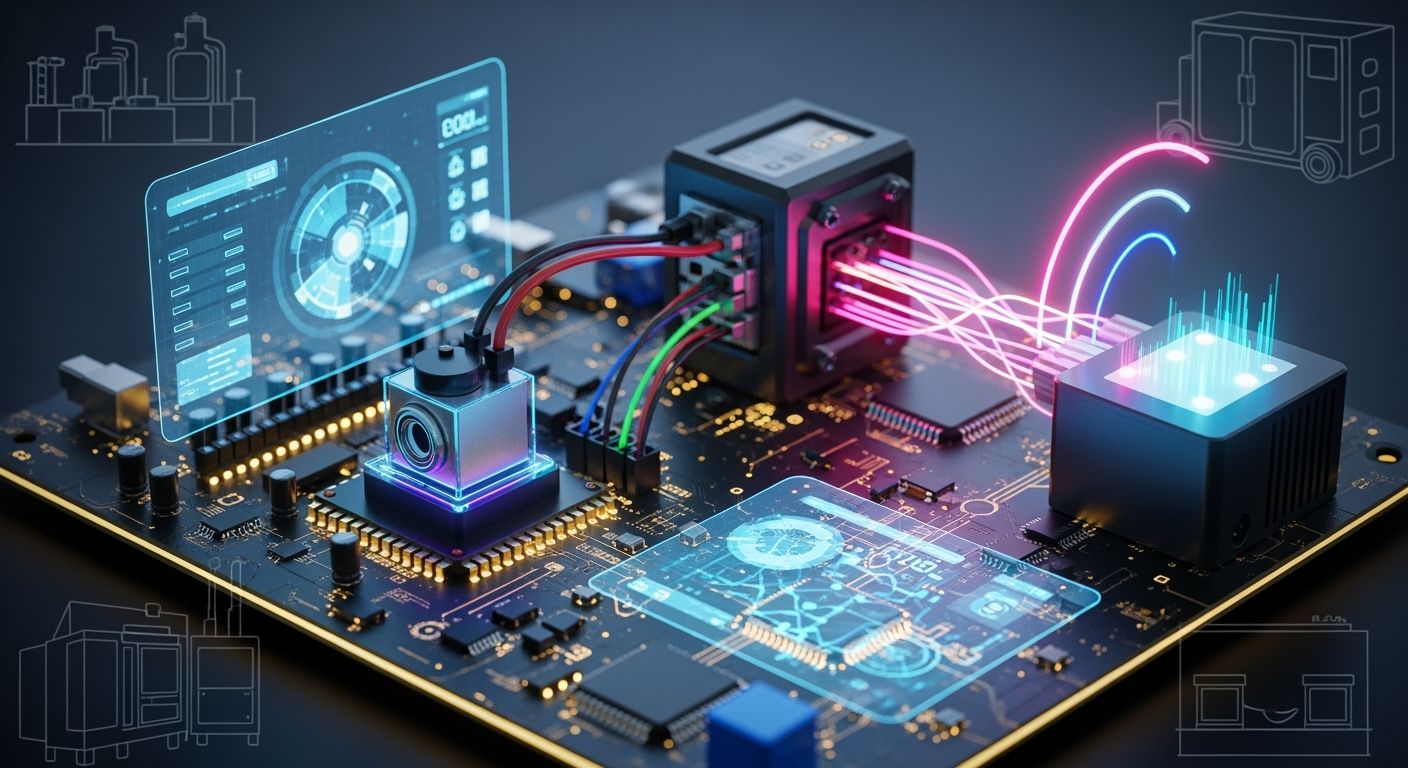
You use pcba to make industrial sensors and transmitters work in tough places. In factories, pcba links all the parts and helps your devices handle signals, control power, and share data. A good pcb design helps machines work well and keeps them from breaking. Industrial Sensors need a strong pcb, so you have to pick the right pcba for long use. Your transmitters also need a good pcb to send data correctly in every factory job.
Key Takeaways
PCBA links all parts of industrial sensors and transmitters. This helps them work well in hard places.
Good power management in PCBA lets sensors last longer. It also helps them work well in tough factory areas.
Picking the right communication interface is very important. It makes data move fast and correct between sensors and devices.
Keeping sensor PCBs safe from dust, water, and chemicals is very important. This helps them last longer and work well in factories.
Testing and picking strong materials for PCBA design is important. It helps sensors handle tough places and work well.
PCBA Functions in Industrial Sensors
Signal Processing in Sensor PCB
PCBA does the main job of signal processing in sensor PCB. Sensors like temperature sensors and pressure sensors make weak or noisy signals. PCBA makes these signals stronger and cleaner. This helps sensors give correct data. Good PCB design keeps connections strong. This stops errors in sensor PCB. Special manufacturing, like controlled impedance routing and multi-layer PCB, keeps signals steady and correct. This works even in busy factories.
You can find many signal processing methods on sensor PCB:
Amplification makes weak signals stronger.
Filtration takes away noise and bad frequencies.
Environmental compensation changes for temperature or pressure.
A/D and D/A conversion lets sensor PCB share data with other devices.
These jobs help sensors give good and exact measurements. This is very important for temperature sensors and pressure sensors.
Power Management for Industrial Sensors
Power management on PCBA helps sensor PCB work well and last longer. You need smart ways to save energy and keep devices safe. Good power management lets sensors work longer and stay strong. This is true even in hard factory places.
Some power management methods in PCBA are:
Power topology design uses switching power supplies.
PMICs help control power quickly.
Power saving features use sleep modes and load sensing.
Thermal management stops overheating.
Power line filtering and voltage regulation keep things steady.
Energy recovery uses solar panels.
Battery management makes batteries last longer.
Evidence Description | Impact on Operational Lifespan |
|---|---|
A smart PCB design can save milliwatts each cycle. This means hours or days more working time. | More working time because of energy saving. |
Too much heat makes users uncomfortable. It also hurts battery and parts. | Less heat means parts last longer. |
Engineers must plan PCB power networks, use microcontroller sleep cycles, and pick good data protocols. | Sensors become more reliable and last longer. |
When you use these ways, sensor PCB can help sensors like temperature sensors and pressure sensors work longer. This is true even in tough factory places.
Communication Interfaces in PCBA
Communication is a big job for PCBA in sensors. Sensor PCB must send and get data fast and right. You have many choices for communication interfaces. Each one fits different factory needs.
Some common interfaces are:
UART
SPI
I2C
RS-232
RS-485
USB
Ethernet
FireWire
CAN
Bluetooth
Wi-Fi
LoRa
ZigBee
NFC
You use UART for simple links. I2C connects many slow sensors. SPI moves data fast. CAN is strong in noisy factories.
Tip: Wired communication is usually better than wireless in factories. Good connectors, like Industrial RJ45 or M-type, keep your data safe and quick.
Every choice, from protocol to PCB layout, changes how well sensors work. Good communication makes sure temperature sensors, pressure sensors, and other sensors give the right data when you need it.
Environmental Protection for Sensor PCB
Factories can be rough places. Sensor PCB faces dust, water, chemicals, and shaking. You need strong protection to keep PCBA working.
You can use different protection ways:
Conformal coating puts a thin layer on sensor PCB to stop dust, water, and chemicals.
Encapsulation covers everything in thick resin for more safety.
Strong solder joints help sensor PCB fight shaking and hits.
Conformal coatings are thin and light. Sensor PCB stays small and easy to fix. They stop water, dust, and rust. This is very important for sensors. Encapsulation gives more safety, especially if sensor PCB faces water or big hits. You must pick the right way for your sensors and factory.
Note: Water protection is very important. It stops rust and damage from chemicals. This can ruin sensor PCB and make sensors not last long.
With good protection, PCBA can help temperature sensors, pressure sensors, and other sensors work in the hardest factory places.
Design Considerations for Sensor PCB
Component Selection for Sensor
You need to pick the best parts for your sensor pcb. This helps your sensor work well in factories. Strong parts last longer and handle tough jobs. Weak parts can break from shaking or wet air. Using strong materials stops cracks and peeling. Good choices fit your system and lower warranty problems. You also make sensors last longer between fixes.
Picking parts is important for pcb reliability.
Strong parts handle heavy loads and stress.
Right choices stop solder cracks.
You fix sensors less and they work better.
Good parts help electrical performance.
Strong materials make sensors last longer.
Parts that are easy to get help support.
The right sensor pcb design helps your sensor survive tough places. It also keeps your pcba working for a long time.
Layout for Harsh Environments
Sensor pcb design must protect sensors in factories. Put parts that shake a lot near mounting spots. This makes stress paths shorter. Route important traces as pairs with ground shielding. This keeps signals clean when motors make EMI. Do not use sharp bends. Use curved or 45-degree turns to stop strain. Split power and ground planes to keep noisy areas apart. Put decoupling capacitors close to IC pins. This helps stop noise.
Criteria | Explanation |
|---|---|
Durable Materials | Use thick pcb boards for strong sensor pcb design. |
Component Placement and Mounting | Keep parts away from stress spots and use glue for big parts. |
Ruggedized Components | Pick parts made for factories with wide temperature ratings. |
Locking Connectors | Use connectors that stay tight to stop loosening from shaking. |
High Avalanche Energy Ratings | Choose MOSFETs or IGBTs with high ratings for voltage spikes. |
Thermal management is important too. Use thermal vias and place parts to move heat away. This keeps your sensor pcb cool and steady.
EMI/EMC in Industrial Control PCBA
Industrial sensors face EMI and EMC problems. You must keep analog and digital grounds apart in your sensor pcb. Use a solid ground plane to make loop area smaller. Shield cables and boxes to stop EMC failures. Follow rules like IEC 61000, CISPR, FCC, and car EMC standards.
Bad grounding causes noise and voltage changes.
Layout keeps grounds apart to lower radiation.
Shielding stops EMC failures.
Following rules is needed to sell sensors.
Miniaturization in Sensor PCB
Miniaturization helps your sensor pcb fit more features in less space. Use high-density designs, reflow soldering, and automated inspection. 3D packaging stacks parts up and down. Flexible boards let electronics bend. Chiplets break big chips into smaller pieces for more density.
Miniaturization puts more parts in less space.
It makes signals better with shorter paths.
Smaller parts use less power.
You meet market needs for small sensors.
Miniaturization makes your pcba stronger and more efficient for industrial sensors.
Manufacturing and Quality in Industrial Control PCBA
Assembly Techniques for PCBA
You need strong ways to put together industrial control pcba. Use surface finishes like ENIG to stop rust and keep connections working for a long time. Pick epoxy-based solder masks because they fight off chemicals. Automated Optical Inspection, or AOI, helps you find solder mistakes and parts that are not in the right place. Robots and machines help make pcb assembly faster and more exact. Always keep your pcb clean and use good materials that can take high heat. Halogen-free flux in solder paste helps stop rust. These steps help make sensor pcb building safer and more steady for factories.
Epoxy-based solder masks help fight chemicals.
AOI finds problems early.
Machines make assembly faster and more correct.
Smart factories use AI to spot problems right away. This helps your industrial control pcba work better.
Testing Protocols for Sensor PCB
Testing is very important for every sensor pcb. You must check if wires connect right and if the build meets IPC-A-610 rules. Functional tests act like real use and check timing, logic, power, and signals. You need to follow rules like IPC-610 and ISO 9001. Reliability tests look for weak solder spots and bad part placement. Environmental tests show if your sensor pcb can last in hard factory places.
Electrical tests check if wires connect.
Functional tests see if it works in real life.
Reliability tests find weak places.
Environmental tests show if it lasts long.
Standards Compliance in Industrial Sensors
You must follow world rules to sell your industrial control pcba. These rules keep your sensor pcb safe and working well. Here are some important rules:
Standard | Description |
|---|---|
ISO 9001 | Quality management for meeting customer and legal needs |
ISO 14001 | Environmental management and waste control |
IPC-A-610 | Cleanliness, soldering, and part placement |
IPC-6012 | Rigid pcb qualification and performance |
RoHS | Limits hazardous materials for safety |
UL Certification | Safety and quality for consumer trust |
Reliability Testing for PCBA
You must test your industrial control pcba to make sure it lasts. Use these ways to check your sensor pcb:
Test Method | What It Checks | Why It Matters for Industrial PCBA |
|---|---|---|
ICT | Component values, opens, shorts, circuit checks | Finds problems before other tests |
FCT | Board operation in real conditions | Checks if it works in real life |
Thermal Cycling | Performance in hot and cold | Finds heat and cold problems |
Vibration and Shock | Mechanical strength | Stops breaks in machines and vehicles |
EMC/ESD Testing | Electrical interference and static resistance | Makes sure it works in noisy places |
You can trust these steps to build strong industrial control pcb assembly. Good sensor pcb building and testing help your factory systems work well.
Selecting the Right PCBA for Industrial Sensors
Custom vs Standard Sensor PCB
You have a big decision when picking a pcba for industrial sensors. You can choose a custom sensor pcb or a standard one. Custom sensor pcb fits special needs. Standard sensor pcb is good for simple jobs. The table below shows how each option fits different needs in industrial control pcba:
Factor | Custom PCB | Standard PCB |
|---|---|---|
Product Shape | Compact or uniquely shaped | Basic designs sufficient |
Performance | Exceeds standard capabilities | Meets basic needs |
Reliability | High for harsh environments | Standard reliability |
Manufacturing Scale | Best for large volumes | Good for small runs |
Time-to-Market | Longer due to customization | Faster production |
Custom sensor pcb lets you control performance and reliability. Standard sensor pcb saves time and money for easy jobs.
Partnering with PCBA Manufacturers
You get better results when you work with skilled pcba manufacturers. They help you build strong industrial control pcba for your sensors. Good partners use quality pcb assembly and keep you informed. You can talk with their engineers and designers to make your sensor pcb better. They offer custom pcb design services for your needs. Working together makes your industrial control pcba more reliable and helps sensors last longer.
You get quality pcb assembly.
You improve your sensor with expert advice.
You receive custom solutions for your industrial control pcba.
Tip: Pick a manufacturer with a good history in industrial control pcba. This helps your sensor work well in tough places.
Cost vs Performance in Industrial Sensors
You must balance cost and performance when picking a pcba for industrial sensors. Prototyping platforms are fast and easy to use. Production hardware focuses on reliability, cost, and lasting longer. You need to know the difference to launch your product well. Some choices, like differential or single-ended outputs, change the cost and performance of your industrial control pcba. Differential signaling works better for high-performance industrial sensors because it fights noise and moves data faster. You must think about these trade-offs to get the best sensor pcb for your industrial job.
Prototyping is quick but not always reliable.
Production pcb assembly must last longer and cost less.
Differential signaling gives better reliability for industrial sensors.
You make the best choice for your industrial control pcba when you match your needs with your budget and performance goals.
You need a special pcb to help your industrial sensors and transmitters work well. Good design, making, and picking can stop problems in hard factory places. To get the best results, try these steps:
Talk to suppliers early and check datasheets for your needs.
Use models to see how pcb and sensors act when stressed.
Make testing and calibration simple.
Pick boards that follow IPC-6012 for strong use.
Try out different pcb designs before you choose one.
Write down your choices and follow the rules.
Be gentle with parts so they do not break.
Test if the pcb works for a long time in factories.
You should look at what your sensors need and ask pcb experts for help to find the best answer.
FAQ
What is the main job of PCBA in industrial sensors and transmitters?
You use pcba to connect all parts inside industrial sensors and transmitters. It helps your sensor handle signals, manage power, and send data. Good pcb assembly makes your sensors and transmitters work better and last longer in industrial places.
How do you make sensor PCB reliable in harsh industrial environments?
You pick strong materials and use smart sensor pcb design. Place parts to avoid stress. Use coatings to protect from dust and water. Test your sensor pcb in real factory conditions. These steps help you get reliable industrial control pcb assembly.
What types of sensors use PCBA?
You find pcba in many types of sensors. Temperature sensors, pressure sensors, and flow sensors all use sensor pcb. Industrial sensors and transmitters need strong pcb to work in tough places. Each sensor pcb design fits the sensor’s job.
Why is testing important in sensor PCB manufacturing?
Testing finds weak spots in your sensor pcb. You check for bad solder, wrong parts, and signal problems. Good sensor pcb manufacturing uses tests to make sure your industrial sensors and transmitters work well and stay reliable.
How do you choose between custom and standard sensor PCB?
You choose custom sensor pcb for special shapes or high performance. Standard sensor pcb works for simple jobs. Think about your needs, cost, and how fast you want to finish. Talk to your pcb assembly partner for the best choice.
See Also
Defining PCBA: Its Role in Electronic Devices
Essential PCBA Processing Needs for Medical Devices
Exploring Industrial Serial Screen PCBA Applications Today
