Engine Control Unit (ECU) PCBA Design
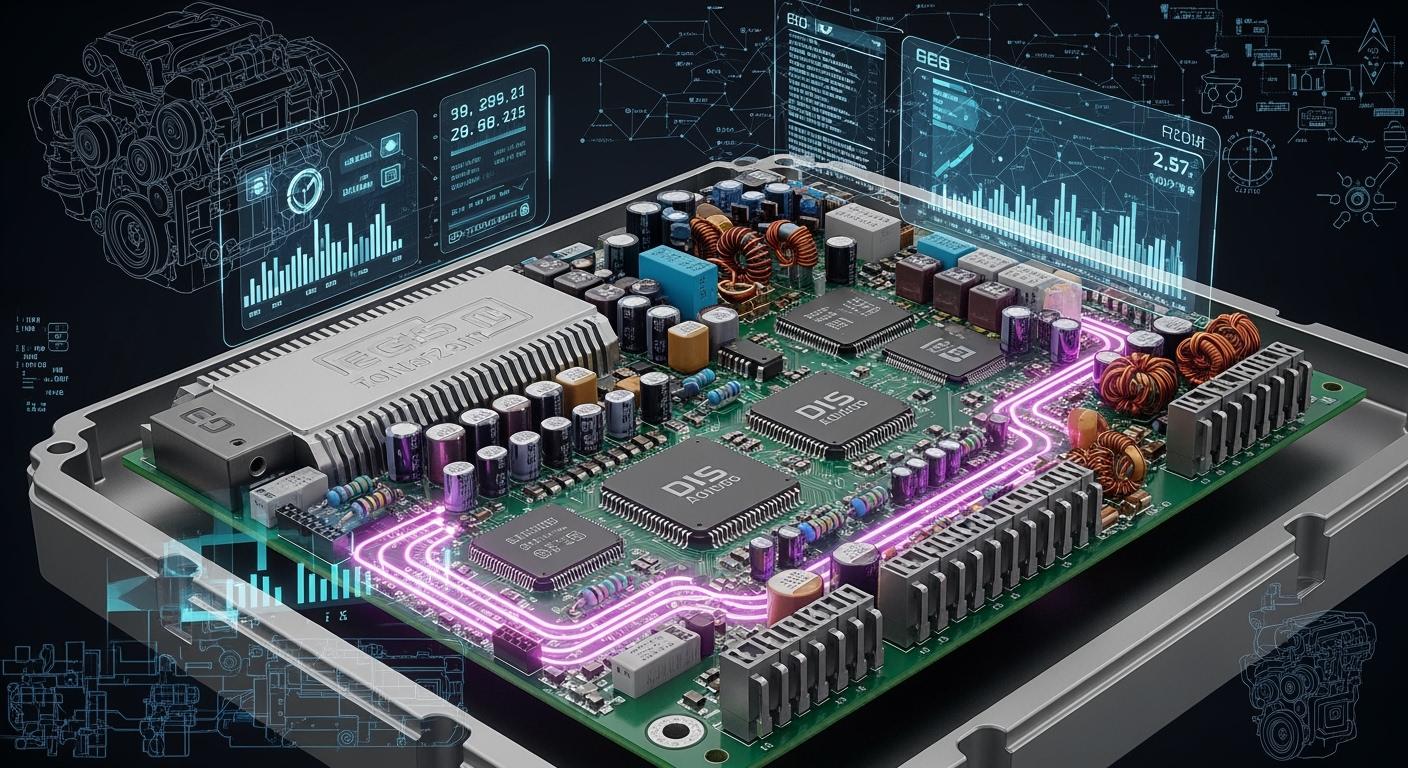
When you work with an engine control unit, you design and build the printed circuit board assembly (PCBA) that controls how the engine works. ECU PCBA reliability is very important for keeping cars safe and making sure they last a long time.
Requirement | Description |
|---|---|
Extreme Conditions | Must handle hot and cold, shaking, and sudden bumps. |
Corrosion Resistance | Needs to fight off water, road salt, and chemicals. |
Signal Integrity | Must keep fast signals and connect to sensors well. |
Longevity | Should work safely for 10 years or longer. |
When you start to design and build an ECU, you must follow strict safety rules.
Following ISO 26262 means you do careful safety checks.
It finds possible dangers and uses ways to lower risks.
It helps you make systems that stay safe even if something fails.
You will see that hobby engine management projects can use these same ideas. Focusing on control, reliability, and safety helps you make good solutions.
Key Takeaways
Make sure your ECU PCBA is reliable. Pick strong parts and test them well so they can handle heat, shaking, and water.
Use safety rules like ISO 26262 to lower risks. These rules help you build a safe ECU that keeps the engine and people safe.
Try open-source tools like Arduino and KiCad for your own ECU projects. These tools do not cost much and let you change things and learn more.
Add good thermal management and EMI shielding to your design. This stops the ECU from getting too hot and cuts down on electrical noise. It helps the engine run well.
Write down your design steps and tests. Good notes help you fix problems and make changes later. This makes your ECU work better.
Engine Control Unit PCBA Basics
ECU and PCBA Overview
An engine control unit helps run your engine. The ecu is like your engine’s brain. It gets information from sensors. The ecu uses this data to make choices. These choices help your engine work well. The ecu sits inside a metal box. But the important work happens on the printed circuit board assembly. The pcba has all the electronic parts. These parts help the ecu read data and send signals. The pcba connects sensors, chips, and wires. This lets your engine get the right commands.
Role in Engine Management
The ecu helps your engine work better. It reads data from sensors like oxygen and mass airflow sensors. The ecu looks at this data and changes fuel injection and ignition timing. It also changes other engine settings. This helps your car use less fuel and pollute less. It also makes your car drive smoother. The ecu makes changes right away when needed. It keeps your engine safe by stopping problems early. You count on the ecu to control your engine system.
Tip: If you want your engine to last longer, make sure your ecu works well and gets good data from all sensors.
Importance of Reliable Design
Your ecu pcba must be strong and reliable. It needs to handle heat, cold, shaking, and wetness. You test the pcba in different ways. In-circuit testing checks each part. Functional testing checks if the ecu works in real life. Environmental stress testing checks if it lasts a long time. Common problems are corrosion, cracked solder, burned parts, broken traces, and software bugs. You stop these problems by following rules like AEC-Q100 and AEC-Q200. You pick special car parts for the ecu. This helps the ecu work in hard places. A good design keeps your engine safe and your car running for many years.
Key ECU Functions and Components
Core Functions of the ECU
The ecu helps your engine work well and run smooth. It is the main part that controls your engine system. The ecu does many important jobs to help your engine. Here are some main things most ecus do:
Control of air-fuel ratio: The ecu reads sensor data. It changes how much fuel goes in. This keeps the air and fuel mix right.
Control of idle speed: The ecu checks how fast the engine spins. It changes the idle speed. This helps your engine stay smooth when stopped.
Control of variable valve timing: The ecu controls when the valves open and close. This gives your engine more power and saves fuel.
These jobs help your engine react fast and stay safe in all kinds of driving.
Essential Electronic Components
You need some main parts to make an ecu work. Each part has a special job in the system. Here are some of the most important electronic parts:
Microcontroller: This chip is the ecu’s brain.
Power supply: It gives steady power to every part.
Input sensors: These check things like heat, pressure, and oxygen in the engine.
Output drivers: These send signals to parts like fuel injectors and ignition coils.
Communication interfaces: These let the ecu talk to other car systems.
You must pick parts that can take heat, shaking, and wetness. This helps your ecu last for a long time.
Tools and Software for Design
You can use open-source tools or paid software to design your ecu. Open-source engine control tools like Arduino help you test ideas fast. They are simple to use and have many code libraries. Paid tools are better for making lots of ecus. They help you follow rules and make strong products.
Software Tool | Type | Description |
|---|---|---|
Speeduino | Open-Source Engine Control | Firmware for Arduino-based ecus, giving ready code for fuel mapping. |
KiCad | PCB Design Software | Free tool for making custom ecu PCB layouts with special trace widths. |
Arduino IDE | Programming Environment | Used for writing and sending code to the ecu board. |
Tip: Try open-source tools first if you want to learn or build a test project. Use paid tools if you need more features or want to make many ecus.
These tools help you design, code, and test your ecu. This lets you build a strong and safe engine control unit for your project.
ECU PCBA Design Process
Requirements and Specifications
You begin each ecu project by setting clear goals. These goals help you work better and avoid mistakes. You need to think about where the ecu will be in the car. Some ecus are inside the cabin. Others are in the engine bay. Each spot needs different materials and layouts.
Here is a table with common ecu requirements:
Category | Details |
|---|---|
Material Considerations | Standard FR-4 (Tg ~170°C) for cabin; high-Tg FR-4 (Tg ≥180°C) for engine bay applications. |
Component Placement | Uniform orientation for components; avoid tall components next to short ones; group high-heat components. |
Trace Routing | Shortest path for high-current traces; minimum widths for signal traces; power/ground planes on inner layers. |
DFM Considerations | Symmetric pads to reduce tombstoning; larger pads for smaller components to improve yield. |
Adherence to IPC-6012DA for high-reliability PCB fabrication; includes hole position accuracy and via fill requirements. |
You also need to pick what features your ecu will have. Maybe you want advanced injection control or new sensor support. Write down all your needs before you start your custom pcb design.
Schematic and PCB Layout
You need a good plan before building your circuit board. Draw a clear schematic to show how parts connect. You can use software like KiCad for this step. Make sure you include every sensor, microcontroller, and driver.
When you start your custom pcb design, follow these tips:
Plan your circuit and limits before routing traces.
Set rules for making and assembling your board.
Place parts so routing is easy and not crowded.
Keep high-power parts apart to stop hotspots.
Group similar parts together for simple routing.
Put power and ground layers in the right places.
Follow rules for connectors and mechanical parts.
Set trace width and spacing rules.
Keep clearances and set via sizes.
Tip: Careful layout helps your ecu handle heat and noise. This keeps your engine running well.
Component Selection and Assembly
You must pick the best parts for your ecu. High reliability is important because a failure can stop your engine. Always buy parts from trusted sellers. This keeps your ecu safe and traceable.
Follow these steps for strong assembly:
Check your design for trace width and part placement.
Use surface mount technology (SMT) for precise builds.
Add conformal coating to protect your board from water, salt, and chemicals.
Only use high-quality parts that can handle heat and vibration.
A careful assembly process helps your ecu last for years, even in tough engine conditions.
Firmware and Integration
You make your ecu work by programming it. Firmware is the code that runs on your microcontroller. You must match your code to your hardware. Here are the main steps for firmware and hardware integration:
Figure out what your ecu must do. Write down all functions and limits.
Plan your system. Make clear plans for both firmware and hardware.
Write your code. Use good tools and follow safety rules.
Test your code on the real hardware. Look for bugs and errors.
Document your work. Good notes help others use and fix your ecu.
Program the firmware onto your custom pcb design. Make sure it works as planned.
Keep your ecu updated. Add new features and fix problems as needed.
Note: Good programming and testing help your ecu control the engine safely and respond to changes fast.
Testing and Validation
You must test your ecu before using it in a car. Testing checks that your design meets all safety and quality rules. Here are some key tests and standards:
ISO 26262 checks functional safety for critical systems.
AEC-Q1 and IPC-617 test reliability with heat and humidity.
ISO 16750 and ISO 7637 test how your ecu handles stress and electrical events.
CISPR 25 and ISO 10605 check for electromagnetic and static safety.
IATF 16949 sets rules for mass production, traceability, and inspections.
You should run these tests to make sure your ecu can handle engine heat, vibration, and electrical noise. This keeps your engine safe and your car reliable.
Challenges and Safety in ECU Design
EMI and Thermal Management
Designing an ecu is hard because of EMI. EMI is unwanted electrical noise. It can come from inside or outside your ecu. Inside, things like switching regulators make noise. Outside, radio signals can cause problems. If your circuit board is not designed well, it can act like an antenna. This means it picks up extra noise. High-speed signal traces near power lines can mess up signals. Your ecu must work in tough places. It faces temperatures from -40°C to 85°C. It also deals with strong shaking and lots of electrical noise.
To keep your ecu cool, you need good thermal management. You can use heavy copper, heat sinks, cooling fans, and thermal vias. Putting parts in the right spots helps move heat away. Using thermal interface materials also helps. These steps stop your ecu from getting too hot. This keeps your engine running well.
Safety Standards and Compliance
You must follow strict rules when you design an ecu. These rules keep your engine safe and your car reliable. Here are some important standards:
Standard | Description |
|---|---|
IATF 16949 | Sets quality rules for making car parts. |
ISO 26262 | Focuses on safety in car electronics and sets safety levels. |
IPC-A-600 | Sets high standards for making reliable circuit boards for cars. |
UL 94V-0 | Makes sure materials in your ecu do not catch fire easily. |
Meeting these standards helps you avoid mistakes. It also makes sure your ecu works well in every engine.
Secure Communication
Modern ecu systems must protect against cyber threats. Hackers can attack weak spots in your ecu. You should use a security-first design to keep your engine safe. Standards like AUTOSAR help you build strong security. Over-the-air updates let you fix problems fast. But you must make sure these updates are safe. Always keep key systems separate in your car. This stops attacks from spreading. A secure update system keeps your engine safe from harm.
Tip: Always test your ecu for security before using it in your car.
Quality and Reliability
You want your ecu to last as long as your engine. Use high-quality parts that can handle heat, shaking, and moisture. Test your ecu for every possible problem, like corrosion or broken traces. Good design and strong testing help your ecu control fuel injection and other engine systems without fail. When you follow these steps, your engine stays reliable and your car stays safe.
DIY ECU PCB and Project Expansion
Open-Source Tools and Platforms
You can begin your diy ecu pcb project with free tools. Arduino and Speeduino help you build and test your own engine projects. These tools save you money. You do not need to buy expensive ECUs. You can change your diy ecu pcb design any way you want. You control every step of the process. You also learn a lot about how electronics and engines work together. Open-source engine control software lets you try different fuel maps and sensor setups. You can use these diy ecu systems to make custom solutions for your car.
Tip: Try KiCad for making your pcb and Arduino IDE for writing code. These tools make your diy ecu pcb project simpler.
Reverse Engineering ECU PCBs
If you want to fix or learn about an ecu, you can try reverse engineering. Always respect intellectual property rights. Only do this for learning or fixing real problems. Always follow the rules for car electronics. Some boards have many layers, which makes things harder. X-ray imaging helps you look inside without breaking the board. Sometimes, part numbers are missing. You can use a multimeter to check how parts work. Firmware analysis needs you to know programming and debugging. You can learn a lot about engine management by looking at real ecu boards.
Adding Features and Upgrades
You can make your diy ecu pcb better by adding new things. Add data logging with an SD card module. This lets you record engine data like RPM and fuel use. Use a Bluetooth module to see engine data on your phone. Open-source engine control software lets you add more tuning options. You can make your own fuel maps and change settings. Many engine projects get better by adding upgrades. Be careful of common problems. Signal noise can hurt your diy ecu pcb. Use shielded cables and capacitors to help. Protect your pcb from heat and shaking with a strong box and heat-safe parts. Pick faster microcontrollers for bigger diy ecu pcb projects.
Note: Every upgrade makes your diy ecu pcb stronger and helps you learn more about engine management.
You can make a strong engine control unit PCBA by following easy steps. First, decide what your project needs. Next, draw a plan called a schematic. Then, design your PCB and put the parts together. Always think about making it tough and safe. Make sure it does not get too hot. Stop unwanted electrical noise with EMI shielding. Follow important safety rules like ISO 26262. This helps people trust your work. If you want to know more, look up topics like PCB miniaturization and advanced routing. You can also learn about automotive PCB design. These ideas help you build safer and better ECUs.
FAQ
What is the most important part of ECU PCBA design?
You must focus on reliability. Pick strong parts. Test your board for heat, vibration, and moisture. Follow safety rules. This keeps your engine safe.
Can you build an ECU PCBA at home?
Yes, you can use open-source tools like Arduino and KiCad. Start with simple projects. Learn step by step. Always test your board before using it.
How do you protect your ECU from electrical noise?
You use EMI shielding, careful trace routing, and good grounding. Shielded cables help block noise. Place sensitive parts away from power lines.
What software helps with ECU PCB design?
Tool | Use |
|---|---|
KiCad | PCB layout |
Arduino IDE | Programming |
Speeduino | Engine control |
You can try these tools for your project.
Why do you need to follow safety standards?
Safety standards like ISO 26262 help you avoid mistakes. They make your ECU strong and safe. You protect your car and everyone inside.
See Also
Understanding PCBA: Its Meaning in Electronics
Sourcing Electronic Parts for PCBA Production
Defining PCBA and Its Essential Components
