How to Ensure High Reliability in Implantable Device PCBA
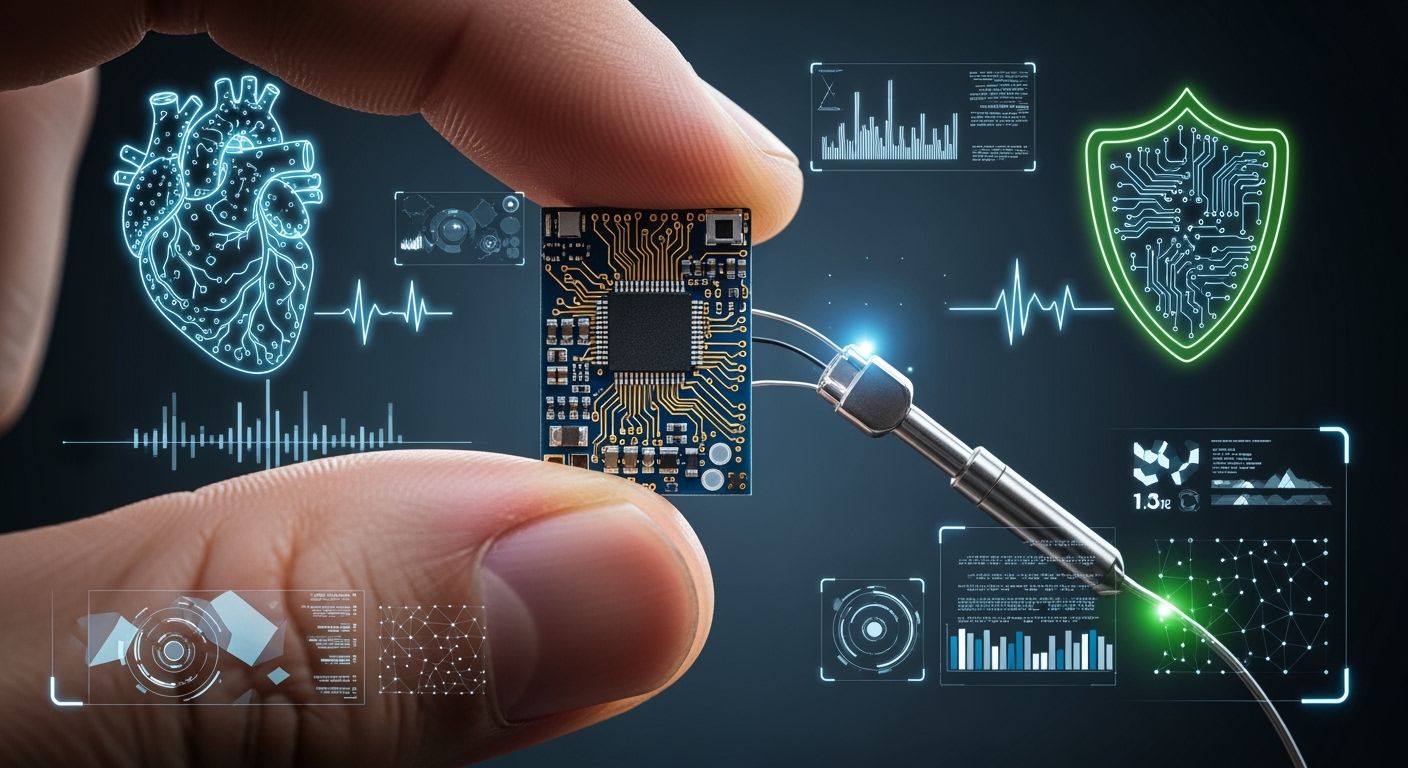
You must do everything you can to make sure the implantable device works well. Precision and biocompatibility keep patients safe and help the device last a long time in the body. If you want to lower risks, you should look at common failure points:
Contaminants can cause electrochemical migration.
Solder extrusion and whisker growth may cause short circuits.
High-power components make heat that can stress circuits.
Sterilization cycles and humidity changes can make the board weaker.
A careful plan for design, manufacturing, and testing helps build strong and reliable devices.
Key Takeaways
Use IPC Class 3 and ISO 13485 standards for implantable devices. These rules help keep devices safe and follow the law.
Write down every step in making the device to track it well. This helps find problems fast and keeps patients safe.
Make devices with backup parts so they work if one part breaks. This is very important for medical device reliability.
Pick materials that do not rust for long-term use in the body. This makes the device last longer and stay safe.
Test each board carefully with different tests before using it. This makes sure the board is safe and works well.
High Reliability Requirements in Implantable Devices
IPC Class 3 and ISO 13485 Standards
When you make implantable medical PCBAs, you must follow strict rules. IPC Class 3 is the top standard for medical electronics. This class is for life-saving systems like implantable devices. These boards must never stop working. They need to work all the time, even in tough places.
Class 3 boards must:
Work without stopping in any condition.
Never have downtime.
Go through lots of checks and tests.
Meet IPC 6012F for military, medical, and car uses.
Have strong solder joints with almost no mistakes.
ISO 13485 is also very important for implantable medical pcb reliability. This standard makes sure you control your process and keep good records. You must follow strict design steps and watch your suppliers closely. ISO 13485 helps you follow FDA and EU MDR rules. It builds a base for quality in medical electronics. This includes checking your process and handling complaints. These steps help your implantable device reach the highest reliability.
Tip: Always use both IPC Class 3 and ISO 13485 as your starting point for implantable medical pcb reliability. This keeps patients safe and helps you meet rules around the world.
Documentation and Traceability
You need strong records and traceability for implantable medical pcb reliability. Rules say you must track every step when making the board. This helps you find problems, handle recalls, and keep patients safe.
Traceability Element | Description |
|---|---|
Product | Give each board a special serial number or batch code. |
Materials | Track all materials, who made them, and their codes. |
Components | Watch important parts and record their lot and date codes. |
Process | Keep notes on machine settings and when you made the board. |
Operator | Write down who made, checked, and approved the board. |
Equipment | Track what tools you used and if they were checked. |
Configuration control/device master record | Show the board matches the right version. |
Inspection and test | Link test results to each board or batch. |
Device history record | Prove each board meets the right specs and quality. |
Nonconformance and rework | Record all problems, fixes, and actions taken. |
Supplier | Track which suppliers you use and their papers. |
Complaint and recall | Find products fast if you need to recall them. |
Record retention | Keep records as long as the rules say. |
Traceability connects your safety checks with risk management. This is very important for patient safety. You can watch for problems and find safety issues fast. If you see more failures, you can update your risk plans and fix things. Good traceability helps you watch products after they are sold and makes recalls easier.
Redundancy and Fault Tolerance
You must design for backup and fault tolerance for implantable medical pcb reliability. These ideas help your device keep working if something breaks. There are many ways to do this in medical electronics:
Triple Modular Redundancy (TMR): Uses three systems to hide faults.
Dual-channel setups: Checks sensors to make sure they work right.
N+1 Power Supply: Gives backup power if one fails.
Independent Watchdog Timers (WDT): Restarts the system if it stops.
Built-in Test Methods: Uses Logic BIST, POST, and tests to check the device.
These backup plans help you avoid one part causing a big problem. You can keep the device safe and meet high reliability needs for implantable medical pcb reliability. Built-in tests and watchdog timers give extra safety. You can trust your device to work, even in hard medical cases.
Note: Backup and fault tolerance are not just tech features. They are needed for patient safety and to follow rules for implantable devices. Always add them to your design and test plans.
Biocompatible Long-Term Boards: Materials and Design
Material Selection and Corrosion Resistance
You need to pick the right materials for biocompatible long-term boards. This is important for implantable devices. Choosing materials is the first step to make boards last longer. The body is tough on boards. Sweat, fluids, and tissue can cause corrosion. Corrosion makes boards weaker. You should use corrosion-resistant boards. This helps them stay strong and reliable. Here is a material breakdown for medical pcbs to compare choices:
Material Type | Properties |
|---|---|
Polyimide | Flexible, thermally stable, biocompatible, withstands high temperatures, suitable for compact designs. |
FR-4 with Biocompatible Coatings | Cost-effective, good mechanical strength, requires coatings for biocompatibility. |
Ceramic Substrates | Excellent thermal conductivity, corrosion resistance, used in high-reliability applications. |
Gold Plating | Highly resistant to corrosion, excellent conductivity, used for traces and contact points. |
Platinum | Superior biocompatibility, used in neurostimulators for direct tissue interface. |
Copper with Protective Layers | Standard for traces, requires protective layers to prevent corrosion. |
Silicone | Flexible, biocompatible, moisture-resistant, used for encapsulation. |
Parylene | Excellent moisture resistance, biocompatible, thin conformal coating. |
Epoxy Resins | Provides robust protection against mechanical stress and fluids. |
Corrosion-resistant boards help stop corrosion and make boards stronger. Gold plating and platinum keep boards safe for medical use. Polyimide and ceramic substrates make boards more durable and reliable.
Biocompatibility Testing
You need to test materials for biocompatibility before using them. This is important for biocompatible long-term boards. Testing checks if boards are safe for medical implants. It also checks if boards last in the body. Here is a material breakdown for medical pcbs to show common tests:
Testing Method | Description |
|---|---|
In Vitro Testing | Exposes PCB materials to simulated bodily fluids to assess corrosion resistance and chemical stability. |
In Vivo Testing | Conducts animal studies to observe the behavior of implantable PCBs in a living organism. |
Cytotoxicity Tests | Assesses whether materials release toxic substances harmful to cells through cell culture exposure. |
Biocompatibility testing checks for corrosion and durability. In vitro testing shows how corrosion-resistant boards react to fluids. In vivo testing checks if boards stay safe and reliable inside the body. Cytotoxicity tests help you avoid toxic materials and keep patients healthy.
Tip: Always use biocompatibility testing to check your materials. This step helps you make biocompatible long-term boards that meet medical standards.
Miniaturization and High-Density Layout
You need to design biocompatible long-term boards to be small and dense. Miniaturization lets you fit more features in an implantable device. You can use advanced methods to shrink parts and make boards smaller:
Advanced IC Packaging (CSP, WLP, SiP)
HDI Integration
Component Shrinking (0603 → 0402 → 0201)
3D PCB Architecture
You must balance durability and reliability with miniaturization. High-density layouts can cause thermal hotspots. This makes boards harder to cool. You need materials with good thermal properties to manage heat. Blood flow and tissue type affect how heat moves away from boards. You must watch for thermal stress and pick materials carefully to avoid damage.
Miniaturization is not just for looks. It is needed for medical implants and wearables. Size and weight are important. Rigid-flex and flexible PCBs help boards bend and fit inside the body. You must use these designs to make biocompatible long-term boards stronger and more reliable in every implantable device.
Manufacturing for Implantable Device Reliability
Cleanroom Assembly and Contamination Control
You need to build encapsulated component boards in a cleanroom. Cleanrooms keep out dust and tiny particles. This helps stop contamination that can hurt materials. Even a little dust can cause problems. It can make devices not work right or cause corrosion. You should pick the right cleanroom class for your job. The table below shows some cleanroom classes used for medical PCB assembly:
Cleanroom Class | Particulate Limit (particles/ft³) | Application |
|---|---|---|
Class 8 | 100,000 | General medical PCB assembly |
Class 7 | 10,000 | Critical processes like gold wire bonding |
Most medical PCB assembly uses ISO 8 to ISO 6 cleanrooms. For higher-risk implantable device work, you may need ISO 7 or ISO 5. You choose the cleanroom class by looking at device risk and rules. Cleanroom standards help keep boards clean and safe. This protects materials from corrosion and keeps them reliable.
Tip: Always follow cleanroom rules. This keeps your boards safe from corrosion and other harm.
Soldering and Interconnect Quality
You must use good soldering to make strong boards. Good soldering keeps materials safe from corrosion. It also helps the board work well. Here are some steps to follow:
Use a soldering iron with temperature control and a fine tip. This helps with small medical parts.
Clean all parts before soldering. Use isopropyl alcohol to remove dirt and stop corrosion.
Use the right amount of solder. Too much can cause shorts. Too little can make weak joints.
Check every joint with a magnifier. Look for cracks or bad solder.
Gold-based alloys are good for medical soldering. They do not react with body fluids or tissue. Always clean off flux after soldering to stop corrosion. No-clean or water-soluble fluxes are good for encapsulation. These steps help your boards last longer and stay safe from corrosion.
Supplier Qualification and Component Reliability
You need to pick suppliers who follow strict rules for medical materials. The right supplier gives you good materials for your boards. The table below shows what to check in a supplier:
Criteria | Description |
|---|---|
ISO Certifications | Suppliers must have ISO 13485, ISO 9001, and IPC Class 3 |
Regular Audits | You should check suppliers often and review their processes |
CAPA and Risk Assessment | Suppliers must keep records of problems and risk plans |
Lot Traceability | Suppliers must track all materials and processes by lot |
It is hard to find suppliers with ISO 13485 certification. Not many suppliers meet these rules. This can make it take longer to get parts and cost more. You must pick suppliers as carefully as you design your device. Good suppliers help you avoid problems and keep boards reliable. Checking suppliers often makes sure your materials meet medical rules. This lowers the chance of corrosion and keeps your boards safe for patients.
Testing Protocols and Compliance
Functional and In-Circuit Testing
You have to test every board before using it in a medical implantable device. These tests help you find problems early. Continuity testing checks if the circuit is complete. Insulation resistance testing looks for short circuits between paths. Signal integrity analysis shows if signals move well on the board. In-circuit testing and flying probe methods check if power flows everywhere. Automated optical inspection finds missing or wrong parts, solder bridges, and polarity mistakes. X-ray inspection lets you see hidden solder joints and look for empty spots. These tests help you spot corrosion and weak areas in materials. You can trust your board to work and keep patients safe.
Continuity testing
Insulation resistance testing
Signal integrity analysis
In-circuit testing and flying probe
Automated optical inspection
X-ray inspection
Tip: Always test the board for electrical and firmware performance. This helps you find corrosion and keep the board reliable.
Accelerated Life and Stress Testing
You need to know how long your board will last inside the body. Accelerated life and stress tests show how materials handle corrosion and stress. You can use different tests for active and passive parts. Biased HAST uses power to make failures happen faster from ionic contamination and breakdown. Unbiased HAST checks how strong the materials are without power. Dynamic HAST runs the board during the test to show real-life use. You must set clear rules and use burn-in conditions that are 1.5 to 2 times higher than normal. You should watch the chamber and write down data all the time. If a board fails, check it right away to find out why.
Test Type | Description | Used For |
|---|---|---|
Biased HAST | Devices powered to speed up failures from ionic contamination and breakdown. | Active components (ICs, transistors) |
Unbiased HAST | No bias, focuses on material integrity. | Passive components (resistors, capacitors) |
Dynamic HAST | Devices exercised during test for real-world simulation. | Power electronics, high-speed systems |
Note: These tests help you see how corrosion changes materials and reliability over time.
Sterilization and Biocompatibility Validation
You must sterilize every board before using it in a medical implantable device. There are different ways to keep materials safe and biocompatible. Autoclave uses steam and heat, but moisture can cause layers to peel and corrosion. Ethylene oxide (EtO) works at lower heat and causes less stress. Gamma radiation and E-beam work fast and do not change how the board works, but they can change the color of polyimide. You must control moisture before heating to stop empty spots. You need to run many test cycles to meet ISO 13485 rules.
Sterilization Method | Conditions | Impact on Flex PCB | Recommendation |
|---|---|---|---|
Autoclave (steam) | 134°C, 18 min, steam | Moisture absorption, delamination risk | Bake after sterilization; use adhesiveless stackup |
EtO (ethylene oxide) | 37–63°C, 1–6 hours, gas | Minimal thermal stress | Preferred for most flex PCB devices |
Gamma radiation | 25–50 kGy | Can yellow polyimide, no electrical change | Acceptable; discoloration is cosmetic only |
E-beam | 25–50 kGy, seconds | Similar to gamma, faster | Acceptable for high-volume disposables |
You must check biocompatibility for all materials. ISO 10993 says you need to check solder alloys, flux leftovers, and coatings. ISO 13485 asks you to keep records and follow quality rules. You must write down and track all test results for audits.
Tip: Always check biocompatibility and corrosion resistance for every material. This keeps the board reliable and meets medical standards.
You make implantable device PCBA very reliable by following strict rules and using trusted steps. You need to design boards so they are easy to build. You must pick high-quality parts and keep good records of every board. You check and test each board to make sure it is safe for medical use. The table below lists the key steps:
Step | Description |
|---|---|
Design for Manufacturability | Make PCB layouts that are easy to build. |
Component Sourcing | Use certified parts that work very well. |
Traceability | Keep track of every board and part used. |
Test boards carefully before using them. | |
Quality Inspection | Use AOI and X-ray to check for problems. |
Adherence to Standards | Follow ISO 13485 and IPC for safety. |
Groups like the FDA and ISO have strict cleaning and testing rules. You show you follow these rules to keep medical devices safe.
You can make your process better by cleaning boards well and using vapor degreasing. You should always know the latest rules from IEC, FDA, IPC, and ISO. You can look at IEC 60601, FDA 21 CFR Part 820, IPC-A-610, and ISO 13485 for help. Always try to improve so your devices stay safe and work well.
FAQ
What standards must you follow for implantable device PCBA?
You need to use IPC Class 3 and ISO 13485. These rules help you make safe and strong boards. They show you how to design, build, and test your boards.
How do you prevent contamination during assembly?
You put boards together in a cleanroom. You use special tools and wear clean clothes. Cleanrooms stop dust and dirt from getting on the parts.
Why is traceability important for medical PCBAs?
Traceability helps you follow every board and part. You can find problems fast and recall products if you need to. This keeps patients safe and helps with safety.
What materials work best for biocompatible boards?
You pick materials like polyimide, ceramic, gold, and platinum. These materials do not rust and work well in the body. You test each one to make sure it is safe.
How do you ensure reliability in implantable devices?
You follow strict rules, design carefully, and test a lot. You check every board for problems and use good parts. This helps your device stay safe and last a long time.
See Also
Essential Strategies for Enhancing PCBA Durability Over Time
Understanding PCBA Processing Needs in Medical Device Manufacturing
Innovative BGA Assembly Methods for Reliable Electronic Production
Choosing the Right PCBA Supplier for Your Specific Requirements
