How Power Management ICs Support Modern PCBA Design in 2026
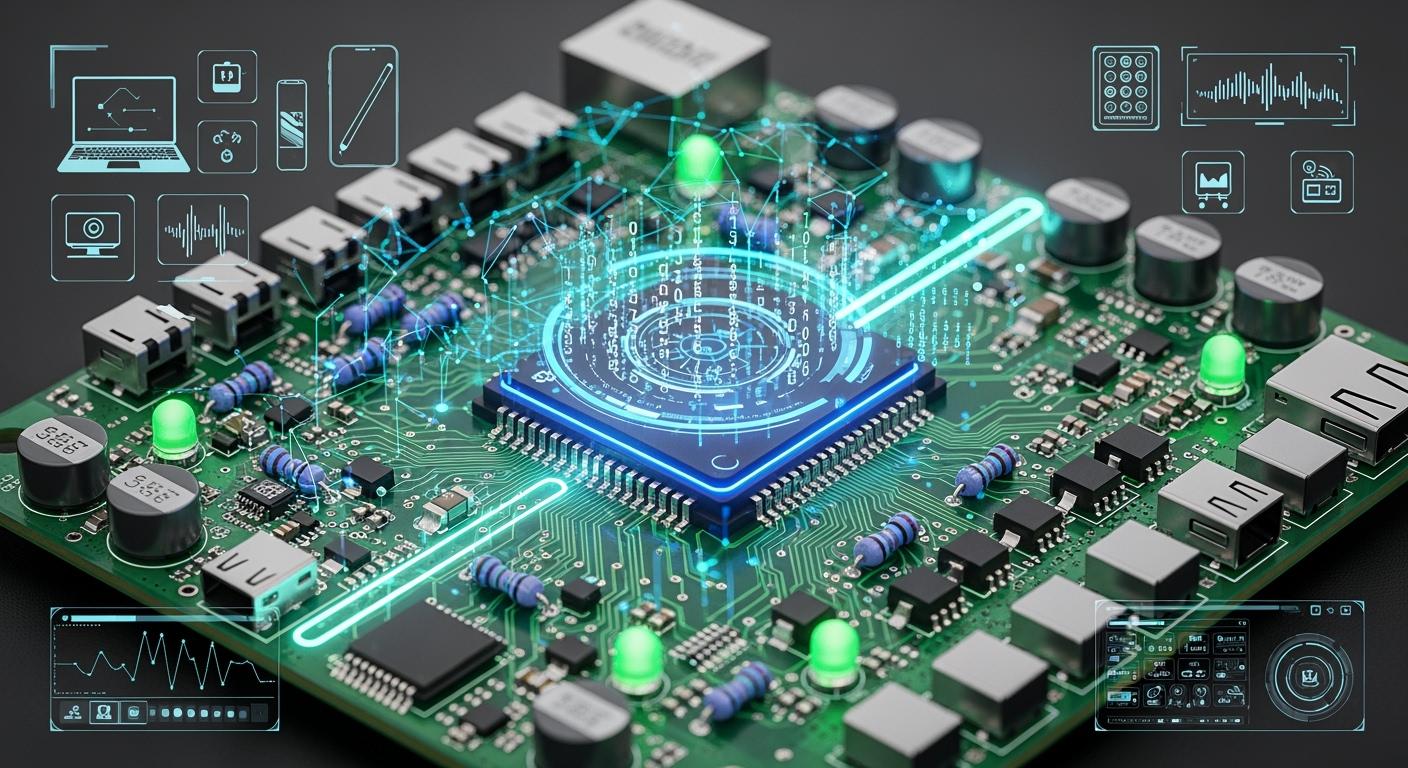
You use power management ICs to help your PCBA designs work well and stay safe in 2026. A power management integrated circuit makes sure each part of your device gets the right power. These chips change, share, and control power very carefully. When you use a power management integrated circuit, you get many good things:
The power management integrated circuit puts many power jobs into one chip.
Fewer parts on your board make your design smaller and lighter.
Advanced power protection features help keep your circuits safe.
You also get better battery care and heat control. With power management ICs, your devices last longer and do not get too hot. You make smarter and smaller products every time you use power management ICs.
Key Takeaways
Power management ICs (PMICs) put many power jobs on one chip. This makes your circuit design easier.
Using PMICs means you need fewer parts. Your printed circuit board (PCB) gets smaller and lighter.
PMICs help with battery use and heat control. This makes devices last longer and keeps them safer.
PMICs have special features to stop damage from too much voltage or current. This helps your device work well and not break.
Picking the right PMIC is important. You should think about how well it works, how it handles heat, and if it is sensitive to noise. This helps your circuit work its best.
Power Management ICs in PCBA Design
PMIC Overview
A power management integrated circuit, or pmic, helps control power in your printed circuit board. The pmic is like the boss for power in your device. It changes, controls, and sends power to each part of your pcb. You can trust a pmic to keep your circuit safe and working well. When you make a new printed circuit board, you need a pmic for microcontrollers, processors, and sensors. The pmic lets you use fewer parts and makes building easier.
Tip: A pmic can do many power jobs at the same time, so you do not need a different chip for every job.
Here is a table that shows what a power management integrated circuit does in circuit design:
Function | Description |
|---|---|
DC-to-DC Conversion | Changes one voltage into many levels for different parts of your pcb. |
Voltage Regulation | Keeps voltage steady to protect important parts. |
Power Sequencing | Controls when power turns on and off to stop damage. |
Battery Management | Watches battery health and charging, so your device is safe and lasts longer. |
Integrated Housekeeping | Adds things like timers and control pins to help your circuit and cut down on extra parts. |
Types of Power Management ICs
You can pick from many types of pmic for your circuit. Each type is made for a different power job in your pcb. Here is a table that lists common pmic types:
Type of PMIC | Description |
|---|---|
DC-DC Switching Regulators | Chips that change voltage levels and save energy. |
Battery Management ICs (BMIC) | Chips that control battery charging and stop overcharging. |
Load Switch ICs | Chips that turn power on or off to save energy. |
Automotive Safety PMICs | Chips made for cars with extra safety features. |
Specialized Function PMICs | Chips for special jobs like LED driving or USB power delivery. |
Key Features in Circuit Design
You get many good things when you use a power management integrated circuit in your design. A pmic sends power only where it is needed, so you save energy. You can use both linear and switching regulators to give the right power. Compensation in a pmic helps keep voltage steady for sensitive parts. High-efficiency regulators let you handle many power needs in your pcb. You can change and set up functions for better power use. The pmic has power sequencing, fault detection, and battery checks, so you need fewer extra parts. Firmware lets you make power management better even after you finish your design.
When you use a pmic, your printed circuit board gets smaller and easier to make. You use less space for power circuits, so it costs less to build. Your circuit is also more reliable because there are fewer tricky connections. The pmic helps stop voltage drops and interference, so your device works better.
PMIC Functions and Benefits
Voltage Regulation
A power management integrated circuit helps keep voltage steady. The pmic uses special voltage control to save power and work better. New designs use very little energy when not working hard. Smart control helps the pmic change when things in your device change. Multi-phase power management can handle big power needs in fast devices. Power monitoring lets you see how much energy is used and make good choices.
Note: Keeping voltage steady stops damage from too much power.
Here is how a pmic keeps voltage steady in your circuit:
Function | Description |
|---|---|
Line Regulation | Keeps output voltage steady even if input changes. |
Load Regulation | Keeps output voltage steady even if load changes. |
Power Sequencing | Turns on parts in order to stop damage. |
You use pmic features in cars, factories, and home devices. The pmic keeps voltage steady for microcontrollers, sensors, and processors. You get safe power and protect your circuit from sudden voltage jumps.
Power Conversion and Distribution
A power management integrated circuit changes and shares power well. The pmic uses buck and boost converters to change voltage for different jobs. Buck regulators lower high voltage for microprocessors. Boost regulators raise low voltage for things like wearables. Modern pmic designs can work at over 95% efficiency. The NEH71x0 can start with only a tiny bit of energy. It builds up energy slowly to keep power going.
You use pmic features to let devices work on their own. Your device can run longer without changing batteries, which is good for cars and factories. The pmic gives power to every part that needs it. It manages power for sensors, processors, and communication parts. You can see how much power each part uses in real time.
Buck/Boost Converters help change power with little waste.
Step-Down Conversion gives power to microprocessors in cars and factories.
Step-Up Conversion powers wearables and small devices.
Autonomous operation lets your device last longer without new batteries.
Progressive energy build-up keeps power going all the time.
A power management integrated circuit helps save power and makes your device work better. The pmic shares power with many parts, so your device lasts longer.
Battery and Thermal Management
A power management integrated circuit helps take care of your battery and heat. The pmic uses smart math to check battery strength. You get very good voltage checks, so your device stays safe. The pmic helps with fast charging using USB Type-C in cars and home devices. It can balance battery cells by itself or with help, so batteries last longer. Smaller size and less heat are good for tiny devices.
Feature | Description |
|---|---|
OptimGauge™ Algorithm | Checks battery strength very well |
Integration | Puts charger, LDO, switches, and protection in one chip |
Smart Reset/Watchdog | Makes your device safer and work better |
Shipping Mode | Saves battery when not in use |
Charger Enable Input | Lets you stop charging any time |
You use pmic features to help batteries in cars, factories, and portable devices. The pmic protects against too much voltage or current. It balances battery cells and limits current to make batteries last.
Heat affects every part of your device. Power circuits like voltage regulators and DC-DC converters can get hot. Too much heat can hurt the chip and cause power loss. The pmic helps control heat and keeps your device safe. RF circuits in cars and wireless devices can be hurt by heat. High heat can change how signals move and make them weaker. The pmic helps stop heat stress and keeps solder joints from cracking.
Tip: You should think about where to put heat sinks, what PCB materials to use, and add thermal vias to help cool your device and keep it safe.
A power management integrated circuit helps save energy, cut power loss, and make batteries last longer. The pmic puts many power jobs into one chip, so your device is small and strong. You get longer battery life, which is important for cars and portable devices.
Design Efficiency and Protection
Reducing PCB Size
You can make your printed circuit board smaller with power management ICs. These chips control many power rails using just one device. You do not need lots of separate parts for power jobs. This change helps you use fewer components on your pcb. You save space and make your circuit easier to build. One chip can handle many power lines, so your project is simpler. You get more reliability and efficiency from built-in protection and heat control. Your pcb layout is compact, and your device fits in smaller spaces.
Power management ICs control many power rails, so you need fewer parts.
Using fewer parts makes your pcb smaller.
Built-in functions help save space.
One chip can handle many power lines, making your circuit easier.
Built-in protection features make your device more reliable and efficient.
Advanced Protection Features
You keep your circuit safe with advanced protection features in power management ICs. These chips have over-current protection like fuses and current limiting resistors. You also get over-voltage protection with things like transient voltage suppressors and varistors. TVS diodes stop voltage spikes to protect your parts. Varistors change resistance to limit surge currents when voltage goes up. Safe discharge paths help get rid of stored energy from batteries, capacitors, and inductors. You stop dangers like electric shock, fires, or broken parts. Conformal coating keeps moisture, dust, and accidents away from sensitive pcb areas. You follow safety rules for enclosure design to keep your device safe. These features help you avoid short circuits and keep your circuit strong.
Tip: Always check for over-voltage and over-current protection in your power management ICs to keep your circuit safe.
Reliability in Circuit Design
You make your circuit more reliable when you use power management ICs. These chips put many functions together, so your printed circuit board uses less space. You make your bill of materials simpler and assembly easier. Fewer outside parts mean fewer places where things can break. You get better performance because the chip gives power well and works closely with other parts. You also lose less power and your device lasts longer. You face problems like tricky manufacturing, heat control, and signal quality, but you can fix these with careful design. You keep your circuit strong and your device reliable.
Benefit | Description |
|---|---|
Reduced Footprint | Puts functions together, so your board is smaller. |
Simplified BOM | Uses fewer parts, making buying and building easier. |
Improved Reliability | Fewer parts mean fewer things can break, so your product is stronger. |
Enhanced Performance | Close integration helps power delivery work better. |
You make your circuit more efficient, lose less power, and keep it safe with power management ICs. You make your pcb smaller, add strong protection, and improve reliability in every project.
Integration Strategies and Power Switch ICs
Choosing the Right PMIC
You need to pick the best pmic for your circuit. First, check the voltage difference between input and output. See if your device needs high efficiency or can handle some power loss. Heat is important, especially in cars or factories. If your load is sensitive to noise, pick a pmic with low output ripple. Think about how complex you want your circuit to be and how much money you want to spend. Use this table to compare your choices:
Criteria | Description |
|---|---|
Voltage Difference | Input minus output voltage for your application |
Efficiency | How well the pmic saves power |
Heat Dissipation | How much heat your design can handle |
Noise Sensitivity | If your load needs low noise |
Complexity | How simple or complex your design should be |
Cost | How much you want to spend on solutions |
Check how efficient the pmic is at different loads. Some pmic chips work well when the load is high but lose efficiency at low load. This matters for battery-powered devices like wearables or cars. Always look at how fast the pmic responds to changes and how steady the output is. This helps your circuit stay stable.
Integrating Power Switch ICs
You use power switch ics to control power flow in your circuit. These switch ics let you turn power ON and OFF for each load. You can add protection features like over-voltage, short circuit, and current limiting. Switch ics with low ON-resistance help save energy in your circuit. Many switch ics have built-in safety and diagnostic features. These features mean you need fewer extra parts for protection. You can use switch ics in cars, factories, and home devices. Switch ics help manage power and keep your circuit safe. You can turn off loads when not needed, which saves power and cuts heat. Switch ics also help with diagnostics by showing faults or problems. You can use switch ics to protect against overloads and short circuits. Switch ics make your circuit more reliable and easier to build.
Tip: Put input capacitors close to your pmic and switch ics. This helps lower noise and keeps your circuit stable.
Best Practices for Circuit Design
You can follow some best practices to make your circuit strong. Use a solid ground plane under your pmic and switch ics to lower impedance and block noise. Put buck converter inductors and output capacitors on the same layer as your pmic. For boost converters, keep output capacitors close to the ic. Route switch signals away from lines sensitive to noise to stop crosstalk. Use thermal sensors and make copper areas bigger for better heat control. Add thermal vias and make sure air can flow around your board. Use programmable pmic chips for changing voltage and current. Add sleep modes and load sensing to save power in your devices. Always include protection features like over-current, over-voltage, and short-circuit in your switch ics. Use filters to cut noise and voltage regulators for steady power. Map your power tree and set control needs before you start your design. These steps help you build reliable, efficient, and safe circuits for cars, factories, and home devices.
Note: Good diagnostics and circuit protection keep your circuit safe and help you find problems fast.
Power management ICs make pcb design different in 2026. You use power switch ics to control each switch and load. These chips protect every switch and load in cars and factories. You get better efficiency and more safety for each switch. Advanced diagnostics help you check switches for problems. Power switch ics help manage switches in cars, factories, and 5G devices. Diagnostics let you find faults in switches and loads. You trust power switch ics to keep your pcb safe. You pick these chips to make your circuit efficient and safe. Power switch ics help with power management and protect switches in cars and factories.
FAQ
What do power switch ics do in a circuit?
You use power switch ics to control the flow of electricity. Each power switch ics can turn a switch on or off. This helps you manage power for different parts of your device and keep everything safe.
How do power switch ics improve safety?
Power switch ics protect your circuit from problems. If a switch gets too much current, the power switch ics can turn off the switch. You avoid damage and keep your device working. You also get alerts if a switch fails.
Can I use power switch ics for many switches?
Yes, you can use power switch ics to control many switches in your design. Each power switch ics can handle more than one switch. You make your circuit simple and easy to manage by using power switch ics for every switch.
Why should I choose power switch ics over regular switches?
Power switch ics give you more control than regular switches. You can turn each switch on or off with a signal. Power switch ics also add safety features. You get better protection and can check if a switch works right.
How do I know if a switch needs a power switch ics?
If your switch controls important parts or needs protection, you should use power switch ics. You get better safety and control. Power switch ics help you find problems fast if a switch stops working.
See Also
Essential Tips to Enhance PCBA Reliability for Longevity
Top Strategies to Optimize SMT Lines in PCBA Production
PCBA Processing Standards Required for Medical Equipment Applications
Ways PCBA Contract Manufacturing Enhances Business Productivity
Guide to Procuring Electronic Components for PCBA Production
