Potting and Encapsulation for PCBA Protection
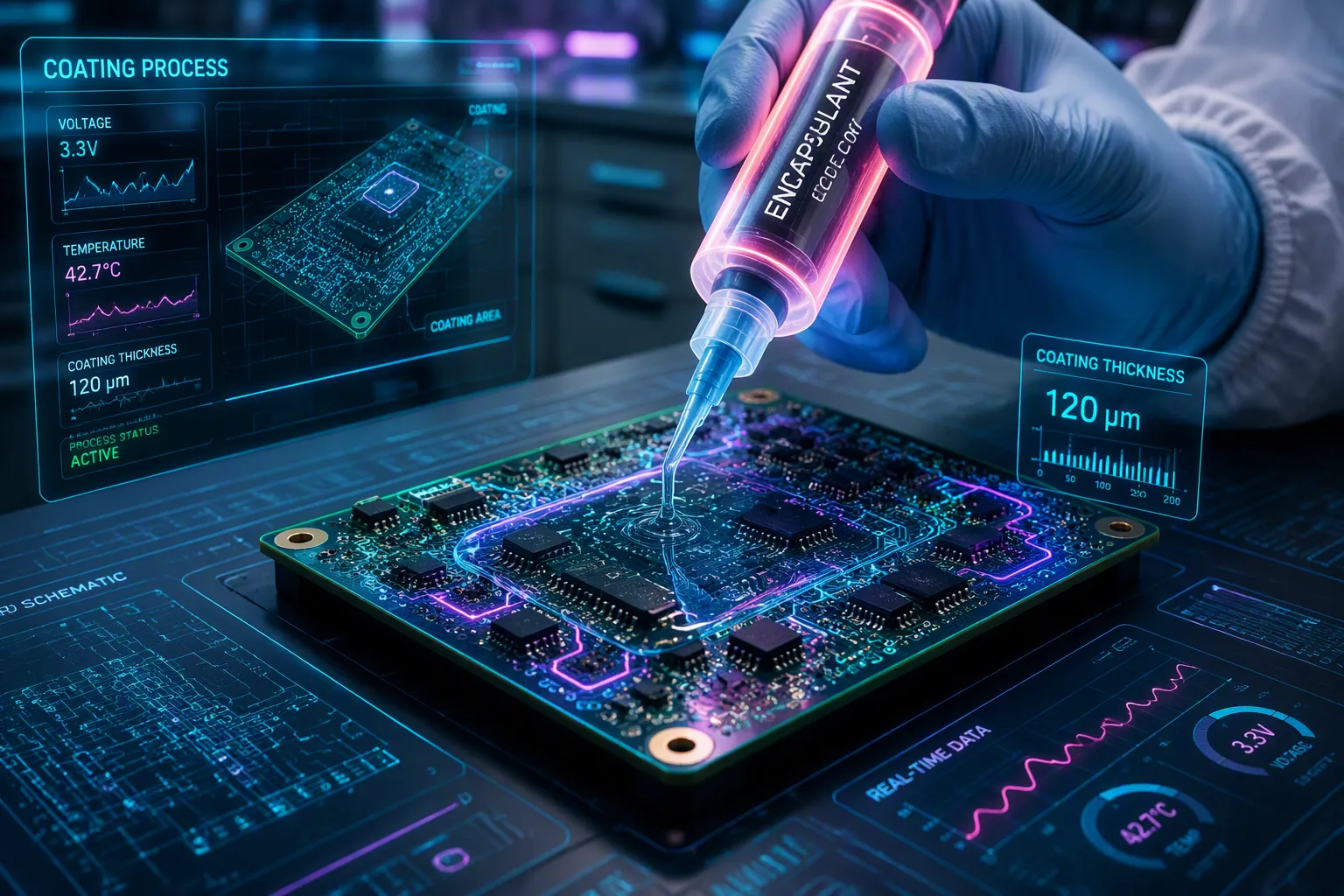
Your PCBA faces tough conditions. Moisture gets into joints. Vibration breaks solder connections. Heat changes stress components. Chemical exposure damages traces. These risks call for serious pcba protection.
How can you guard your electronics well? Potting and encapsulation give proven hardening. These methods beat what conformal coating offers. The world market for these materials hits USD 2.54 billion in 2025.
Coatings help most with humidity and condensation. Coating alone cannot stop physical impact. Potting compounds create physical barriers at interfaces. This coating method works for lighter defense. Encapsulation gives stronger resistance to vibration. You need both coating and potting.
This guide compares methods. You will learn how to protect pcbs for your use. Circuit board protection means balancing needs, stress, and cost.
Key Takeaways
Potting and encapsulation give the best protection against moisture, vibration, and chemicals.
Use epoxy when you need a hard, chemical-proof coating; choose silicone if you want flexibility and heat resistance.
Potting adds weight and makes fixing harder, while conformal coating is lighter and simpler to repair.
Choose the right protection method for your environment, thinking about temperature, stress, and cost.
Spending on good protection stops field failures and extends your PCBA's life.
Potting and Encapsulation Methods for PCBA Protection
When you think about protecting your PCBA, you need to know the difference between potting and encapsulation. Potting means filling a whole assembly inside a case. Encapsulation is a wider idea that includes coating single parts. This part talks about three ways to encapsulate. They use resin to guard your PCBs from tough conditions. Each way is a different material to protect your boards.
Potting vs. Dam & Fill for Full Coverage
Potting and coating do different jobs. Both protect electronics, but they work in different ways. When you look at potting versus coating, you will notice important differences. Each method has its own pluses. You cannot swap one for the other. They need different steps to apply. The choice between potting or casing encapsulation depends on what you need.
Potting fills the whole assembly with resin inside a case. This method gives the best protection against water, bumps, and chemicals. The resin makes a solid barrier around each part. Fixing the board becomes very hard after the resin hardens.
Dam and fill is a different way. You build a wall around the spot you want to shield. Then you fill only that area with resin. This saves material and makes the board lighter.
Method | Coverage | Advantages | Disadvantages |
|---|---|---|---|
Full board method | Full PCB | Maximum protection from moisture, shock, and chemicals | Rework difficult; components fully enclosed |
Dam and fill | Selective | Conserves material; reduces weight | Requires precise setup and application |
Glop Top for Localized Component Protection
Glop top encapsulation works for tiny, chosen spots. The thick material makes a dome over certain parts. This stops it from flowing to other board areas. You usually use glop top for bare chip devices. It makes a thicker barrier than conformal coating, giving stronger protection. This PCB encapsulation method is common for chip-on-board designs. This coating works well for small-area protection. A dependable coating gives you long-lasting strength.
These materials must meet tough rules for sticking and electrical insulation. The right materials also give strong protection against physical stress.
Key traits for glop top materials are sticking strength, electrical insulation, and controlled thickness. These materials give reliable bonding and electrical insulation. Glop top coatings need certain material traits. They harden fast when heated.
Material Selection for PCB Encapsulation
Choosing the right material for your board depends on your environment. You need to match the material to the stress your board will face. Three main options exist: epoxy, polyurethane, and silicone. Each offers different strengths for your specific needs.
Epoxy and Urethane for Rigid Board Coverage
Epoxy and urethane resins serve as main choices for rigid board coverage. The table below shows how these encapsulants compare.
Property | Epoxy | Polyurethane |
|---|---|---|
Tensile Strength | 50–80 MPa (High) | 10–25 MPa (Medium) |
Shore Hardness | D80–D90 (Rigid) | A60–D60 (Flexible) |
Temperature Range | –40 to +150°C | –50 to +125°C |
Moisture Resistance | Excellent | Very Good |
Epoxy provides high rigidity and chemical resistance. You get strong physical coverage from this coating. However, epoxy can crack under thermal cycling. The rigid material cannot absorb strain from expansion differences. You must consider this when you select your protective material. This coating resists chemicals well. The resin bonds strongly to your board. Potting with epoxy requires careful temperature control.
Polyurethane offers balanced flexibility and durability. You get better vibration resistance with this coating. This coating handles thermal cycling with ease. Potting with urethane works well for assemblies that face temperature changes. The trade-off is a shorter pot life for this resin. Both encapsulants give excellent electrical insulation. These encapsulants protect your pcbs from harsh conditions. Different encapsulants suit different environments. The right encapsulation method depends on your needs. Potting in large volumes requires low-exotherm formulas.
Silicone for Flexible and High-Temperature Protection
Silicone serves a different encapsulation role for your board. You need this material for high-temperature environments. Silicone does not degrade under prolonged heat exposure. Other coatings harden or become brittle. This coating works well for extreme conditions.
Silicone offers superior flexibility for your board. The soft material absorbs vibrations and mechanical stress. Potting with silicone gives you reliable performance. This coating stays flexible over time. The resin handles high temperatures without degradation. Choose your resin based on the operating temperature range. Potting with these materials requires proper venting.
Silicone is well-suited for challenging environments. Some coatings offer better flexibility than others.
The trade-off is lower mechanical strength compared to epoxy. Potting with silicone works best when heat and vibration are your main concerns. Your coating selection affects the final performance. These encapsulants serve different purposes for your board. This coating choice depends on your specific needs.
Key Factors for Choosing PCBA Potting
Picking the right potting material means looking closely at your working environment. You need to match the material to the stresses your board will face. If you choose wrong, your board can fail early, even if you apply the material perfectly.
Environmental Exposure and Physical Stress Requirements
Start by checking the conditions your assembly will meet. Chemical resistance comes first. Epoxy stands up well to fuels and solvents. Silicone resists some fuels less, but it shines in other ways. Salt spray and industrial pollutants can speed up reactions that cause failure. You need a material that can handle these specific chemical dangers.
Temperature range helps you pick the right material family. Silicone works over a wide temperature range, fitting extreme heat or cold. Epoxy has a high glass transition temperature and strong mechanical traits. For aerospace, industry standards require thermal cycling data to demonstrate durability.
Physical stress needs also guide your choice. Vibration and shock call for flexibility. Silicone soaks up mechanical energy well. Hard impact needs epoxy's stiffness. Thermal cycling creates expansion stress. Softer materials handle this bending without cracking. Hard materials give weather resistance and IP protection.
Selection Criterion | Key Consideration |
|---|---|
Hardness | Hard materials resist weather; softer ones handle thermal cycling |
Viscosity | Low viscosity helps penetration; high viscosity stops flow before curing |
Thermal Conductivity | High values stop overheating in fully potted assemblies |
Flammability ratings are important for safety compliance. Ensure the material meets the required safety standard for your application.
Moisture sealing is rated by IP codes, with higher ratings indicating better protection. For submersion, silicone seals very well. Military standards include humidity cycling tests.
Electrical Performance, Repairability, and Cost Trade-Offs
Electrical performance shapes your material choice a lot. Potting fully covers heat-generating parts. High thermal conductivity becomes key. Epoxy can be formulated with enhanced thermal conductivity to prevent overheating in high-power designs.
Repairability is the biggest trade-off. Once the potting compound cures, parts become unreachable. You cannot fix or rework a potted assembly. Any flaws must be found before potting. Epoxy is permanent and very hard to remove. Silicone allows some rework with careful removal. Polyurethane balances flexibility and durability but stays hard to rework. The encapsulation method you pick directly affects your maintenance plan.
Cost goes beyond material price. Low-viscosity materials penetrate better but may need more labor. High-viscosity compounds stop flow before curing but make coverage harder. Your production volume affects the economic choice. Potting in large volumes needs low-exotherm formulas to avoid heat damage.
The right choice balances all these factors. Your pcba protection strategy depends on your specific use. You must weigh environmental demands against physical protection, electrical performance, and cost. No single material wins in every area. Choose the protective material that best fits your priorities.
This encapsulation decision sets your board's lifespan. Proper potting guards your pcbs from harsh conditions. The investment pays off through fewer field failures and longer service life. Take time to weigh each factor against your needs.
Potting vs. Conformal Coating: Strengths and Trade-Offs
When you compare potting vs conformal coating, you see two different levels of protection. Potting delivers maximum ruggedization. Conformal coating offers lighter defense. Your choice depends on your environment and your priorities.
Advantages of Potting and Encapsulation
Potting and encapsulation give you the highest level of pcba protection. The table below shows how these methods compare to conformal coatings.
Aspect | Potting | Conformal Coating |
|---|---|---|
Moisture Protection | Fully encapsulates components; protects against submersion and extreme conditions | Thin barrier for moderate moisture, dust, and chemicals |
Corrosion Protection | Robust protection due to complete sealing; ideal for harsh environments | Excellent for moderate exposure but limited for harsh environments |
Protection Level | Maximum (water, dust, chemicals, vibration) | Moderate (water, dust, light chemicals) |
Mechanical Support | High – fully encases components, providing robust structural support | Low – thin layer offers minimal structural reinforcement |
Potting compounds act as shock absorbers. They dissipate energy from vibrations and shocks before solder joints fatigue. This structural reinforcement prevents component detachment. Conformal coating cannot provide this benefit. The bulk nature of this method creates continuous thermal paths, especially when using thermally conductive fillers. This eliminates air gaps and reduces hotspot formation. Conformal coatings have a thin profile of 25–250 micrometers, which limits heat spreading across your assembly.
Potting and coating serve different roles. Potting and coating require different trade-offs. Potting and coating decisions depend on your specific needs. Potting and coating are not interchangeable solutions. Potting and coating each have strengths. Potting and coating work at different levels. Potting and coating both protect electronics.
When to Choose Conformal Coating Instead
Conformal coating becomes the better choice when weight, size, and repairability matter most. Potting adds significant weight to the PCB. Conformal coating adds minimal weight. In aerospace applications, every gram counts. Engineers use conformal coatings for flight control systems and avionics where weight reduction is a primary goal.
Conformal coating strikes a balance between protection and flexibility. It makes sense for applications where modifications and adaptability are important. Weight and volume are constraints. Rework, repair, or modifications may be anticipated. The thinner layer allows for solvent-based, mechanical, thermal, or chemical stripping.
The table below shows key differences.
Dimension | Potting | Conformal Coating |
|---|---|---|
Cost | Higher cost | Lower cost |
Repairability | Difficult, often requires full replacement | Easy, can be peeled off and reapplied |
Weight Impact | Significant weight increase | Minimal weight increase |
Size Impact | Increases size; requires extra space | No noticeable bulk; maintains original footprint |
Conformal coating places almost no physical stress on sensitive components. It protects small pins without causing damage. If you anticipate future modifications, this coating gives you more flexibility. You can inspect the board easily. You can rework without damaging the substrate. This coating works well for handheld devices and consumer electronics. The application of conformal coating is simpler and faster.
Potting and coating each serve different protection needs. The right choice between potting and coating depends on your application. Potting and coating decisions affect your product's long-term reliability. Potting and coating deliver different results. You must match your method to your environment.
Potting and encapsulation deliver the strongest pcba protection for harsh environments. You must choose methods and materials carefully. The right decision balances environmental demands, physical stress, electrical performance, and cost. No single solution fits every application.
Evaluate your specific conditions against the factors discussed. Consider temperature ranges, vibration levels, and chemical exposure. Think about repairability needs and weight limits. Your priorities determine whether potting or conformal coating suits your pcbs best.
This protection investment prevents field failures and extends service life. Contact our experts today for a tailored potting or encapsulation solution. Request a consultation to discuss your PCBA protection needs.
FAQ
How long does potting material take to cure?
Cure times vary by material type. Epoxy cures at room temperature, but heat can accelerate the process. Silicone typically takes longer. Always check the manufacturer's data sheet for exact specs.
Can you remove potting compound for repairs?
Removal is hard. Epoxy needs chemical strippers or mechanical grinding. Silicone offers slightly better access with careful cutting. Plan for replacement rather than repair when you choose potting. This trade-off matters for your maintenance plan.
Does encapsulation protect against extreme temperatures?
Yes. Silicone handles a wide temperature range, while epoxy works from -40°C to +150°C. Your operating range determines the right material. Match the compound to your environment for reliable pcbs protection. This choice directly affects your board's lifespan.
What thickness should you apply for full coverage?
Full potting fills the entire housing completely. Dam and fill covers only selected areas. Glop top creates a dome over individual components. Your application method determines coverage depth. Each approach offers different levels of protection against moisture and vibration.
How does potting compare to conformal coating for cost?
Potting costs more than conformal coating. Conformal coating is less expensive. Potting adds significant weight, while coating adds minimal weight. Your budget and weight limits guide this decision.
See Also
Understanding PCBA And Its Essential Components
Key Technical Precautions For HDI PCB SMT Assembly
Processing Requirements For Medical Device PCBA Manufacturing
Advantages Of Applying Conformal Coating In PCBA
Essential Technical Aspects Of Conformal Coating In PCBA Production
