PCBA for Infusion Pumps and Drug Delivery Systems
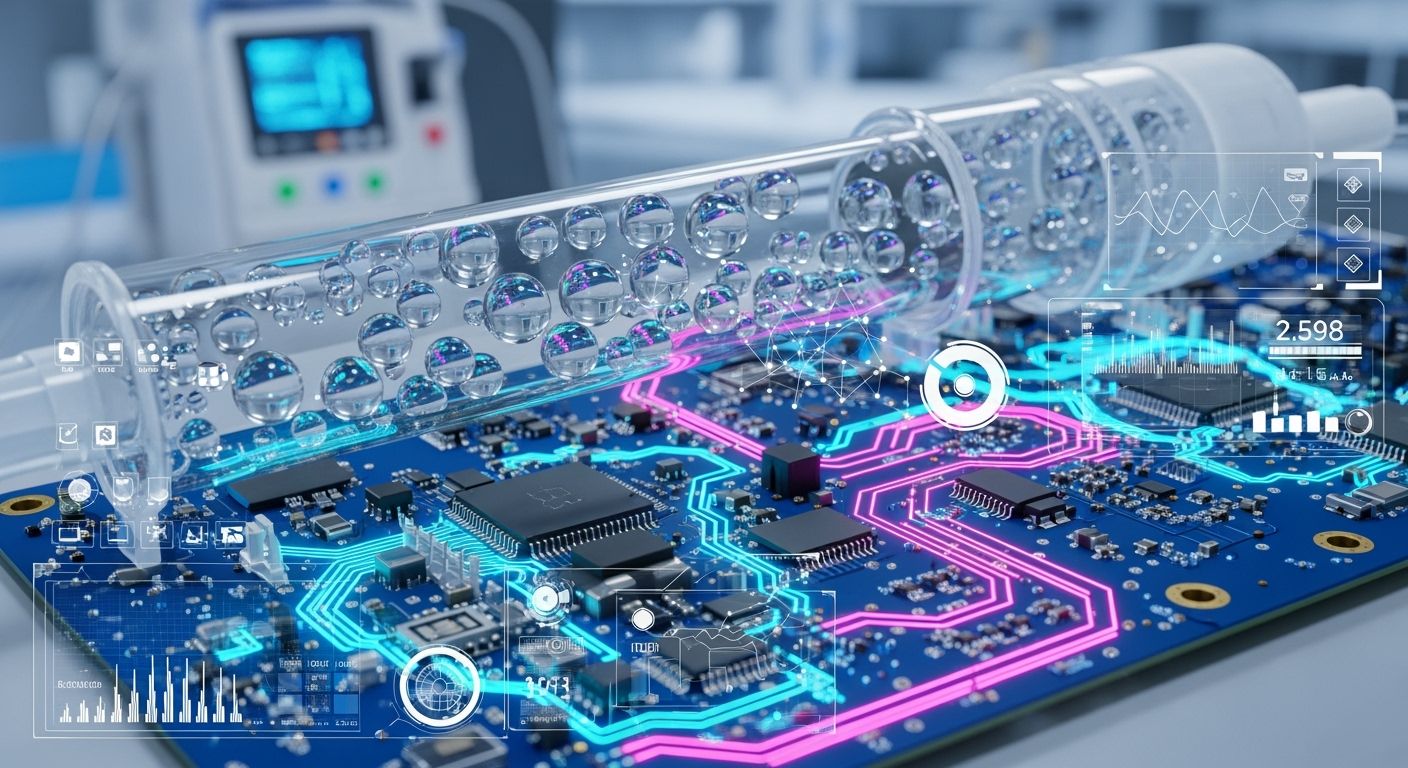
You depend on medical-grade printed circuit board assemblies to power modern drug delivery systems. These electronic parts control volumetric infusion pumps and syringe devices in important healthcare settings. High-density layouts allow close component spacing on tiny pcbs. Backup circuits guarantee operational safety during continuous medication delivery.
Precision motor drivers control each pump motor with great accuracy. Careful component selection protects patient safety during daily diabetes care. Smart engineering prevents failure in wearable medical devices. Small pcbs improve reliable fluid flow for mobile diabetes treatment. You can build a reliable infusion pump device for complex diabetes care by choosing strong hardware options.
Key Takeaways
Two small computers work as a team on the main circuit board to stop mistakes and prevent medication overdoses.
Exact motor controllers give small, correct liquid amounts to keep sick people safe and cared for.
Clever control of heat and energy keeps delicate medicine safe and helps wearable device batteries last longer.
Strict building rules and special protective layers keep circuit boards safe from liquid leaks and electrical interference.
Core Architecture for Infusion Pumps
The main circuit board acts as the electronic brain for volumetric and syringe pumps. This central board handles every important job inside modern drug delivery tools. You rely on these assemblies to run live checks, run motors, and calculate exact dosage plans. Smart, compact layouts help engineers fit two processing paths and special memory onto small boards. Light, bendable circuit boards and rigid-flex pcbs let you fit electronic parts around tight inner corners. These small pcbs remove heavy wires, lower electrical noise, and fit easily inside small wearable medical tools.
System Redundancy and Fail-Safe Logic
You keep patients safe by placing extra check channels on modern circuit boards. Standard designs run main and secondary microcontrollers at the same time. Main microcontrollers calculate drug delivery math, while secondary controllers check system health all day. Both processors compare their math every few milliseconds. If one processor finds a mistake, the hardware turns off power to the pump right away.
Separate hardware watchdogs track system clocks continuously and turn off power fast if main software programs freeze up.
You must add layered safety hardware to handle dangerous situations:
Two power switches prevent single-part electrical shorts from starting the pump motor by accident.
Special voltage sensors turn off system power during dangerous electrical drops.
Light-based signal isolators shield main control circuits from big voltage spikes.
These safety steps stop accidental overdoses during mobile diabetes care routines. Smart backup hardware protects daily health during continuous mobile care plans.
Precision Motor and Stepper Control
Modern medical tools use precise stepper motor drivers to deliver fluids correctly. Micro-stepping driver chips break full motor steps into hundreds of tiny movements. This careful physical control lets your infusion pump output tiny fluid doses at steady flow speeds.
Driver Parameter | Precision Value | Functional Advantage |
|---|---|---|
Micro-stepping resolution | 1/256 step increments | Prevents fluid pulse spikes |
Current regulation | Closed-loop feedback | Maintains constant torque output |
Position verification | Rotary encoder indexing | Guarantees exact volumetric output |
The motor control area uses custom pcbs with low ground resistance. Clean line routing keeps noisy motor signals away from delicate measuring sensors. Special power sensors track motor wire resistance while running. Shifts in power use show physical sticking, motor stalls, or high fluid pipe pressure.
You can build wearable electronics to improve long-term diabetes care for patients. Small wearable pcbs control motor steps smoothly and save battery power. Compact pcbs lower power use without losing mechanical delivery accuracy. This quiet motor operation improves comfort for people who follow daily diabetes care plans.
Good sensor feedback rules guarantee exact dosing during regular diabetes care. Accurate motor control protects people who rely on daily diabetes management products. You can refine fluid pump parts to meet tough FDA performance rules. Strong circuit design keeps modern infusion delivery tools accurate, safe, and reliable.
Power Management and Low-Power Design
Battery Management in Ambulatory Care
You need to pick effective motors and power control parts for portable health tools. Small DC motors run very well without wasting energy. However, basic stepper motors lose about 60 percent of their power. Poor energy use forces larger batteries that add unwanted weight. People who manage diabetes need long battery runtime throughout the day. Tiny circuit boards let you build small, light, and easy-to-wear devices for daily home or hospital use.
You have to follow strict safety rules when creating power systems for mobile medicine pumps. Multi-layered boards keep high-power lines away from delicate logic signals. Rules like IEC 62133 direct how to use rechargeable lithium batteries in health tools. Standard IEC 60086 Part 4 regulates single-use lithium cells, while UN 38.3 sets shipping standards. General electric rules like ANSI/AAMI ES 60601-1 also apply. Meeting these standard guidelines keeps medical tools safe while patients use them every day.
Thermal Regulation in High-Density PCBAs
Tight circuit boards build up inner heat within a closed, small device case. You must move this extra heat away from delicate parts to protect patients from drug delivery issues. Thick copper paths on firm boards draw heat off power chips and motor controllers. Keeping overall temperatures down stops fragile insulin from spoiling during ongoing patient care. Good heat management helps you provide steady daily treatments for people at home.
Smart design decisions improve temperature control and increase the lifespan of a portable medicine pump. Engineers put tiny heat holes beneath power chips to send extra heat out to ground layers. Keeping parts cool helps you construct a safer, more reliable pump system for steady medical care. Good heat control guarantees solid performance for important health electronics. Modern circuit boards support steady drug flow from the pump for people who manage their health daily.
Sensor Integration and Signal Integrity
Occlusion and Bubble Detection
Sound sensors clamp onto fluid tubes inside medical tools. Small parts send sound waves through the line. Liquid carries sound smoothly across this open channel. Air bubbles interrupt the sound strength. The detector sends a quick warning in under 0.5 milliseconds. High sensitivity catches tiny bubbles that fill only 25% of the tube diameter.
These sensor systems track small flow rates below 1 ml/min. Continuous self-tests prevent false warnings during daily home diabetes care. Live sensor data routes straight through dedicated pcbs. Clean circuit paths protect patient safety during non-stop fluid flow. These hardware choices make your portable diabetes tool very safe. Reliable pcbs improve modern diabetes care.
EMI Suppression in Clinical Environments
Hospital ICUs have tough settings filled with strong electrical noise. Critical medical tools need solid shielding from unexpected signal problems. You protect compact pcbs using a solid copper reference layer. This continuous copper layer keeps a steady ground voltage and offers a low-resistance path. Balanced signaling cancels shared noise across paired circuit lines. Receiver circuits measure only the voltage gap, which protects against ground shifts. Matching line lengths helps signals arrive together to keep noise out.
Special shield films protect bendable pcbs without making them stiff. Flexible conductive seals close outer case gaps to block interference. These grounded walls stop high-frequency noise from disturbing your pump motor. Quality pcbs maintain steady work across hospital ICUs and home rooms. Clean signal routing protects patient safety during daily insulin infusion care. Focused diabetes care needs steady hardware accuracy. Better safety controls improve automated diabetes care routines. You can build a precise infusion pump for personal diabetes care. Safe circuit designs protect patients during non-stop diabetes treatment with a reliable pump. Proper noise shielding helps every pump deliver exact medicine doses. Each pump depends on precise signal timing. Engineers set up each tool for quiet operation. Constant tracking helps patients who depend on daily diabetes care. Next-generation infusion pumps push modern medical care forward.
Manufacturing Standards for Infusion Pumps
Makers must obey strict assembly rules when building circuit boards for healthcare devices. Life-support equipment needs perfect hardware performance. Assembly crews run over twenty special steps to hit IPC-A-610 Class 3 goals for vital tools. Modern medical units require detailed testing after placing every part:
Four-terminal sensing tests measure micro-ohm values in small joints to stop lead reading errors.
Tough stress tests use temperature swings, moisture, shaking, and aging models to check strength.
Cleanliness tests like ROSE or ion chromatography check that leftover solder stays below low limits.
Automatic cameras spot misaligned parts fast. Advanced 3D X-ray systems inspect hidden solder joints under complex chips. Custom operational checks confirm total board actions before final mounting.
IPC-A-610 Class 3 and ISO 13485
Class 3 rules require tighter solder joint connections than standard factory products:
Parameter | IPC-A-610 Class 3 Requirement (for J-Lead) |
|---|---|
Side Overhang (2) | Maximum of 25% of the lead width. |
End Joint Width (3) | Minimum of 75% of the lead width. |
Solder Thickness (5) | Not specified (same as Class 2). |
Side Joint Length (6) | Same as Class 2 requirements. |
These policies reduce side overhang and end joint width margins by about 25% versus Class 2. Strict assembly limits stop hardware breakdowns while treating patients.
Full component tracking keeps patients safe during every production step. ISO 13485 codes demand clear records for every built board. Digital systems save delivery notes, solder paste lots, worker shifts, and test scores for each distinct serial tag. Special storage holds parts apart from different factory runs. Official change logs note all hardware edits, vendor updates, and process shifts. Clear recordkeeping helps device makers pass review checks quickly.
Conformal Coating and Bio-Fluid Resistance
Carefully added protective films guard delicate electronic parts from outside liquids. These specialized barriers shield inner pcbs against sudden drug spills and harsh cleaning fluids. Daily diabetes care needs strong physical defenses against sweat, water, and washing liquids. Portable diabetes gadgets often meet fluids during normal home use.
Material Type | Key Characteristics |
|---|---|
Disinfectant-Resistant Acrylic Coating | Resistant to hospital-grade disinfectants like isopropyl alcohol, quaternary ammonium compounds, and bleach. |
Silicone Conformal Coating | Flexible coating suitable for a wide temperature range in portable devices. |
Parylene-Alternative Urethane Coating | High chemical and moisture resistance against fluids. |
UV-Cure Medical-Grade Coating | Fast curing for high-volume production. |
Low-VOC Water-Based Coating | Environmentally compliant option for restricted facilities. |
SANCO dispensing platforms support coating chemistries specifically formulated for resistance to hospital-grade disinfectants including isopropyl alcohol, quaternary ammonium compounds and bleach-based solutions.
Choosing the right layer keeps personal diabetes treatment hardware safe for years. Wearable pcbs avoid moisture damage inside tiny cases. Modern pcbs keep delivering precise liquid volumes despite harsh contact inside every mobile unit. Dedicated pcbs run constantly without electrical shorts from fluid leaks. Tough pcbs ensure steady operation during non-stop drug delivery for daily diabetes plans.
Strong safety builds keep modern drug delivery units running right. You can create a reliable ambulatory infusion pump for specialized medical uses. An automated infusion pump sends precise drug doses to patients safely during ongoing therapy. Modern infusion pumps transform home healthcare routines for people with serious medical needs. Reliable pump units supply continuous insulin for everyday diabetes control. The micro-stepping pump motor pushes tiny fluid drops easily. This small pump system runs quietly inside every wearable tool. Smart engineering improves long-term wellness outcomes for modern diabetes care.
You protect patient safety when you build specialized pcbs for drug delivery electronics. Strict manufacturing prevents hardware defects in medical devices. High-density pcbs support non-stop care for people who manage diabetes. Every medication pump requires accurate circuitry for continuous dosage control.
You should partner early with certified manufacturing experts. Early teamwork simplifies regulatory approval and scales production smoothly. This collaboration helps you design a precise infusion pump for home diabetes management. Quality pcbs keep your device reliable in critical settings. Advanced hardware engineering drives the safety and efficiency of modern infusion pumps. These smart electronics improve automated insulin infusion during daily diabetes care.
FAQ
How do circuit boards support continuous diabetes care?
You depend on tight-spaced circuit boards containing dual controllers. One main chip measures medicine doses, while the second chip monitors equipment safety. These extra protective units prevent electrical failures. They guarantee safe drug delivery during everyday diabetes care routines.
What manufacturing standard governs medical circuit board assembly?
You must follow strict IPC-A-610 Class 3 rules for healthcare electronics. This guideline demands stronger solder connections and complete tracking of every part. Following ISO 13485 rules also requires production teams to record full assembly steps for all product boards.
How do protective coatings shield wearable drug delivery devices?
Specialized protective films guard internal pieces against water, sweat, and strong medical cleaners. These helpful barriers stop electrical shorts during normal usage. Shielding inner parts lengthens product life and maintains steady liquid delivery.
See Also
Essential PCBA Manufacturing Standards Needed For Advanced Medical Devices
A Beginner's Guide To PCBA And Its Core Components
Understanding PCBA And Its Role In Modern Electronics Manufacturing
How To Procure Electronic Components For Efficient PCBA Manufacturing
Top Essential Raw Materials Required For Successful PCBA Production
