What Are HVAC Control PCBA Components? A Complete Guide for Engineers
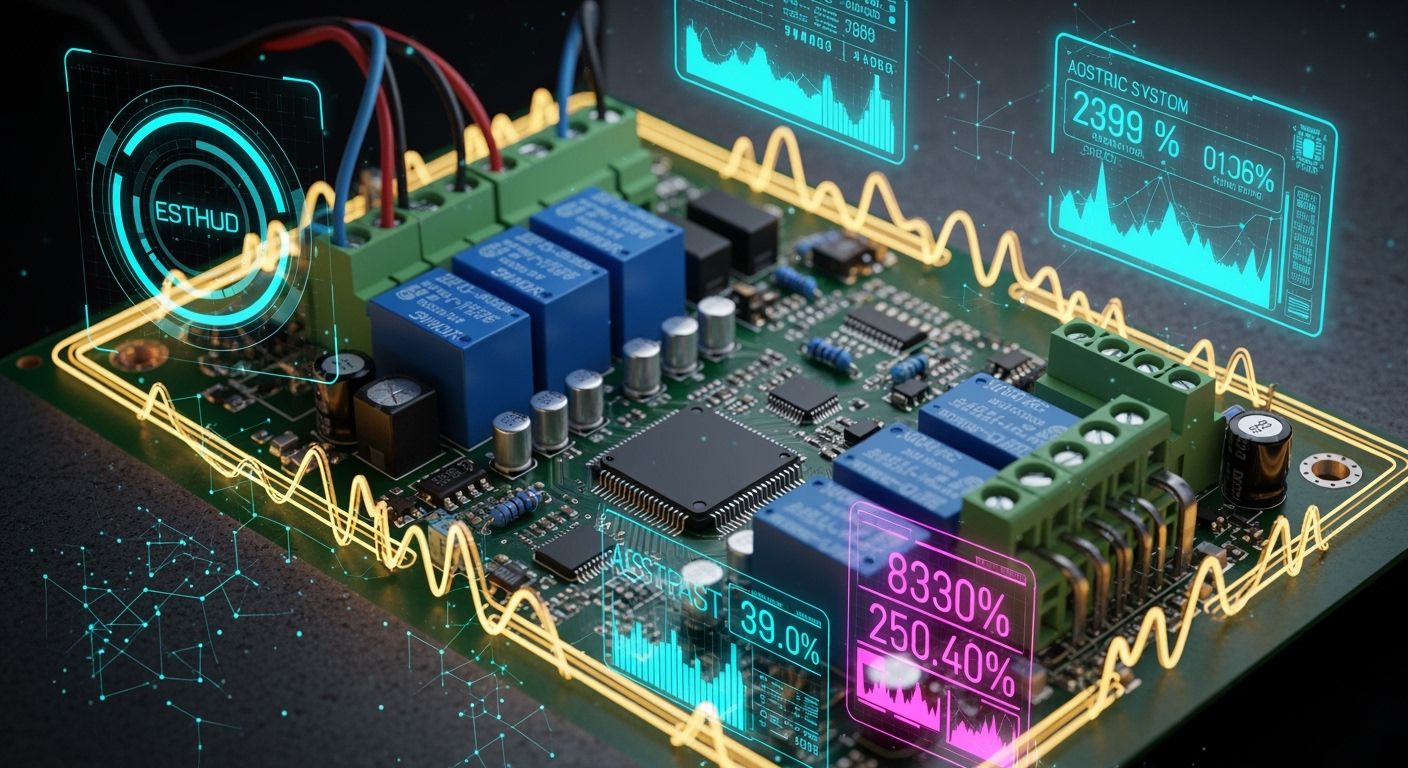
An HVAC PCBA works as the main brain for controlling indoor temperatures. You need to know how plain circuit boards differ from fully built ones during manufacturing. An empty board only offers basic paths for electrical signals. However, a finished board connects active and passive parts together to carry out smart instructions.
This built circuit board acts as the primary computer inside an HVAC control box. The system safely links low-voltage computer signals to high-voltage power lines. Main working sections handle computer processing, energy management, temperature sensing, switch control, and communication connections. You choose important parts to manage internal power safely. These HVAC system components need good design to protect every small part inside commercial HVAC control systems.
Key Takeaways
HVAC control boards read information from sensors and safely operate parts that use a lot of electricity.
Engineers use both surface-mount and through-hole techniques to create long-lasting circuit boards.
Protective coatings shield sensitive electronics from heat, moisture, dust, and continuous mechanical vibration.
Standard field bus protocols let control boards talk to each other across big commercial building networks.
Automated testing checks circuit paths and how well parts work before final hardware setup.
Essential Components for HVAC Control Systems
Processing and Power Modules
You build a functional processing unit by populating bare pcb boards with active components and passive components. You place active parts like microcontrollers and voltage regulators onto the circuit board surface. You also place passive components such as capacitors and resistors. These electronic components manage internal power distribution and deliver reliable processing power. Every single part plays a vital role in keeping your circuit assembly operating safely under continuous environmental loads.
The microcontroller operates as the primary controller for your unit. You choose specific chips based on required clock speed and memory capacity to maintain operational efficiency across all active thermal zones.
Component | Typical Application Context | Clock Speed Range | Flash Memory Range | RAM Range |
|---|---|---|---|---|
General MCU for Basic HVAC Processing | Hotel room climate system | 8 MHz - 48 MHz | 16 KB - 64 KB | Up to a few KB |
General MCU for Advanced HVAC Features | Adding voice processing or complex algorithms | Up to 100 MHz or more | 128 KB or more | Not specified |
ARM Cortex-M3/M4 | High performance, power-efficient HVAC processing | 48 MHz - 100 MHz | Not specified | Not specified |
PIC Microcontroller | Lower-cost or less demanding HVAC processing tasks | 4 MHz - 20 MHz | Not specified | Not specified |
You rely on this processing power to handle real-time control operations. High performance microcontrollers process inputs quickly to maintain optimal operational stability. Power management modules convert main supply voltages down to stable direct current levels. Linear regulators and switching converters supply clean electrical energy to sensitive digital components. Proper filtering capacitors remove unwanted power ripple on the pcb trace lines. You add protective diodes to safeguard sensitive integrated circuits against damaging reverse voltage spikes during initial surface mount assembly steps.
Sensor Interfaces and Circuits
Sensors deliver essential operational data for temperature regulation in heating and cooling environments. You must condition raw signals from temperature, humidity, and pressure sensors before feeding signals into microcontroller analog-to-digital converters. Raw sensor outputs often contain electrical noise or inaccurate voltage levels. You place specialized conditioning circuits near sensor connection terminals to protect signal integrity across the pcb layout.
For temperature sensing with NTC thermistors, you implement specific circuit designs:
Potential divider circuits convert resistance changes into predictable voltage variations.
Ratiometric measurement configurations eliminate errors from voltage supply shifts.
Operational amplifier buffers stabilize output voltage without loading sensor networks.
You should avoid analog linearization circuits because extra analog components add tolerance errors. Instead, you perform linearization in software to maximize measurement accuracy. You also minimize the total number of analog conditioning stages. Keeping the analog path simple reduces overall pcb design complexity while preserving original signal quality.
Sensors continuously measure environmental conditions to enable accurate real-time feedback loops. You connect conditioned analog signals directly to analog-to-digital converter pins on your controller chip. Selecting quality components prevents signal attenuation during heavy pcb assembly production. Every single part on the pcb assembly must work together flawlessly.
By selecting robust hvac system components, you protect sensitive electronic traces from thermal stress and severe mechanical vibration. Quality surface mount components and through-hole components completes the final hardware assembly. Good pcb design ensures stable operation across complex heating and cooling networks.
Actuation and Communication Modules in HVAC
High-Voltage Switching Devices
You must connect low-voltage digital signals safely to heavy power switching components on your circuit board. Power relays and solid-state drivers trigger heavy electromechanical loads like compressor motors, fan blowers, and electric heating coils. Your pcb must isolate delicate processing lines from high-voltage electrical transients. You place high-speed optocoupler components and galvanic isolation barriers between digital logic circuits and high-power switches. This physical separation effectively prevents dangerous voltage spikes from damaging the main controller during continuous daily operations.
Relays serve as the bridge between low-power control signals and high-power electrical loads. Relays are typically either panel-mounted contactors for large loads such as compressors... One of the greatest challenges relays face in HVAC is high inrush currents. Motors, particularly compressors, condenser fan motors, and indoor blower motors, can draw upwards of five to eight times their rated full-load current the instant they start... In fixed-speed compressor systems, this inrush current occurs at every start, making durability under these conditions a primary design requirement.
You design high-current pcb trace lines with heavy copper thickness. Thick copper traces dissipate operational heat efficiently and prevent board damage during severe motor inrush events. You place protective snubber circuits across physical relay contacts. These snubbers absorb sudden voltage spikes during rapid switching operations. Selecting durable switching components extends the overall service lifespan of the complete power system assembly.
Industrial Transceivers and Protocols
Your industrial hvac controller requires reliable external field bus hardware to exchange operational data across entire commercial buildings. You install robust transceiver components to convert internal digital logic into differential wire signals. Noise-immune communication circuits ensure reliable real-time control across long physical cable runs. You secure the pcb assembly inside the hvac control panel enclosure to shield signal lines against external electrical interference.
Modern building installations rely on specific field bus protocols for hardware connectivity:
BACnet MSTP: Described as having an immediate impact and coming to dominate the controls industry, serving as a standard protocol for Building Automation networks.
LON Bus: Developed for open, interoperable communications and noted as being most widely adopted in building management networks.
Modbus: Highlighted as a common communication protocol in the HVAC marketplace, popular due to being open, free, and relatively easy to deploy.
Johnson Controls N2 OPEN Bus: Cited for having the greatest product depth among current HVAC field buses, though its adoption is limited by being owned by a single company.
You integrate transceiver components like industrial RS-485 driver chips onto the pcb during automated surface mount assembly. These physical transceiver components handle differential signaling across the board layout for superior noise rejection in noisy commercial environments. You place transient voltage suppressor diodes directly near the external terminal wiring block. These protective suppression components shunt harmful electrostatic discharges safely away from core logic pathways down to chassis ground.
Your real-time monitoring routines depend on robust physical layers to execute commands without data corruption. Every modern hvac control panel needs stable digital communication paths to coordinate multi-zone climate equipment. Selecting rugged interface components guarantees continuous network uptime across complex commercial automation system infrastructure. Proper hardware assembly keeps every connected field node operating reliably year after year in demanding building applications.
Design Considerations for Harsh Environments
Electrical Noise and EMI Isolation
You must protect your pcb layout from harsh electrical noise in factories. Big motors and relays make strong electromagnetic fields inside the box. You place ferrite beads near sensitive logic components to soak up voltage spikes. Ground planes give low-resistance paths to keep noisy power areas away from delicate parts. Spacing out circuit lines stops cross-talk on crowded boards. These physical spaces keep the system working well when large motors turn on.
You align your board design with the IEC 60721 standard to group tough environmental stresses. This framework sets clear limits for electrical noise, moisture, and dirt levels. Correct pcb trace routing protects active components from sudden voltage jumps. You also keep ground lines separate between low-voltage logic paths and high-voltage motor drivers. Shielded pcb trace routing gives the best performance in noisy places.
Thermal Protection and Ruggedization
Control boards face big temperature changes, shaking, dust, and constant moisture. You apply protective liquid coatings onto the populated pcb to shield active components from damage. Standard damp-heat cycling tests like IEC 60068-2-30 test how well coatings block out wetness.
Coating Material | Key Strengths for Moisture & Dust Protection | Relevant Characteristics for HVAC Environment |
|---|---|---|
Acrylic | Good humidity resistance; high fluorescence. | Fast drying; protects against condensation and dust. |
Silicone | Fair moisture/abrasion resistance; wide thermal range. | Excellent for thermal cycling in hvac units. |
Urethane | Good moisture and abrasion resistance. | Withstands chemical vapors in harsh environments. |
Epoxy | High chemical and abrasion resistance; dielectric. | Offers higher protection for rigid enclosures. |
Parylene | Uniform coverage; low outgassing. | Ideal barrier against continuous condensation. |
Picking the right material makes the product last longer in real use. You place heat sinks near power parts to pull heat away from pcb traces. Strong fasteners hold heavy components tight against shaking when motors start up. These smart protective steps make sure the system works for a long time.
PCB Assembly in Practical HVAC Applications
Thermostats and Zone Controllers
You build modern pcb assembly boards for home thermostats to manage local room climate needs. A smart controller reads local room data while sending live system updates back to a main controller. You place sensors far from power parts on the primary pcb layout. This location keeps temperature readings accurate for your system software. Your zone controller saves data to track system work across several building areas.
You need to plan RF layouts during pcb assembly design to keep strong wireless connections.
Key Consideration | Supporting Evidence & Guidance |
|---|---|
Antenna Selection | Choose between small chip antennas or custom trace antennas printed on the board. |
Antenna Placement | Keep antennas away from noisy power switches to stop unwanted electrical noise. |
Impedance Matching | Use a pi-network to match the antenna, aiming for a strong return loss. |
Enclosure Impact | Plastic cases let signals pass, but metal cases drop signal range by up to 30%. |
Variable-Speed Blower Drivers
Variable-speed fan drives need strong circuit board parts inside the main hvac control panel. You mount the main power board next to the motor using power diodes and filter capacitors. At the same time, you place the DSP board near the outer case to run speed control programs. This layout keeps noisy power switches away from sensitive computer lines. Good motor design raises overall energy efficiency in big commercial buildings.
The fan driver pcb assembly gets quick commands straight from the main hvac control panel. An Intelligent Power Module or six power MOSFETs create smooth three-phase power signals for safe operation. You design thick copper trace lines on the power board to control heat safely. The second board records system data to help schedule regular maintenance checks. Smart driver design choices prevent sudden tool breakdowns in busy work places. Linking these fan drives to a central hvac control panel gives you complete building control. You use these smart hvac control systems to keep indoor air moving well every day.
PCB Assembly Manufacturing and Quality Testing
SMT and THT Assembly Methods
You make modern control boards using precise circuit board building steps. Fast machines place tiny digital chips right onto the board surface. First, placement tools put down small surface-mount parts. Next, hot ovens melt solder paste to lock each connection. You rely on hvac pcb smt assembly to fit complex chips into tight spaces. This automated process speeds up work for dense hvac pcb smt assembly projects.
SMT Assembly Process
Solder Paste Printing → Pick-and-Place → Reflow Soldering
Large wire connectors and heavy power switches need a different setup. You use hvac pcb through-hole steps to attach these big parts. Workers push metal pins through drilled holes before soldering them.
Strong Mechanical Bond: Connectors hold tight against shaking and pushing so they do not fall off.
Better Heat Tolerance: Thicker metal pins carry away excess heat easily during high-power tasks.
Reliability Under Stress: Sturdy connections withstand harsh shocks, rapid heat shifts, and wet conditions.
You join surface-mount methods with hvac pcb through-hole steps to build tough drivers. This hybrid process creates strong power paths for harsh building setups.
AOI, ICT, and FCT Testing Standards
You must run careful safety checks when making these control boards. Automatic optical cameras inspect solder points right after heating steps. Modern camera systems spot missing parts, short circuits, and crooked pins.
Inspection System | Defect Detection Rate | Context |
|---|---|---|
Legacy AOI (Rule-Based) | 78–85% | On complex assemblies, within general PCB manufacturing. |
AI Vision Camera | 97–99.4% | Across all joint types, within general PCB manufacturing. |
Circuit testing checks that power flows correctly along every board path. Custom test beds push small pins onto special board contacts. This test checks every tiny part and verifies basic chip logic. You fix short circuits before connecting main electrical power.
Final functional testing gives you a complete hardware safety check. You turn on real power to mimic actual building conditions. Testing tools feed signals into sensor ports and switch physical relays. This full system test verifies board design and keeps devices working long-term. Careful quality checks ensure these tough commercial systems run smoothly for years.
You get top performance by placing tiny computers, power units, protective barriers, and switches on one board. You mount digital parts on the surface during hvac pcb smt assembly. You lock down heavy relays using hvac pcb through-hole techniques. Combining these two methods into one finished pcb assembly makes the board very strong against heavy shakes.
Strict quality checks test every pcb assembly. AOI, ICT, and FCT test steps check all board circuits to ensure they work for years. This accurate pcb assembly process keeps the whole system running well. Successful engineering depends on mixing good circuit planning, strong outer protection, and DFM rules for every hvac control systems project.
FAQ
What is the main role of an HVAC control board?
An HVAC control board acts as the main brain for your system. It reads sensor signals and safely controls power switches. This main circuit board links low-voltage digital signals to big electrical power parts in your hvac control panel.
Why do engineers use surface-mount technology for these boards?
You use hvac pcb smt assembly to fit small microcontrollers and digital chips on tight boards. Fast machines place tiny parts quickly. This hvac pcb smt assembly method packs parts closely and speeds up large factory jobs for modern hvac control systems.
Why are through-hole components still necessary on HVAC boards?
You use hvac pcb through-hole methods to connect heavy relays and big wire connectors. These metal pins create strong physical bonds. The hvac pcb through-hole steps help parts handle hard mechanical shakes and high power currents in the hvac control panel.
See Also
Understanding Printed Circuit Board Assemblies And Their Essential Components
The Complete Beginner And Expert Guide To PCBA Manufacturing
Exploring The True Meaning Of PCBA In Modern Electronics
How To Design Reliable Circuit Boards For Industrial Controllers
Sourcing Essential Electronic Components For Successful Circuit Board Assembly
