How flying probe testing streamlines low-volume PCBA
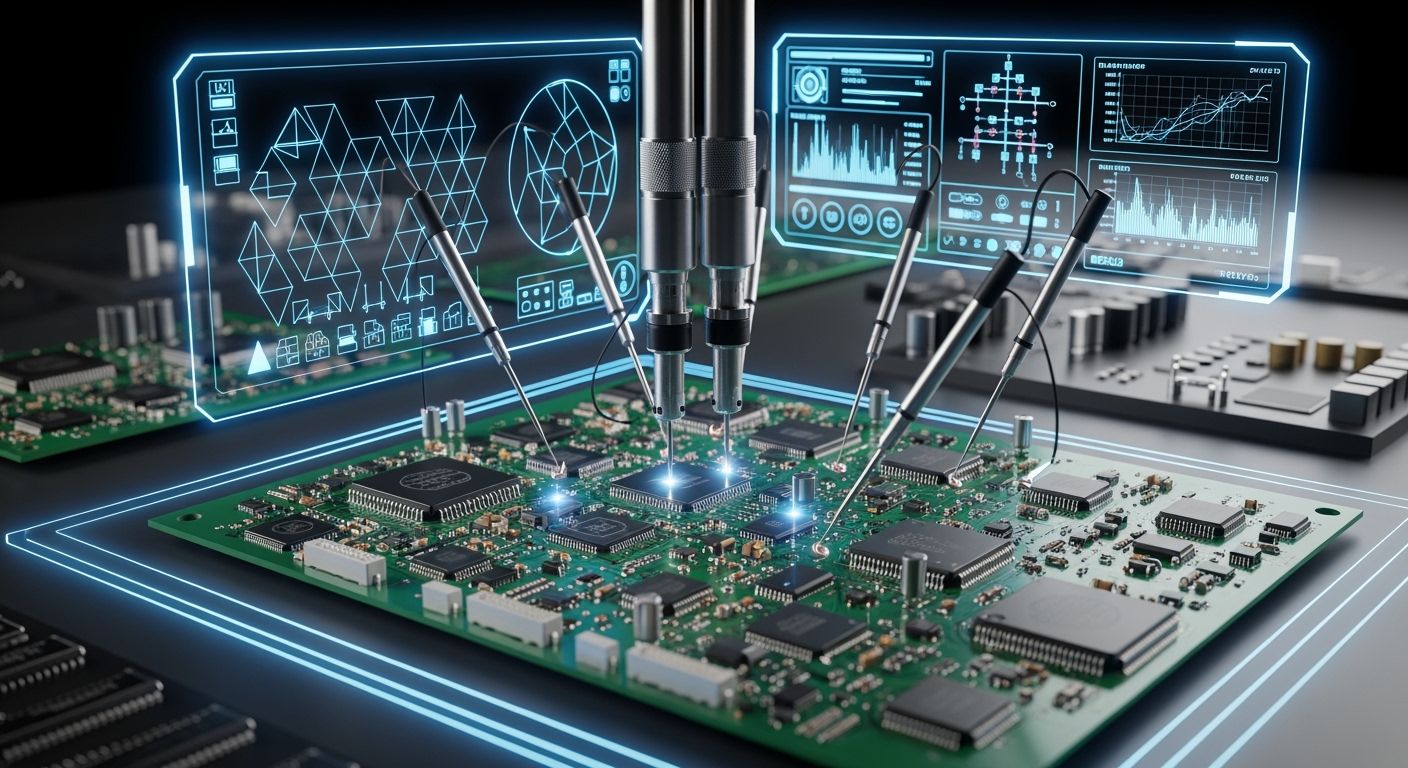
You can make things work better, spend less money, and get more reliable low-volume pcb assembly with flying probe testing. This method is good for prototypes, early production, and small batch runs because it does not need pricey fixtures. You can really save money with this way:
8-probe systems almost double how fast you work compared to 4-probe systems.
Testing both sides at once makes the wait time shorter.
The test machine picks the fastest way to use the probes, so testing takes less time.
Method | Cost Implications |
|---|---|
Flying Probe Testing | No fixture costs; lower upfront investment |
In-Circuit Testing (ICT) | Fixture costs range from $4,000 to $20,000 |
You also get better pcb quality because you can find problems early.
Key Takeaways
Flying probe testing does not need costly fixtures, so you save money and time when making a small number of PCBs.
This method lets you set up and test quickly, so it works well for prototypes and small batches.
Flying probe testing finds faults very well, so your PCB products are better quality.
You can change the testing process easily for new designs, which helps with fast prototyping and many design changes.
You can test both sides of the PCB at once, so you wait less and work faster.
Flying probe testing overview
How flying probe testing works
Flying probe testing checks pcb assemblies without needing expensive fixtures. It uses probes that move and touch different spots on the board. The steps are simple:
Put your pcb in the test area and start the software.
The probes move and touch test points on the board.
The machine looks for electrical problems like shorts or bad connections.
It gathers information and checks for issues.
You get a report showing any defects or problems.
Take out the pcb and fix anything if needed.
Flying probe testing is special because you do not need custom fixtures. You can test new designs or small batches fast. This saves time and money, especially for prototypes or advanced flying probe test systems.
Flying probe testing does not use fixtures like ICT. It works well for low- to mid-volume and prototype pcb assemblies. ICT needs a custom fixture that takes time and costs a lot. This makes ICT less useful for small batch or prototype builds.
Key features of a flying probe test machine
A flying probe test machine has features that make it great for low-volume pcb testing. It is easy to set up and change. You can test boards with lots of parts easily. Here is a quick comparison:
Feature | Flying Probe Testing | ICT Testing |
|---|---|---|
Optical Inspection | Some optical inspection is possible | Usually no optical inspection |
Functional Testing | Basic functional testing is possible | Only some analogue and digital tests |
Test Coverage | High coverage if test points are designed | Coverage depends on fixture design |
Test Time | Usually takes 30 seconds or less per board | Time changes based on how complex it is |
Movable probes touch test points on your pcb. This finds problems like open circuits, shorts, or wrong values. You can change test programs quickly if your design changes. Advanced flying probe test systems let you test boards with lots of parts and tight spaces.
Applications of flying probe testing in low-volume PCBA
Prototyping and early production
When you make new pcb designs, you need fast testing. Flying probe testing lets you check your prototype pcb assembly quickly. You do not have to wait for custom fixtures. You can use this method for many jobs, like:
Prototype pcb assembly
Engineering validation builds
Small or medium-volume production
Designs with lots of parts or few test pads
Products needing electrical checks early
You can change your design often during prototype and engineering builds. Flying probe testing lets you update your test program fast. You do not need to buy or wait for a fixture each time you change your pcb. This saves you time and money.
Engineers pick flying probe testing for prototype validation for these reasons:
Low setup cost: You do not need custom fixtures, so you spend less on each new design.
Rapid prototyping support: You can test and adjust prototypes quickly, which helps you finish projects faster.
Flexibility: You can adapt the test to different pcb layouts and handle frequent design changes.
Flying probe testing helps you find problems early. You can spot shorts, opens, or wrong parts before you build more boards. This makes prototype validation easier and helps you avoid bigger problems later.
Flying Probe Testing (FPT) is used for checking assembled boards, especially during prototype, NPI, and low-to-medium volume production. Unlike In-Circuit Test (ICT) systems that need special fixtures, Flying Probe testers use movable probes controlled by motors and cameras to touch test points right on the PCB. This way, you do not pay for tooling or wait for setup, so it works well for high-mix, low-volume manufacturing.
Small batch and specialized runs
Sometimes you need to build a small number of boards for a special project or a customer order. Flying probe testing works well for these low-volume runs and small builds. You do not need to spend money on expensive fixtures, so your costs stay low.
Here is a table that shows why flying probe testing is a smart choice for small batch and specialized runs:
Benefit | Description |
|---|---|
Ideal for prototypes | No need for expensive test fixtures, allowing for quick setup and testing. |
Cost-effective for small runs | Reduces upfront costs compared to traditional testing methods. |
High accuracy | Effectively detects opens, shorts, and component issues. |
Flexible for complex designs | Easily reprogrammed for designs that are frequently updated. |
You can use flying probe testing for products that change often or have complex layouts. You can reprogram the test machine for each new pcb design. This flexibility helps you keep up with customer needs and new ideas.
Many companies use flying probe testing for prototype validation, small builds, and special projects. You can test boards with many parts or tight spaces. You can also finish your projects faster because you do not wait for fixture production.
You can see the main advantages of flying probe testing for low-volume prototypes and small batch production:
No need for customized fixtures, so you save money and time.
Significant cost-effectiveness for small batch production.
Low initial investment, which is great for research and development.
Low maintenance cost, since you can replace probe parts easily.
You can also benefit from quick setup times. You can often start testing within hours, not days. This speed helps you bring new products to market faster.
Flying probe testing gives you flexible, cost-effective testing in low-to-medium volume production. You can change your design and keep your quality high.
Making pcb quality better with flying probe testing
Finding faults and checking electrical connections
Flying probe testing helps you find problems early. Robotic probes check each connection and part for accuracy. You can spot shorts, open circuits, and wrong parts fast. Early detection stops expensive fixes and helps you make more good boards.
Flying probe testing finds:
Shorts between traces
Open circuits
Missing or misaligned parts
Reversed polarity on diodes or capacitors
Wrong passive values
You get detailed checks that protect against hidden failures. This matters for important products where every connection must work. Flying probe testing checks electrical performance before boards leave the factory. You can trust this method for high accuracy and quality.
Reports from testers show which parts and nets were checked. You can use these reports to track how many defects escape and find gaps in your testing.
Manufacturers check how well testing works by looking at coverage. More coverage means fewer missed defects and better pcb quality. You can use flying probe testing data to trace process changes and improve your steps.
Measuring parts and making boards reliable
Flying probe testing measures part values with high accuracy. It checks resistance, capacitance, and diode polarity to make sure parts meet design needs. You can check connections and signal strength, which supports functional testing.
Testing Method | Accuracy | Speed | Flexibility | Best Use Case |
|---|---|---|---|---|
Flying Probe Testing | High | Slower | High | Prototypes and small batches |
In-Circuit Testing | Medium | Faster | Low | High-volume production |
Flying probe testing is great for products with many versions. You can reprogram the tester for different pcb designs. This flexibility helps with validation and quality control in small batch runs.
Flying probe testing improves pcb yield by giving detailed electrical data for review.
You can match your process with IPC standards, which makes delivery more reliable.
Early defect detection lowers rework costs and protects against later failures.
You can trust flying probe testing to keep pcb quality and reliability high. This method gives you accurate checks and functional testing. It is a smart choice for prototypes and special builds.
Flying probe testing vs. other testing methods
Cost and setup time comparison
You want to spend less money and test your pcb assembly fast. Flying probe testing helps you do both for prototypes and small jobs. You do not need to buy expensive fixtures. This saves money right away. In-circuit testing (ICT) machines need fixtures that cost about $15,000. Flying probe testing avoids this cost. You also save time because you do not wait for fixture production.
Flying probe testing costs less for low-to-medium production.
ICT needs custom fixtures, so setup costs are higher.
You do not pay for fixtures with flying probe testing, so small runs cost less.
You get faster turnaround and can change your pcb design easily.
Flying probe testing lets you test your pcb assembly faster and cheaper. This makes it a smart choice for early production and prototypes.
Suitability for different production volumes
You need to pick the best testing method for your pcb assembly size. Flying probe testing works well for low-volume and small/medium-volume production. You can test many pcb designs without long setup times. This method is great for high-mix, low-volume jobs. You do not need to wait for fixtures, so you can test new designs quickly.
If you make fewer than a few thousand boards each year, flying probe testing gives you the best value. You save money because you do not have to spread fixture costs over many boards. You also get flexibility to handle frequent design changes. For high-volume production, fixture-based testing works better because it tests boards faster.
Limitations and considerations
You should know the limits of flying probe testing before you choose it for your pcb assembly. The probes move physically, so testing takes longer than fixture-based methods. Some pins, like those under BGAs, cannot be reached by the probes. The design for testability matters a lot. If your pcb does not have enough test points, flying probe testing may miss some problems.
Limitation | Description |
|---|---|
Test Speed | Probes move physically, so testing takes more time. |
Accessibility to Pins | Some pins, like BGA and PoP pins, are hard or impossible to reach. |
Reliance on DFT | Good results depend on how well you design your pcb for testing. |
You should also think about your production needs. Flying probe testing fits low-volume runs, frequent design changes, and fast turnarounds. Fixture testing works better for high-volume, stable designs, and when you need high throughput.
Consideration | Flying Probe Testing | Fixture Testing |
|---|---|---|
Volume | Low volume | Medium or high volume |
Design Changes | Easy to manage | Best for stable designs |
Turnaround Time | Fast | High throughput |
Fixture Cost | Not needed for low volume | Needed for medium/high volume |
Design Suitability | Flexible for dense designs | Needs enough test pads |
You can pick the best testing method by looking at your pcb assembly size, design changes, and quality needs.
You get lots of benefits with flying probe testing for low-volume pcb projects. The table below explains why this method is special:
Advantage | Description |
|---|---|
Fixtureless Design | You do not need custom fixtures, so you save money and time. |
Flexibility | It works with any design and lets you make quick changes. |
High Accuracy | It finds small problems, so your boards are better quality. |
Ideal for Prototypes | It is great for small runs and early builds. |
Access to Dense Boards | It can reach tight spots on complex boards. |
You can set up tests quickly and change programs without trouble.
You do not pay high costs and you get good results for each board.
Think about using flying probe testing for your next project. Start by getting ODB++ or IPC-2581 files ready and enjoy fast, fixtureless testing.
FAQ
What is flying probe testing best for?
You should use flying probe testing for prototypes, early production, and small batch PCB assemblies. It works well when you need fast setup and flexible testing. You do not need to buy custom fixtures.
How accurate is flying probe testing?
Flying probe testing gives you high accuracy. The probes check each connection and part directly. You can find shorts, opens, and wrong parts before you ship your boards.
Can flying probe testing check both sides of a PCB?
Yes, you can test both sides of your PCB. Many flying probe machines have probes on the top and bottom. This helps you find problems on both sides in one test run.
How fast can I start testing with flying probe?
You can start testing within hours. You do not need to wait for fixture production. Just load your test files and set up your board. The machine handles the rest.
What files do I need for flying probe testing?
Tip: You should prepare ODB++ or IPC-2581 files for the best results. These files give the machine all the data it needs to test your PCB correctly.
See Also
Techniques for Effective Double-Sided Reflow Soldering in PCBA
Essential Strategies for Optimizing SMT Lines in PCBA
Improving Quality Control in PCBA with X-Ray Inspection
Five Cutting-Edge Testing Techniques for Through Hole PCB Assembly
Steps to Monitor Real-Time Temperature Curves in Reflow Soldering
