Box Build Assembly Services Explained
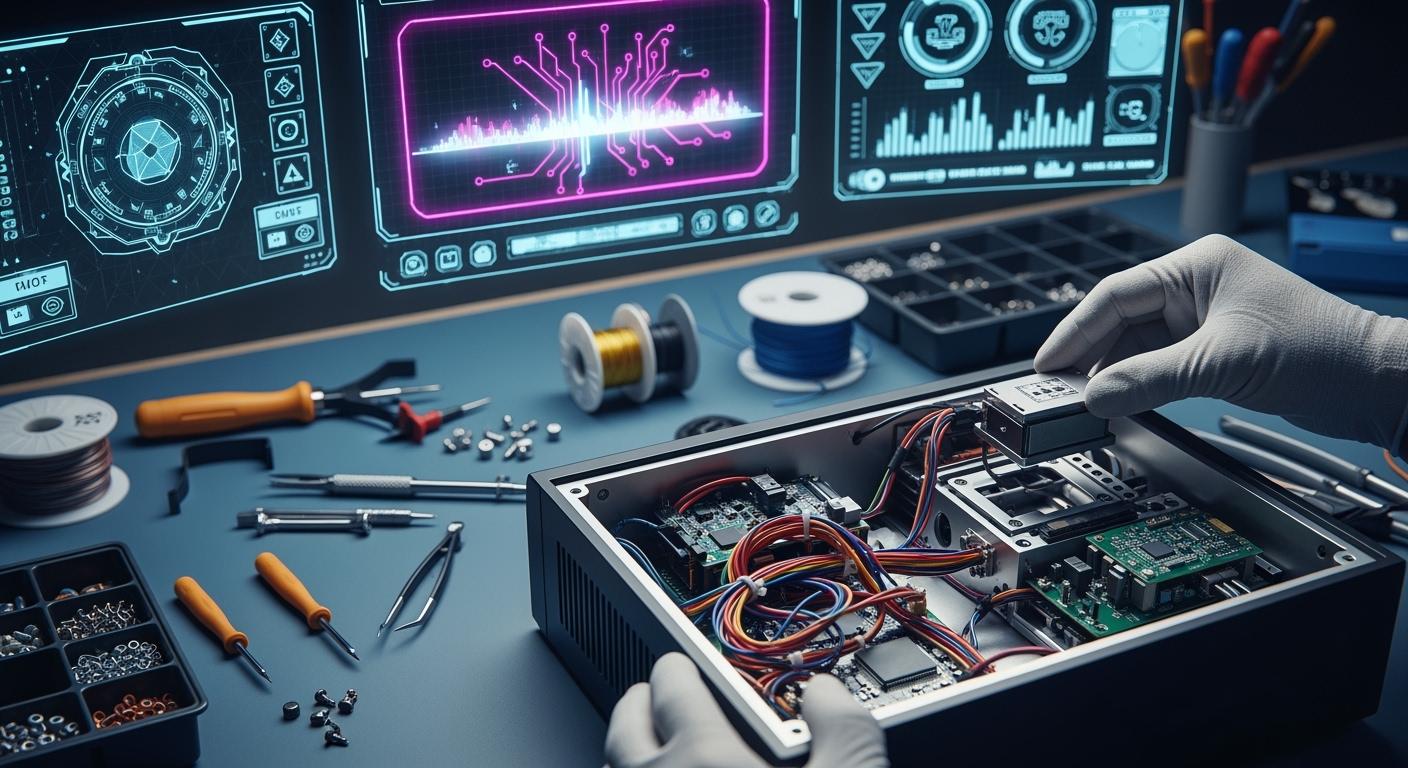
Box build assembly is putting together whole electronic systems in boxes. This process is called systems integration and electro-mechanical assembly. Box build assembly services connect wiring, printed circuit boards, and mechanical parts to make finished products. Many industries use these services, like:
Consumer Electronics
Industrial Equipment
Telecom and Networking
Medical Devices
Automotive Industry
Self-Service Terminals and Vending Machines
Defense and Aerospace
It helps to know how assembly works, even if you are not technical. New trends like automation, smart manufacturing, and advanced testing now change how companies do box build assembly.
Key Takeaways
Box build assembly puts different electronic parts together to make a finished product. This makes production faster and helps stop mistakes.
Knowing how the assembly works helps companies save time. It also helps them get better products by using one supplier for all parts.
Good supply chain management is very important. It stops delays and makes sure parts arrive on time. This keeps projects moving forward.
Quality checks and testing at each step make sure the final product is safe and works well.
Picking a skilled provider with strong quality checks can give better products. It also means fewer errors during assembly.
What Is Box Build Assembly?
Definition And Scope
Box build assembly is putting many parts together to make a finished electronic product. In electronics manufacturing, box build assembly means adding electronic, mechanical, and wiring parts into a device or sub-system. This process is also called systems integration or electromechanical assembly. You can use this service for projects that need component sourcing, PCB assembly, and final box build assembly. If you work with one supplier for all these steps, you save time and check quality better. Box build assembly covers many steps, so it is a good solution for complex products.
Box build assembly lets you combine different assembly types in one place. This makes production easier and helps stop mistakes.
Typical Applications
Box build assembly is used in many industries. Medical devices must meet strict rules and high standards. Industrial automation devices help control machines and often need small batches with many types. Box build assembly is also used in computerized control for factories, medicine, aerospace, utilities, and telecommunications. This service includes mechanical assembly, PCB installation, cable assembly, and testing. These steps help you finish product integration in different fields.
Medical devices
Industrial automation
Aerospace
Utilities
Telecommunications
Key Components
Box build assembly uses many important parts. You often see printed circuit boards, cables, wiring harnesses, and electromechanical parts. Enclosures or cases keep the inside parts safe. Sub-assemblies help make the process easier. Power supply units, mechanical parts, software, cooling systems, connectors, sensors, and other devices are also needed. All these parts help build a strong and working product.
Component | Role in Assembly |
|---|---|
Printed Circuit Boards | Main electronic control |
Cables & Wiring Harnesses | Connect internal parts |
Enclosures/Cases | Protect and house components |
Power Supply Units | Provide energy |
Cooling Systems | Manage heat |
Sensors | Gather data |
Common Box Build Assembly Services
Integration And Wiring
Integration and wiring are the first steps in box build assembly. You put in printed circuit boards and connect cables. You also add switches or displays for users. Neat wiring and cable harnesses keep connections safe. Connectors and power supplies are added next. Point-to-point wiring helps all parts work together. You check if everything is connected right. You also test if the system works.
Integration and wiring help you make a system that works well.
Enclosure And Mechanical Assembly
You start by cleaning and checking the enclosure. All parts are put inside and held in place. Mechanical assembly connects circuit boards to the enclosure. You line up everything and make sure it is tight. Labels and mounting are checked before the last inspection.
First, you do compliance testing.
Pick a contract manufacturer for custom designs.
Put the PCB and hardware into the enclosure.
Get documents ready, like drawings and BOMs.
Check everything before the final system test.
Firmware And Software Loading
You load firmware and software to make the product work. Technicians use instructions to program firmware and set up devices. They also check settings and software versions. Inspections and tests make sure software and hardware work together.
Firmware programming
Calibration steps
Device setup
Version checks
Supply Chain And Sourcing
You handle supply chain and sourcing to keep things moving. You get both regular and special parts. Sometimes there are problems like shortages or delays. Using many sources and good inventory helps stop slowdowns.
Challenge | Description |
|---|---|
You get parts and keep enough in stock to avoid waiting. | |
Supply Chain Risks | You make sure you have supplies and fix shortages fast. |
Product Specifications | You keep needs clear to finish on time and not spend too much. |
Design Complexity | You plan size, function, and cost carefully. |
Tolerancing Issues | You measure well so parts fit and work right. |
End-of-Life Components | You find new parts when old ones are gone. |
Testing Accuracy | You use the right tools to test well. |
Communication Gaps | You talk with suppliers to stop delays and mistakes. |
Good supply chain management keeps your assembly and production going well.
Box Build Assembly Process
Step-By-Step Workflow
You must follow steps to finish a box build assembly. Each step helps you make a good product. You also keep the quality high. Here is how the process usually goes:
Start with Validated Board Assemblies
You start with circuit boards that are already tested. You decide how to place parts. This affects how signals move and how things fit.Prepare and Organize Subassemblies
You collect all subassemblies. You put wiring harnesses in place and attach connectors. This keeps your work neat and helps stop mistakes.Mount Boards in the Enclosure
You put the boards inside the enclosure. You follow the design rules so everything fits right.Connect and Integrate Components
You connect cables and add switches. You also put in displays. You check every connection to make sure it is correct.System-Level Checks and In-Process Inspections
You check if all parts work together. You look for problems as you build to fix them early.Firmware and Software Loading
You put the right firmware and software on the device. You check the versions and settings.Functional Testing and Calibration
You test the whole system to see if it works. You adjust tools and equipment to make them correct.Final Inspection and Release
You do a last check for quality. You only send out the product if it passes all tests.
Tip: You can make quality better by using clear instructions and checking your work often.
Information Needed From Clients
You must give clear and full information before the project starts. This helps your provider make the right product on time and with good quality.
Requirement | Description |
|---|---|
Dimensions | Give drawings that show size, weight, and space for the finished unit. |
Bill of Materials (BOM) | List all parts, materials, where they come from, and who handles each item. |
Prototype | Give a working prototype to test design and function before making many units. |
Testing | Share what tests you need, like looking at the product and checking if it works. |
You should also give:
All design files, like 3D CAD models and wiring diagrams.
A test plan that shows what is needed to pass.
Note: The more details you give, the easier the assembly will be.
Challenges And Solutions
You may have problems during box build assembly. Knowing these problems and how to fix them helps you plan and keep quality high.
Common Challenges:
It can be hard to make sure all parts work together, especially with many suppliers.
Wiring can get very tricky and needs careful work.
You need skilled workers to put parts together the right way.
Problems in the supply chain can slow things down and cost more.
Keeping quality and reliability high means you must check all the time.
Practical Solutions:
Use services that handle all parts in one place. This helps stop supply chain problems.
Use strong quality checks at every step. Early checks and tests find problems before they get big.
Pick flexible assembly and in-house testing to handle tricky wiring and part matching.
Focus on making things reliable and correct from start to finish. Make solutions that fit your product.
Remember: Good planning and strong checks help you avoid mistakes and keep your project going well.
Average Lead Times:
You should know that how long it takes depends on how hard your project is. Simple assemblies can take 2 to 4 weeks. Harder projects can take 8 to 12 weeks or more. If you need special parts, it can take 16 weeks or longer.
Complexity Level | Average Lead Time |
|---|---|
Simple | 2 to 4 weeks |
Complex | 8 to 12 weeks or longer |
Specialized Parts | 16 weeks or more |
Quality Assurance In Box Build Assembly
Testing Procedures
You need good testing to make sure your box build assembly works. Each unit is checked at every step. You look at electrical connections, how parts fit, and how the software acts. Functional testing shows if each part works right. Thermal testing checks if things get too hot. Electrical testing makes sure voltage levels are correct.
Testing Type | Purpose |
|---|---|
Functional Testing | Makes sure each part works as it should. |
Thermal Testing | Checks if the system stays cool enough. |
Electrical Testing | Checks all connections and voltage levels. |
At the end, you do a final check and test. This step looks at the whole system for safety and quality. You use tests to make sure the finished pcba meets your needs.
Tip: Testing and checking at every step help you find problems early.
Standards And Certifications
You must follow rules and standards for quality control. These rules keep your assembly safe and reliable. Here are some important standards:
IPC-A-610: Sets rules for PCB assembly used everywhere.
ISO: Helps with better communication and quality control.
RoHS: Lowers harmful materials in electronics.
UL Listing: Checks for fire and electrical safety.
ITAR: Protects sensitive technology.
MIL: Sets rules for military and commercial electronics.
You should ask your provider about their certifications before you start. This helps you trust their work and testing.
Ensuring Reliability
You want your assemblies to last and work well. System-level testing checks fit, strength, and electrical work. Each unit gets power-on tests, function checks, and safety checks. Some products need burn-in or waterproof testing.
You also do a last check before shipping. This makes sure all connections are tight and parts are in place. Care during assembly and checks helps you avoid mistakes. Turnkey solutions help you manage all steps, from getting parts to the last check, making your product more reliable.
Note: Careful testing and quality checks at every step help you make a safe and strong product.
Choosing Box Build Assembly Services Provider
Selection Criteria
You must pick a provider that matches your needs. This helps your box build project succeed. First, check their technical skills. Make sure they can do surface mount technology and through-hole assembly. They should help from prototype to production. Look for experience in your industry. A provider who knows your field works faster and makes fewer mistakes. Quality assurance is important. Check if they have ISO 9001:2015 certification and follow IPC standards. Good supply chain management keeps your project on time and on budget. Lead times and on-time delivery show if they meet deadlines. Cost transparency means you know all the fees. Good communication and customer support make things go smoothly. You also want strong quality control. This includes checking parts when they arrive, audits during work, and final sample checks. If they offer end-to-end services, like design help and packaging, your project will be easier.
Questions To Ask
You should ask smart questions before you start your box build project. Ask how the provider works with vendors and manages lead times. Find out how they keep inventory correct. Ask what they do with old or hard-to-find parts. Ask about minimum order amounts. Ask how they define quality. This includes how they check for problems and write down defects. Check if they update work instructions and handle changes to parts without stopping work. Ask what is in the price and what is not. Find out what could make the price change. Ask how they fix open issues, like unclear needs or missing info. These questions help you get clear answers. They also help you avoid surprises.
Importance Of Experience
Experience is very important for a good box build project. Providers with skilled workers and good assembly lines make better products. They make fewer mistakes. Certifications like ISO 9001 show they have high standards. Experienced providers can handle hard jobs and put parts together well. They use tests and checks to make sure everything works. If you pick a provider with little experience, you might get bad boards. You could have delays and parts might not be handled right. These problems can make your product fail or miss deadlines. You need a partner who can help from prototype to production. They should use checks and tests to keep your assembly working well.
Tip: Pick a provider with lots of experience and strong checks. This helps you get a good electronic product and reach your goals.
You now know how box build assembly works and why quality is important. If you want to hire someone else to do it, follow these steps: First, make a list of all the parts and say who will get each one. Next, give 3D models, drawings, and plans. Then, give a sample and tell the size. Last, explain what tests you need.
A good provider can help you save money, get your product faster, and make it better. When you pick a partner, look for careful planning, high standards, clear talking, good records, and clear testing rules.
Doing these things helps you get products that work well and are ready to sell.
FAQ
What is the main benefit of box build assembly?
You get a complete product ready for use. This service saves you time and helps you avoid mistakes. You can focus on your business while experts handle the assembly.
How do you choose the right provider?
You look for experience, certifications, and strong quality checks. Ask about their process and support. Make sure they understand your needs and can deliver on time.
What information do you need to start a project?
You must give drawings, a bill of materials, and a sample. You also share test plans and design files. Clear details help your provider build your product correctly.
Can you customize the box build assembly?
Yes, you can request custom enclosures, wiring, and software. Providers work with you to meet your product requirements. Customization helps your product stand out.
How long does box build assembly take?
Simple projects take 2 to 4 weeks. Complex jobs may need 8 to 12 weeks or more. Special parts can increase lead time. Ask your provider for a timeline.
See Also
Optimizing Hardware Assembly Processes for Superior Outcomes
Fast SMT Assembly Solutions: Achieving Deadlines While Ensuring Quality
BGA Assembly Techniques for Reliable Electronics Production
Expert Tips for Successful BGA Assembly Mastery
Top SMT Assembly Practices for Quality Electronics Production
