How Materials Labor and Overhead Shape Your PCBA Cost Structure
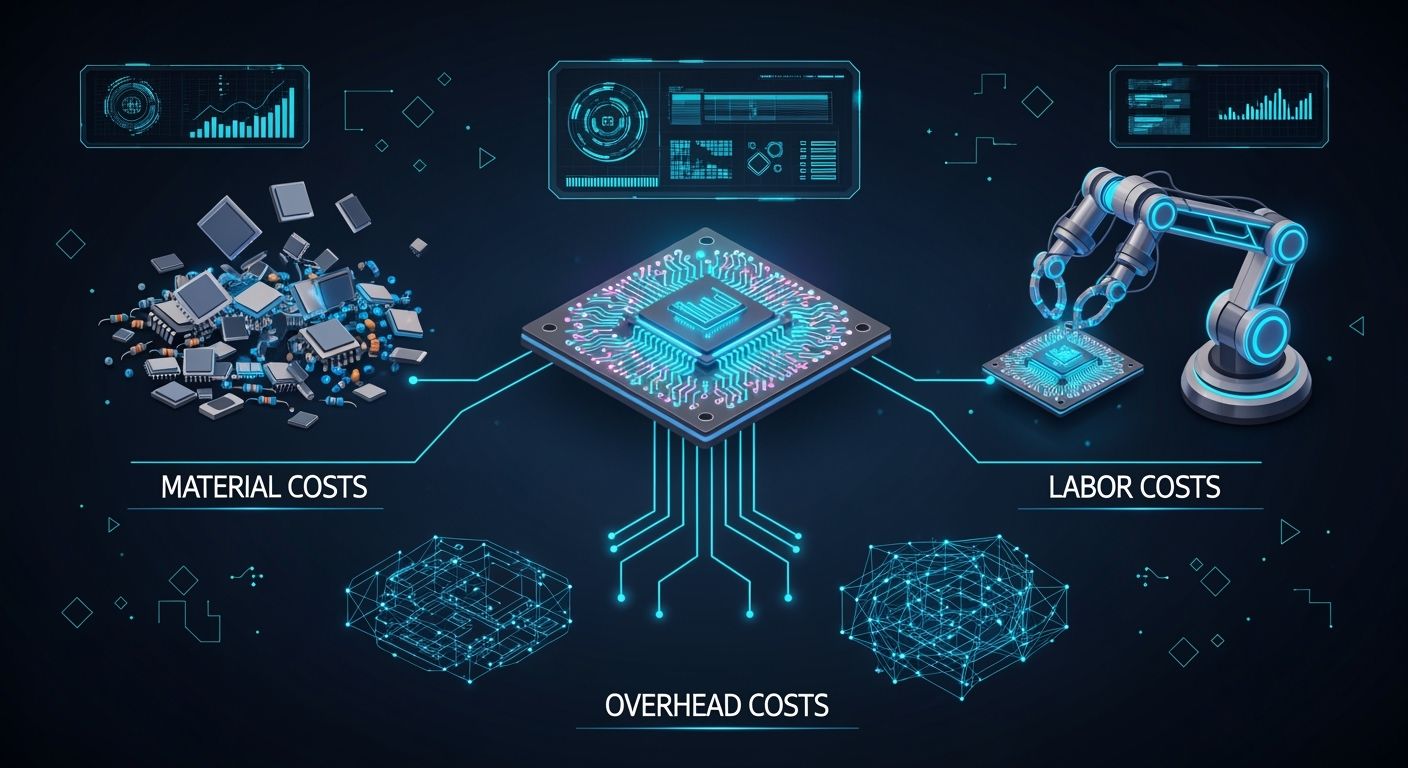
Making strong hardware takes a clear plan. You must know your pcba cost structure well. You can find total pcb assembly cost fast. Use this easy tool:
Total Cost = Materials + Labor + Overhead
Your early choices shape your profit margins. First part picks set raw materials expenses. Pick automated surface mounting now. Do not use manual through-hole assembly. This cuts your direct labor expenses. Yet machine setups raise fixed manufacturing expenses.
You might be hardware engineers. Or you act as procurement managers. You must lower total landed cost now. Still, keep quality high during the pcb assembly process. Read this guide. It helps balance every pcb production variable.
Key Takeaways
Easily find PCBA costs by adding parts, work, and overhead.
Buy more PCBs at once to lower board prices.
Use automated machine assembly instead of hand soldering to save money.
Pick basic FR-4 parts and normal layers to avoid high fees.
Do early DFM checks to stop costly fixes and delays.
Understanding the PCBA Cost Structure
Direct Materials Labor and Indirect Overhead
Learn your core pcba cost structure today. This helps control your project budget easily. Every board project has three main costs. First, direct materials cover bare board parts. They also include microchips and small components. Second, direct labor pays hands-on line workers. They physically build your electronic circuit boards. Third, manufacturing overhead pays for factory power. It also covers machine wear and inspectors.
Cost Category | Definition | Components / Breakdown |
|---|---|---|
Direct Materials | Real parts used in the main product | Bare board parts, solder, and components |
Direct Labor | Pay for workers building the boards | SMT line workers and hand soldering techs |
Manufacturing Overhead | Extra factory expenses to aid production | Building rent, tool care, and inspectors |
A simple cost check tracks your money well. Your direct labor cost turns parts into items. Indirect staff help keep the factory running smoothly. They do not build physical products themselves.
The Impact of Order Volume on Unit Cost
Order size changes your total pcb pricing fast. Small test runs cost more per board. This happens because setup fees stay fixed. Stencils and tooling raise early batch costs. Making bigger orders spreads out these setup fees. This lowers the cost for each board.
Board Design Type | Expected Cost Reduction | Primary Driver of Savings |
|---|---|---|
Basic 2-layer with standard passives | 15% – 25% | Spreading out fixed machine setup costs |
Standard boards with mainstream ICs | 25% – 40% | Full reel buys and part price cuts |
Specialized or hard-to-source IC boards | 10% – 20% | High chip prices stay the same |
Advanced fab (HDI, Rigid-Flex) | 20% – 35% | Better use of board panel space |
Big orders give you better cost breakdowns. Ordering 1,000 units instead of 25 helps. It cuts pcb pricing by up to half. Large orders get big parts discounts easily. They also use panel space much better. Managing these steps lowers your pcba cost structure.
Key Drivers of PCB Assembly Cost in Materials
Substrate Selection and Raw PCB Materials
Your board base sets total pcb assembly cost. Basic FR-4 works for most simple tools. Fast gear needs costly base types like Rogers. Rogers costs 5 to 10 times more. Special parts make these base types very pricey. These boards move fast signals without data loss. Yet, they push up your base build cost.
Hot designs need extra heat control. Ceramic bases raise early prices and factory fees. Still, they move heat 20 to 100 times better. Metal core options offer high heat control too. They also give stronger board shapes.
Substrate Type | Thermal Performance / Conductivity | Cost Impact & Drivers |
|---|---|---|
Enhanced FR4 / High-Performance | Better heat control than standard FR4 options | High base expenses over basic FR4 options |
Metal Core (Aluminum/Copper Base) | Good heat flow for strong power gear | Higher cost from top metals and hard builds |
CEM-3 | Fair heat management for basic needs | Cheap choice for medium thermal needs |
Special base choices raise total raw board costs. Pick standard FR-4 when your setup allows it.
Component Sourcing and Turnkey vs Consigned Models
Your buying style sets unit costs and build speed. Pick turnkey sourcing or consigned sourcing for projects. Turnkey component sourcing gives buying tasks to builders. Consigned sourcing makes your team buy every part.
Comparison Category | Turnkey Sourcing | Consigned Sourcing |
|---|---|---|
Administrative & Supply Overhead | Cuts team work by sending buying tasks away. | Needs big team effort to run many vendors. |
Cost Efficiency & Financial Impact | Helps cash flow by matching build pay times. | Saves part costs for big buyers with deals. |
Your team buys every part in consigned models. This shifts main work tasks to your team. Turnkey vendors buy parts in big bulk sets. They pass real bulk savings to your team. Checking your bill of materials keeps costs low. Each bom item needs a fast safety check. Factory teams check every bom line for risk. Missing parts delay all build work real fast. One missing bom chip stops the full line. Turnkey sourcing stops delays and saves your schedule.
Board Layers Surface Finish and Complexity
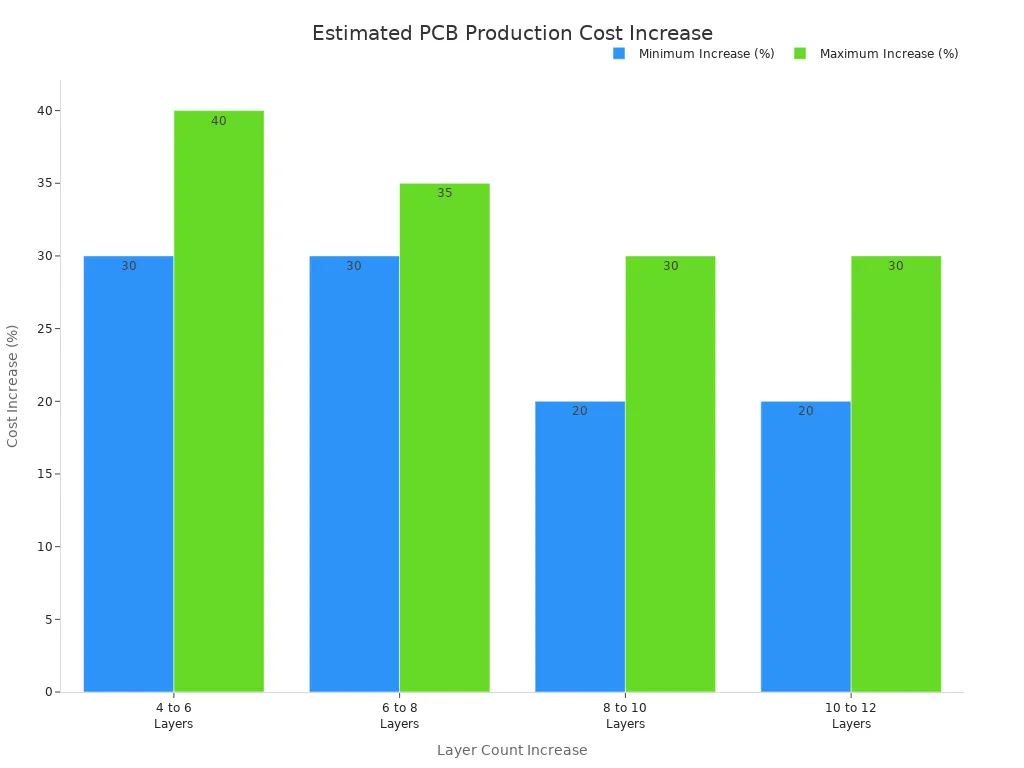
Part choices shape your final pcb assembly quality. Packed designs need extra board layer counts. Extra layers raise factory costs very fast. Extra layers add press steps and raw parts.
Layer Count Increase | Estimated Production Cost Increase |
|---|---|
4 layers to 6 layers | 30% to 40% |
6 layers to 8 layers | 30% to 35% |
8 layers to 10 layers | 20% to 30% |
10 layers to 12 layers | 20% to 30% |
This chart shows cost shifts from layer growth:
Surface finish choices change raw pcb part pricing.
Surface Finish | Relative Cost Tier | Price Range (per sq. in.) |
|---|---|---|
HASL | Low / Cheap Tier | $0.10 – $0.30 |
Immersion Silver | Mid Cost Tier | Costs less than ENIG |
ENIG | High Cost Tier | $0.30 – $0.60 |
HASL (Hot Air Solder Leveling): Gives low start costs but long costs grow. Rough tops make dense builds much harder later.
Immersion Silver: Needs fair start fees and safe care steps.
ENIG (Electroless Nickel Immersion Gold): Costs more due to gold use and steps. Still, it gives top real trust for long runs.
Factory workers place parts on flat boards easily. Flat tops like ENIG ease full board builds. Good surface finish choices balance pcb assembly cost.
Direct Labor Factors in Assembly and Testing
Automated SMT Lines vs Manual THT Labor
Build choices drive direct labor cost during manufacturing. Automated Surface Mount Technology uses fast placement tools. Reflow ovens run with little worker help. Through-Hole Technology needs workers to insert leads. People do hand soldering and fix parts. This extra work slows down total output. It raises your overall expenses fast.
Factor | Automated SMT Assembly | Through-Hole Technology (THT) Assembly |
|---|---|---|
Automation Level | Fully automated machinery | High manual component handling |
Unit Cost Impact | Cuts direct expenses to pennies per unit | Adds $1 to $5 per unit |
10k Volume Run | Drops unit cost to ~$0.80 | Keeps unit cost near ~$1.50 |
Geographic Location and Skilled Labor Rates
Factory sites change direct labor cost values. Overseas plants offer lower worker hourly rates. High-tech boards need trained tech experts. They set up complex machine lines well. You must calculate freight and trade tariffs. Shipping delays add extra indirect fees. Regional workforce choices change your total expenses.
Quality Inspection and Functional Testing Labor
Detailed testing protects quality during pcb assembly. Techs use optical systems for solder checks. First-article checks confirm early board accuracy. X-ray scans find bad hidden connections.
Manual checks catch surface errors on boards. Solder paste systems track total paste usage. Techs run functional tests after visual checks. In-circuit tests find secret short circuits early. Good quality control combines automated and manual steps. This work stops bad hardware from shipping.
Managing Overhead and PCB Manufacturing Cost
You must check plant overhead. This controls total pcb manufacturing cost. Plant overhead pays indirect fees. It keeps factory builds running fine.
Tooling NRE Fees and Stencil Fabrication
Plants charge initial setup NRE fees. These fixed fees pay build engineers. They process files and program tools. They also set optical check gear. Stencil buys form key setup fees.
Stencil choices affect the pcb assembly process. They change overall product build yield. Pick from two main stencil types:
Stainless Steel Stencils: These give cheap start pricing structures. They suit standard mid-pitch smt runs.
Electroformed Nickel Stencils: These cost more money to buy. Yet they give extreme placement accuracy. They fit ultra-fine-pitch smt builds well.
Stencil Category | Pricing Tier | Price Comparison Ratio |
|---|---|---|
Laser-Cut Stainless Steel | Economical / Medium | Baseline Cost |
Electroformed Nickel | Premium / Highest | 2x to 3x more expensive than Laser-Cut |
Top stencils raise early tooling fees. Still, neat paste distribution lowers errors. This helps dense board production runs.
Facility Maintenance and Line Setup Overhead
Plant operations create big overhead daily. Dedicated electronics plants need constant climate control. They require cleanroom air filters. They need backup power systems too. Tool wear demands continuous machine service. These operational needs raise pcb assembly cost.
IPC standards change plant overhead math. Building gear to IPC Class 3 standards needs strict line tuning. It needs frequent quality checks too. Building to basic IPC Class 2 standards cuts line work. This lowers total board build fees. Also, techs take hours setting up tools. They adjust reflow ovens for runs. Fast setups lower factory overhead costs. This improves your pcb assembly cost structure.
Hidden Costs from Design Revisions and Re-Spins
Design mistakes add huge surprise overhead. Bad dfm choices stop factory lines. You must pay for board re-spins. You scrap bad bare boards. You run extra functional tests too.
💡 Cost Savings Tip: Run dfm checks early during design. Early checks prevent sudden design fixes. They protect your release schedule. They speed up pcb assembly steps.
Unoptimized layouts cause solder bridge errors. They create small component clearance issues. Fixing errors takes manual rework tasks. You need extra optical checks later. Fix files early before building hardware. This saves time and protects budgets.
Practical Cost Optimization Strategies
Smart design choices cut total hardware spending. Early plans lower pcb assembly cost. They keep gear working well.
Early DFM Reviews and Standardized Components
Fix design errors fast. This saves time and money. Run automated checks before product builds.
Design Stage | Time-to-Market Effect | Revision Rework Cost |
|---|---|---|
Prototype Stage | Stops late delays | $1,000 – $3,000 per fix |
Production Stage | Causes major delays | $15,000 – $80,000+ per fix |
Base choices cut total costs. Use standard materials to trim spending.
Specific Design Practice | Financial & Cost Impact | Impact on Hardware Reliability |
|---|---|---|
Standard FR-4 Laminate | Cuts costs by 15% to 25% | Meets normal user needs |
Thinner Copper Layers (1 oz) | Saves 10% on raw base | Keeps signal path clear |
Use common small parts on designs:
Increased Order Volumes: Standardizing parts raises buy sizes. This unlocks lower bulk prices.
Streamlined Inventory Operations: Fewer part types ease stock tracking. This cuts storage fees.
💡 Smart Savings: Merge bom items early. Matching bom lines across projects cuts stock fees.
Strategic Volume Scaling and Supply Chain Management
Big orders unlock lower pcb pricing deals. Large runs spread fixed fees thin. Clear math helps check buy choices.
Total Savings = (Bulk Component Discounts) + (Panel Optimization) - (Inventory Holding Cost)
Good supply chains keep pcb pricing safe. Buy main parts early. This avoids bad stock shifts. Good panel setups boost pcb assembly process gains. Wise engineering speeds every pcb run.
Balance materials and labor well. Control factory overhead fees too. These steps set your pcba cost structure. Smart picks guide each pcb assembly task.
💡 Early DFM reviews stop costly pcb re-spins. They safeguard your launch plans.
Talk with your EMS partner early. Good teamwork brings low pcb pricing. It aids long-term product success.
FAQ
How does order volume impact total project cost?
💡 Key Takeaway: Large batches lower unit costs by spreading fees.
Big orders split fixed setup fees across parts. You get lower prices for buying parts in bulk. This drops per-unit costs during big runs fast.
What is the main driver of the pcba cost structure?
Your bom sets most fees. Part costs and worker pay shape your main plan. Wise part choices shield profits on hardware runs.
How do quality checks affect the pcb assembly cost?
Detailed tests raise direct labor and tool costs. Optical tools and tests catch bad boards fast. This stops costly product recalls later.
Why does inspection play a key role in manufacturing?
Strict tests stop costly fixes later. Ongoing tests catch errors during the pcb assembly process early. Fast tools check every solder joint. Good checks keep items safe during full runs.
See Also
Essential Raw Materials Required For Successful PCBA Manufacturing Processes
How PCBA Contract Manufacturing Elevates Your Overall Business Efficiency
Understanding PCBA Basics And Its Primary Electronic Assembly Components
Strategic Electronic Component Sourcing Tactics For PCBA Production Success
