Nitrogen Atmosphere in Reflow Soldering
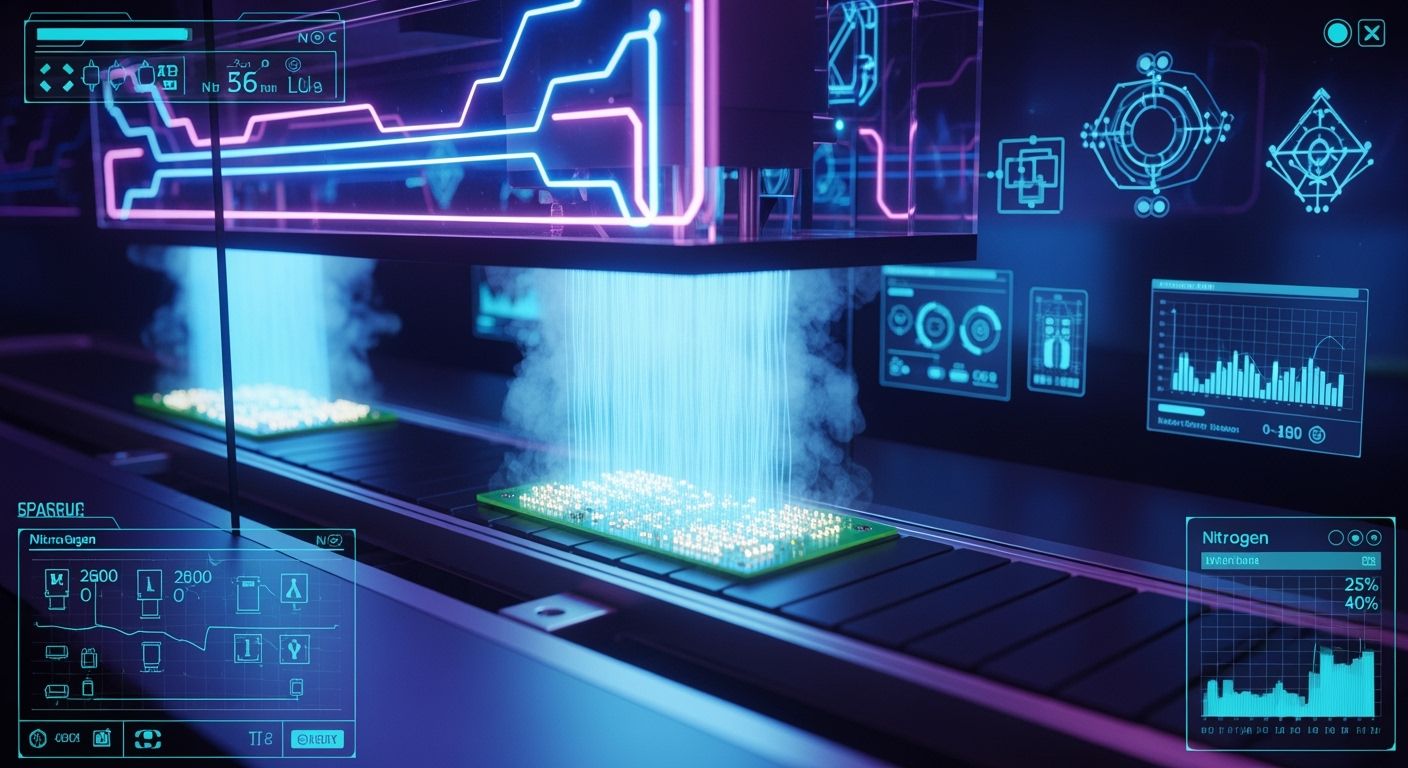
When you use a nitrogen atmosphere in reflow soldering, you fill the oven with nitrogen gas instead of air. This is important because nitrogen keeps oxygen away from the metal parts. Without oxygen, metals do not make as much rust or oxidation. You get better solder connections, better wetting, and fewer empty spaces in the joints. These benefits help you make stronger and more reliable electronic devices.
Key Takeaways
Using a nitrogen atmosphere in reflow soldering stops oxidation. This makes solder joints stronger and more reliable.
Nitrogen helps solder move and stick to surfaces better. This lowers problems like solder bridging and cold joints.
Keeping oxygen levels low (under 1000 ppm) gives better control. It also improves the quality of the soldering process.
Buying nitrogen systems can save money over time. It cuts material waste and makes products more reliable.
Think about using nitrogen for important electronics. This includes medical devices and aerospace parts where quality matters a lot.
Nitrogen Atmosphere Basics
What Is a Nitrogen Atmosphere?
A nitrogen atmosphere happens when you fill the reflow soldering oven with nitrogen gas, not air. This makes the oxygen level very low inside the oven. With less oxygen, metals do not form an oxide layer when they get hot. Removing oxygen stops oxidation on things like component leads and PCB pads. The nitrogen atmosphere helps fluxing agents work faster and better. Solder moves more easily and sticks well to surfaces. There are fewer problems, like bridging or mid-chip solder balls, because solder wets the surfaces more easily. Molten solder has higher surface tension, so solder joints are better. You get stronger connections and fewer issues during manufacturing.
Tip: Using a nitrogen atmosphere helps you avoid many problems from oxidation. You can get cleaner and more reliable results when you solder.
How Nitrogen Is Used in Reflow Soldering
You use nitrogen in reflow soldering by letting it into the oven through a special valve. The oven has an oxygen analyzer that checks the air inside. If oxygen goes up, the valve opens more to let in extra nitrogen. Nitrogen can come from a generator at the factory or from a storage tank. Making nitrogen onsite lets you control how pure the gas is. Some factories buy nitrogen because it can be cheaper. Heating elements in the oven warm the nitrogen to the right temperature. The temperature depends on the size and thickness of the boards. This keeps the atmosphere steady and protects the parts during soldering.
Nitrogen valve controls how much gas goes in.
Oxygen analyzer checks the air quality.
Nitrogen comes from generators or tanks.
Heating elements set the right temperature.
Keeping a nitrogen atmosphere helps your reflow soldering work better. This way, you make good solder joints and have fewer defects.
Effects on Reflow Soldering
Oxidation Reduction Mechanism
Reflow soldering has a big problem with oxidation. Metals react with oxygen when they get hot. This makes a layer that stops solder from sticking. Using a nitrogen atmosphere pushes out the oxygen. Nitrogen keeps these layers from forming. Surfaces stay cleaner and solder joints get stronger. Solder flows better and you do not need as much flux. This means you see fewer mistakes and save money on supplies.
Oxygen can be different in each oven area. You can check oxygen in parts per million, or PPM. This helps find leaks or other issues. Engineers use this information to keep nitrogen levels steady. This makes soldering work better.
Nitrogen pushes out oxygen and stops oxidation.
Solder joints get stronger and handle stress better.
You use less flux and see fewer mistakes.
Nitrogen helps solder spread at lower heat.
Solder joints are better and you save money.
Solder Wetting and Process Window
Nitrogen lets you control the soldering process more. You can keep oxidation low if oxygen is under 1000 ppm. Flux lasts longer in the oven, so you can heat things for more time. This gives you more choices for timing and temperature. You can lower the highest temperature by 5–10°C and still get good soldering. Lower heat keeps sensitive parts safe from harm.
Less oxidation helps flux last for the reflow zone.
A bigger process window lets you change heat and time.
Lower top heat keeps parts from getting hurt.
Nitrogen helps solder stick and lowers mistakes.
Soldering happens faster and results are better. Nitrogen helps solder spread and stick to surfaces. You get strong connections and fewer problems when making things.
Benefits and Drawbacks
Solder Quality Improvements
When you use a nitrogen atmosphere, soldering gets better. Nitrogen helps make solder joints cleaner and stronger. It keeps oxygen away, so there is less oxidation. Solder spreads more easily and sticks to small parts. You see fewer problems like solder balls or beading. Joints look more even and are more reliable. Nitrogen also cuts down on dross and oxide skin. This helps fillets form better.
Here is a table that shows the main improvements:
Improvement Type | Description |
|---|---|
Better wetting and spread | Works better on tiny and fine-pitch parts. |
Lower solder balling and beading | Fewer problems with solder sticking in the wrong place. |
Consistent joints | Solder joints are more reliable and look the same. |
Reduced dross and oxide skin | Less oxidation means better wetting and fillets. |
You can also lower common defects by a lot. Nitrogen cuts down solder bridging, not enough hole fill, and cold solder joints by 50-90%. You make fewer mistakes and get better results.
Solder Bridging: Drops by 50-90% because wetting is better.
Insufficient Hole Fill: Drops by 50-90% as solder fills holes.
Cold Solder Joints: Drops by 50-90% since nitrogen stops oxide.
Nitrogen keeps the air clean during soldering. You get strong connections that last longer. This is important for electronics that must work well.
Cost and Equipment Considerations
You need to think about cost before using nitrogen. Filling a nitrogen tank costs about $140. Renting a tank is less than $50 each month. Each reflow cycle costs about $1 in materials. This means you pay only a few cents for each board. The cost per board is low, but you must buy equipment and pay for upkeep.
Nitrogen systems need special valves, analyzers, and heaters. You must check and control the gas flow. You may need to train workers and change your process. These steps make things more complex. Small factories may find starting costs high. You must decide if the benefits are worth the money.
Note: Nitrogen is not a flux. It does not react at reflow heat. You still need flux to clean and help solder flow.
Limitations and Industry Adoption
Nitrogen has many benefits, but it does not fix every problem. Not all defects come from oxidation. You should use nitrogen only when it helps your process. Some fluxes act differently in nitrogen, so you may need to change how you solder.
Many companies use nitrogen for high-tech products. These include semiconductor packaging and power devices. These products need strong and reliable solder joints. Nitrogen helps lower defects and makes things more reliable. You see better results in these fields.
Some things stop companies from using nitrogen. The main problems are cost and the need to change the process. Small factories may not have enough money. You must train workers and change your process to get good results.
Starting costs can be high for small factories.
You must change your process and train workers.
Nitrogen is best for products that must be very reliable.
Nitrogen stops oxidation during hot soldering. You get clean and strong solder joints. Your products last longer and work better. Many experts think nitrogen is a smart choice for the future of electronics.
When to Use Nitrogen Atmosphere
Application Scenarios
You should use nitrogen in reflow soldering for important products. Nitrogen keeps parts safe from oxidation. This is needed for things like medical devices and car electronics. It is also good for aerospace electronics. If you use lead-free solder, nitrogen helps you get the same results every time. Solder joints look better with nitrogen. This matters for fancy electronics people want to look nice.
Here is a table that shows when to use nitrogen:
Key Decision Criteria | Description |
|---|---|
Oxidation Control | Needed for products that can get damaged by oxidation. |
Wetting Consistency | Helps make strong solder joints, especially with lead-free solder. |
Cosmetic Solder Appearance | Makes solder joints look better for expensive products. |
Product Risk | Lowers the chance of failure in important uses. |
Acceptance Criteria | Meets strict rules for product approval. |
Lifecycle Cost | Balances nitrogen cost with better product quality over time. |
Tip: If your product must pass hard tests or will be used in tough places, nitrogen can help you meet those needs.
Implementation Tips
You can start using nitrogen by checking your tools and machines. Make sure your oven can use nitrogen and has an oxygen checker. Train your workers to set up the oven and find problems. Training helps your team learn new ways to work.
Training workers helps ovens work better.
Fixing oxidation problems makes products better.
Focusing on quality gives you stronger electronics.
You can check if using nitrogen saves money. Compare the cost of nitrogen with the value of fewer mistakes and longer-lasting products. If you make expensive electronics, the good things often are worth the price. You can use nitrogen generators to keep gas pure and save money later.
Note: Always check oxygen levels in your oven. Keeping them low helps nitrogen work best.
You get many good things when you use a nitrogen atmosphere in reflow soldering. Here is a simple chart:
Advantage | Description |
|---|---|
Precision Temperature Control | Keeps the heat steady within about 1°C for better results. |
High-Temperature Capability | Can reach up to 350°C for hard soldering jobs. |
Reduced Void Rate | Makes fewer empty spots, only 1%-5%, which is much better than old ways. |
You will also see fewer mistakes—up to 90% less—and more boards work right the first time. But you need to think about the higher price for gas and machines. Nitrogen stops new oxidation but does not clean off old oxides or help heat move better. Always check if your product really needs these things before you spend money. Try to balance good quality with cost so you make the best choice for your work.
FAQ
What purity of nitrogen do you need for reflow soldering?
You should use nitrogen with at least 99.99% purity. This level keeps oxygen below 1000 ppm. High purity helps you prevent oxidation and get better solder joints.
Does nitrogen replace the need for flux?
No, you still need flux. Nitrogen reduces oxidation, but it does not clean surfaces. Flux removes old oxides and helps solder flow.
Can you use nitrogen with all types of solder paste?
You can use nitrogen with most solder pastes. Some pastes work better in nitrogen. Always check the manufacturer’s recommendations for best results.
How do you know if nitrogen is working in your oven?
You can check the oxygen level with an analyzer. If the oxygen stays below 1000 ppm, your nitrogen system works well. You should also see fewer soldering defects.
Is nitrogen reflow worth the extra cost for small batches?
For small batches, you may not see big savings. If your products need high reliability or have fine-pitch parts, nitrogen can help. For simple boards, air reflow may be enough.
See Also
Importance Of Nitrogen Reflow Soldering In Automotive And PCBA
Essential Process Guidelines For Reflow Soldering In SMT
Temperature Curve Specifications For Reflow Soldering In SMT
Performing Reflow Soldering On Through-Hole Parts Post-SMT Assembly
Identifying Reflow Soldering Issues In SMT And Their Solutions
