LED Driver PCBA Manufacturing
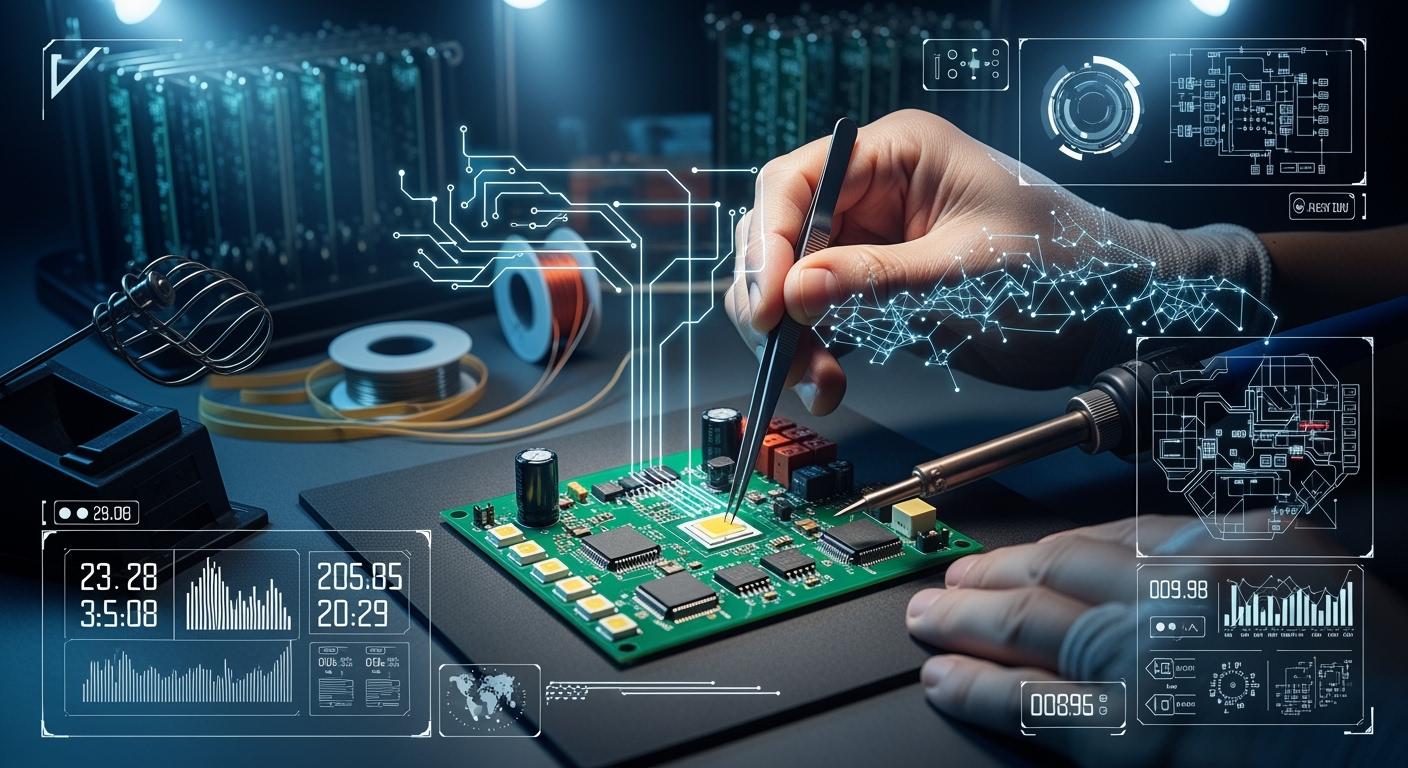
You make smart lighting when you use LED Driver PCBA manufacturing. This process builds boards that control how much voltage and current go to each LED. Controlling these levels keeps the LEDs safe and helps them last longer. Manufacturers must follow strict safety and quality rules. Some important certifications are:
Certification | Description |
|---|---|
UL | A quality mark from Underwriter's Laboratories. It shows the product meets safety rules in North America. |
ETL | Certification from Electrical Testing Laboratories. It shows the product follows safety rules. |
CE | A mark that shows the product follows EU rules. It lets products be sold in the European Economic Area. |
ENEC | A safety mark that shows the product follows European safety rules. |
CCC | China Compulsory Certification. It is needed for products sold in China. |
PSE | Certification needed for electrical products in Japan under the DENAN Law. |
Key Takeaways
LED Driver PCBA boards manage voltage and current for LEDs. This helps keep LEDs safe and last longer. - Pick high-quality boards with certifications like UL and CE. These certifications make sure the boards are safe and work well. - Custom PCBA solutions let you create special designs. These designs fit your lighting needs and make performance better. - Good testing can find problems early. This lowers repair costs and makes the boards more reliable. - Good design and care can make your LED Driver PCBA last much longer.
LED Driver PCBA Overview
What Is An LED Driver PCBA
You need a special board to power LEDs safely. This board is called an LED Driver PCBA. It controls how much electricity goes to each LED. Regular power supplies do not work well for LEDs. LEDs need a steady current or voltage. The LED Driver makes sure your lights get the right power. It also protects your LEDs from getting too much electricity or getting too hot.
There are two main kinds of LED Driver circuits. Constant current drivers keep the current the same. This helps high-power LEDs shine bright and last longer. Constant voltage drivers give a set voltage. These are easy to use for many LEDs at once. Some drivers let you change brightness or add dimming for different needs.
LED Driver PCBA boards use smart designs to handle heat. Many use aluminum to move heat away from the LEDs. This keeps your lights cool and working longer. Designers use special software to plan the board layout. This makes sure each part fits and works together.
Tip: Custom LED Driver PCBA solutions let you match the board to your lighting needs. This helps you get the best performance and save energy.
Why Manufacturing Quality Matters
You want your lights to last and be safe. Good LED Driver PCBA manufacturing makes this happen. When you pick a well-made board, you get:
Better energy use, so you pay less for power.
Less heat, so your LEDs last longer.
Reliable lights, even in tough places.
Lower repair costs over time.
Manufacturers use strong materials and careful work to meet safety rules. They test each LED Driver PCBA to find problems before you use them. Good boards have things like surge protection and thermal management. These keep your lights safe from power spikes and overheating.
If you choose a poor-quality board, you may get flickering lights or short lifespans. There could even be safety problems. Always look for boards with the right certifications and a good reputation.
LED Driver Design Essentials
Input And Output Requirements
You need to know what your LEDs need before you build. Every lighting job is different. Cars need lights that work well and last in hard places. Factories use strong drivers for big currents. Homes want lights that are bright and comfy.
Power requirements: Find the power by multiplying voltage and current for each LED. Count all your LEDs. Pick a driver with a power rating 20% higher than your total. This covers losses.
Voltage and current matching: Make sure the driver’s current fits your LEDs. The voltage should match the total forward voltage of your LED string.
Efficiency standards: Choose drivers that are efficient, usually between 85% and 95%. This saves energy and keeps things cool.
Compliance: Get drivers that meet rules like ENERGY STAR or the EU’s Ecodesign Directive.
Power factor and harmonic distortion: Drivers with a high power factor and low distortion use power better. They cause less interference.
Tip: Some drivers for car headlamps work from 4.5 V to 60 V. They can reach up to 98% efficiency. This helps your lights stay strong in changing conditions.
Voltage And Current Management
You keep your LEDs safe by managing voltage and current. Good control stops overheating and stress. Constant current drivers keep the current steady. This lowers heat and helps LEDs last longer. Overvoltage protection stops too much voltage. These features keep your lights safe in tough places.
Stop overheating and stress
Use constant current drivers for steady work
Add overvoltage protection for safety
Custom PCBA Solutions
You can pick custom PCBA solutions for special LED jobs. Custom boards fit curved or strange surfaces. They save space and resist shaking or stress. You can change the shape, add branches, and set LED spacing for the brightness you want. Pick LED types from top brands. Add parts like resistors, ICs, and connectors to fit your system.
Flexible for unique shapes and surfaces
Space-saving designs for small spots
Strong against stress and shaking
Custom for shape, branches, LED density, and control parts
Note: Custom solutions help you get the best fit and performance for your project.
Manufacturing Process
PCB Layout And Component Selection
You begin by planning the PCB layout. This step decides how well your LED Driver works and how long it lasts. You need to control heat, keep electricity steady, and make the board strong. Here are some steps to follow for good results:
Plan the PCB layout to control heat. Put parts in places that lower heat. Use thick copper lines. Leave space between parts to stop short circuits.
Pick the right trace width for the current. Use the IPC-2221 guide to choose trace widths. This helps the board handle current without getting too hot.
Manage heat for better board life. Add heat sinks, thermal pads, and good heat paths. These things keep the board cool and help it last longer.
Put parts on the board and solder them carefully. Think about heat control. Learn good soldering skills. Check every connection. Keep your work area clean.
When you pick parts, think about how much heat LEDs make. High-power displays need special ways to handle heat. Use aluminum and copper cores to move heat away. Thick copper planes (2 oz or more) help with high-power displays. Put thermal vias under LED packages and driver ICs. Place each part in a good spot to stop hotspots. Good electrical paths keep your lights bright and steady. These choices help make small boards that work well inside and outside.
You might have problems during layout. Some common issues are with stack-up and via choices, missing footprints, bad panelization, and missing test points. You also need to handle high current and make sure your layout spreads light and heat well.
Tip: Always check your files and documents before the next step. This helps you avoid mistakes that cost money.
Assembly And Soldering
You need careful assembly and soldering to make a good LED Driver PCBA. The best method depends on your project size and needs. Here are some good ways to do it:
Hand soldering is good for testing and fixing boards. It gives you control.
Surface Mount Technology (SMT) is best for making many boards fast. It lets you put lots of parts on quickly and in the right place.
Through Hole Technology (wave flow soldering) makes strong joints. Use this for parts that get bumped or moved.
Selective soldering heats only certain spots. This keeps sensitive parts safe from heat.
Hot bar soldering joins flexible circuits to hard boards. It makes strong, lasting joints.
Laser soldering is very exact. Use it for tiny or delicate parts.
Direct chip attach and flip chip methods make short, fast connections.
Aluminum wedge bonding and gold ball bonding use special wires for strong joints.
Conductive epoxy works well in hot or harsh places.
Robotic soldering is fast and accurate for big jobs.
Vacuum and nitrogen soldering make better joints by stopping air bubbles and rust.
Keep your work area clean and neat. Always check your solder joints to make sure they are good. If you use machines, keep them in good shape. Good assembly and soldering help your board last a long time.
Certifications And Standards
You should work with manufacturers who have important certifications. Certifications like ISO 9001 and AS9100 show a company follows strict quality rules. These marks are needed if you want to sell in places like aerospace or medical fields. Customers trust companies with these certifications more. This can help you sell more.
You also need to follow environmental rules. Build a system to track rule changes. Pick materials that meet RoHS, REACH, and WEEE standards. Work with suppliers who give you safe and legal materials. Keep good records of your materials and test results. Check for rule problems often and update your process when needed.
Compliance Strategy | Description |
|---|---|
Material Selection | Choose materials that do not have banned substances as RoHS says. |
Supplier Collaboration | Work with suppliers who follow all rules. |
Robust Documentation Practices | Keep good records of materials, tests, and rule papers. |
Risk Management and Compliance Monitoring | Look for rule problems and watch for updates to lower risks. |
Note: Certifications and following rules keep you legal and make your products more appealing to buyers.
Quality And Reliability
Testing Procedures
You need strong tests to make sure your LED Driver PCBA works well. Testing finds problems before you use the board. There are different ways to test quality and performance:
Electrical validation checks if the circuit works right.
In-circuit testing (ICT) finds issues with parts and paths.
Functional testing puts the board in real conditions to see if it controls current.
High-potential testing checks safety by testing isolation between high and low voltage.
Thermal performance validation uses infrared cameras and thermocouples to measure heat.
Optical measurement checks brightness, color, and light quality.
Reliability testing uses HALT and corrosion tests to see how the board handles stress.
Manufacturing process validation includes solder paste inspection and automated optical inspection.
More testing costs extra money but helps stop early failures and warranty claims. Here is a table that shows how testing affects cost:
Cost Factor | Description |
|---|---|
Testing Depth | Custom testing increases cost, especially for LED applications. |
Basic Inspection | Checks if assembly is correct. |
Deeper Testing | Looks at electrical behavior, heat stability, and long-term signs. |
Stricter Quality Control | Needed because LEDs are sensitive to small defects. |
Increased Handling Time | More inspection means longer processing and higher cost. |
Risk Reduction | Extra cost protects against early breakdowns and warranty issues. |
Tip: Good testing helps you avoid repairs and keeps your lights working longer.
Troubleshooting
You need to find and fix faults fast to keep your LED Driver PCBA reliable. Troubleshooting starts with easy checks and moves to deeper tests. Here are some common ways to find problems:
Visual inspection with magnification lets you spot cracked solder joints, misaligned parts, or damage.
Continuity testing uses a multimeter to check for open or short circuits.
Desoldering for isolated testing removes a component so you can test it separately.
LCR meter use measures inductance, capacitance, and resistance outside the circuit.
You can also use environmental stress testing to find hidden failures. Burn-in and life testing help find early breakdowns. Statistical process control keeps production steady. Defect analysis and prevention remove root causes. You can use temperature and humidity tests, thermal cycling, salt spray, vibration, and UV exposure to check durability.
When you find defects, use Pareto analysis to see which problems happen most. Fishbone diagrams help you understand why defects occur. 8D problem-solving helps with customer complaints. FMEA finds risks before they cause trouble. Corrective action tracking makes sure you fix problems for good.
Note: Always follow standards like IPC-A-600 for inspection. This keeps your boards safe and reliable.
Ensuring Long-Term Performance
You want your LED Driver PCBA to last as long as possible. You can use several design and maintenance practices to help your board stay strong:
Deliver stable, uniform current to each LED using constant-current drivers.
Arrange LEDs evenly for good heat and light distribution.
Use copper pours and thermal vias to manage heat.
You can also:
Add energy-saving features like dimming to lower power use.
Use high-quality materials and cooling methods to manage heat.
Design compact controls and strong parts for tough conditions.
Keep current steady to protect LEDs and make them last longer.
Maintenance helps your board last even longer. Replace failed LEDs or sections when needed. Use heat sinks and thermal paste to move heat away. Pick high-quality LED strips and PCBs. Make sure you have good ventilation in closed spaces. Use high-Tg FR-4 or MCPCB for high-power modules. Place thermal via arrays under LED packages. Use thick copper planes for better heat spreading.
You can choose external drivers for better thermal management and longer life. On-board drivers face more heat stress and may not last as long in high-power jobs.
High-quality boards can last about 50,000 hours at 60°C. If the temperature rises to 80°C, lifespan drops to about 12,500 hours. Temperature, load, power quality, and component quality all affect how long your board lasts.
Callout: Good design, strong materials, and regular maintenance help your LED Driver PCBA shine bright for years.
You get reliable LED Driver PCBA results by using good steps. Begin with careful solder paste printing. Place each component in the right spot. Test for electrical and heat problems early. Pick manufacturers with strong heat control and full services.
Key Factor | Why It Matters |
|---|---|
Quality Control | Makes sure only perfect boards are used |
Certifications | Shows your product follows important rules |
Custom Solutions | Fits your special lighting needs |
Work on quality and efficiency so your lights last longer.
FAQ
What does PCBA mean in LED drivers?
PCBA stands for Printed Circuit Board Assembly. You get a board with all parts soldered on. This board controls how your LED lights work.
How do you pick the right LED driver PCBA?
You check your LED’s voltage and current needs. You choose a driver that matches or is a bit higher. You also look for certifications for safety.
Why do LED drivers need certifications?
Certifications show your LED driver meets safety and quality rules. You can trust certified products to work well and last longer.
How can you make your LED Driver PCBA last longer?
Use good cooling methods.
Pick high-quality parts.
Test your board often.
Keep your board clean and dry.
See Also
Navigating Electronic Component Sourcing for PCBA Production
Enhancing Business Efficiency Through PCBA Contract Manufacturing
Understanding the Meaning of PCBA in Electronics
Exploring Comprehensive PCBA Services from Production to Testing
