Sustainable PCBA Manufacturing
You see sustainable pcba is changing electronics. Sustainable pcb manufacturing uses ways and materials that cut carbon and waste. Many companies pick sustainable printed circuit board manufacturing because people want eco-friendly products. You feel pressure from governments and regulators who want better sustainability in electronics. More worries about pollution and electronic waste also make you act.
The global sustainable electronics manufacturing market was USD 18.39 billion in 2025. Experts think it will be over USD 124.17 billion by 2034, with a 23.64% yearly growth rate.
You see a big move toward green chemistry, eco-friendly materials, and smarter designs. These changes help you meet the need for sustainability and lower your impact on the planet.
Key Takeaways
Sustainable PCBA manufacturing helps cut down carbon emissions and waste. This makes electronics better for the environment.
Focus on saving energy, picking safe materials, and cutting waste. These steps help make production more sustainable.
Using biodegradable and recyclable materials can lower your carbon footprint a lot. It also makes recycling easier.
Work with suppliers who care about sustainability and follow environmental rules. This will make your green efforts stronger.
Design products so they are easy to recycle. Use energy-saving steps to lower harm to the environment and save money.
What Is Sustainable PCBA?
Defining Sustainable PCBA Manufacturing
You might ask what makes a printed circuit board assembly process good for the earth. Sustainable pcb manufacturing uses ways and materials that help nature and let us keep making things for a long time. Top groups in the industry say you should pay attention to three big things:
Energy efficiency: You use less power and pick machines that save energy. This helps you make less greenhouse gas.
Material selection: You choose materials that are safe for the earth. You stay away from harmful stuff and use parts that follow rohs rules.
Waste reduction and recycling: You try to make less trash. You recycle extra materials and use lean manufacturing to have fewer scraps.
Many new factories use these ideas. Sustainable printed circuit board manufacturing also means you follow rules like rohs. These rules stop you from using bad chemicals in electronics.
Why Sustainability Matters
You help make electronics better for the planet. Sustainability in electronics lets you save natural resources and keep air and water clean. When you use sustainable pcb manufacturing, you help your company follow strict rohs rules. You also show customers you care about the earth.
Here are some big reasons to care about sustainability:
Using less energy saves money and helps the planet.
Picking safe materials keeps people healthy.
Making less waste and recycling saves money and stops pollution.
Good water use keeps rivers and lakes safe.
Working with good suppliers helps the whole world.
You can see that sustainable pcba is not just a new idea. It is a smart way to build trust, follow the law, and keep the earth safe for the future.
Environmental Impact of PCB Manufacturing
Resource Use and Waste
Making printed circuit boards can hurt the planet. It starts with the resources you use. Regular printed circuit boards need lots of water and energy. Factories use water to clean and cool things. This makes a lot of waste. Using so much energy also adds more carbon to the air.
Here is a simple table that shows how regular and sustainable ways are different:
Aspect | Conventional PCB (FR4) | Sustainable Alternatives |
|---|---|---|
Energy Consumption | 15-20% more per unit area | Lower energy usage |
Water Usage | Extensive cleaning processes | Reduced water consumption |
Environmental Impact | Higher carbon footprint and greenhouse gas emissions | Lower contamination levels |
You also get waste from chemicals and other materials. Printed circuit boards make dangerous waste like heavy metals and solvents. These can leak into the ground and water. This causes more harm to the environment. If you pick better materials and ways to make boards, you help cut down this waste and keep nature safe.
Pollution and Hazardous Materials
Making printed circuit boards can cause more pollution. Burning or dumping old boards lets out bad chemicals. These include dioxins and furans. These chemicals can hurt people and animals. Heavy metals like lead, cadmium, and mercury are found in printed circuit boards. They can make people sick and dirty the water.
You have to follow strict rules for these materials. The law says you must track dangerous waste from start to end. You need special labels and must use safe places to throw it away. If you focus on sustainability, you lower harm to the earth and make your workplace safer.
Choosing better printed circuit boards helps you stop pollution. It lowers carbon and helps make the future cleaner. You make a big difference when you think about the planet at every step.
Eco-Friendly Materials and Green Chemistry
Biodegradable and Recyclable PCBs
You can pick biodegradable substrates and recyclable printed circuit boards. These materials break down on their own or can be reused. There are many choices for sustainable pcb manufacturing. Some popular options are cellulose-based boards and polylactic acid (PLA). These materials come from plants and do not hurt the earth when thrown away. You also see natural fibers like jute, flax, silk, and wood in new designs. These eco-friendly materials help you make recyclable printed circuit boards that support sustainability.
You can look at the table to compare these materials with traditional ones:
Material | Biodegradable | Thermal Stability | Mechanical Strength | Electrical Performance |
|---|---|---|---|---|
Cellulose-Based | Yes | Limited | Low | Moderate |
Polylactic Acid (PLA) | Yes | Degrades above 60°C | Moderate | Moderate |
Traditional FR-4 | No | High | High | High |
You see that traditional FR-4 boards are strong and stable. Biodegradable substrates like PLA and cellulose have moderate performance but help lower waste. You can use these materials for many products, especially if you want recyclable printed circuit boards.
Water-Based and Low-Impact Processes
You can use green chemistry to make manufacturing safer. Water-based solutions and supercritical fluids replace harsh chemicals. These methods help you avoid dangerous waste and keep your workplace clean. More factories use closed-loop systems now. These systems recycle chemicals and water, so you use less and throw away less.
Here are some ways water-based and low-impact processes help you:
You use closed-loop chemical recovery systems to cut waste and reduce hazardous substances.
You pick energy-efficient curing equipment to save power during manufacturing.
You design boards with fewer layers and smaller sizes to use less material and need fewer steps.
You can also use lead-free and rohs-compliant components in your process. These choices help you follow strict rules and keep your products safe. You make your boards recyclable and lower your impact on the environment.
Benefits of Eco-Friendly Materials
You get many benefits when you use eco-friendly materials in sustainable pcb manufacturing. You lower your carbon footprint and save plastic. You also make your products more recyclable. You can see the difference in the table below:
Material | CO2 Reduction | Plastic Saved | Recyclability |
|---|---|---|---|
Soluboard | 60% | 620g/m² | 90% |
Natural Fiber PCB | 40% | 450g/m² | 85% |
FR-4 (Standard) | 0% | 0g/m² | <30% |
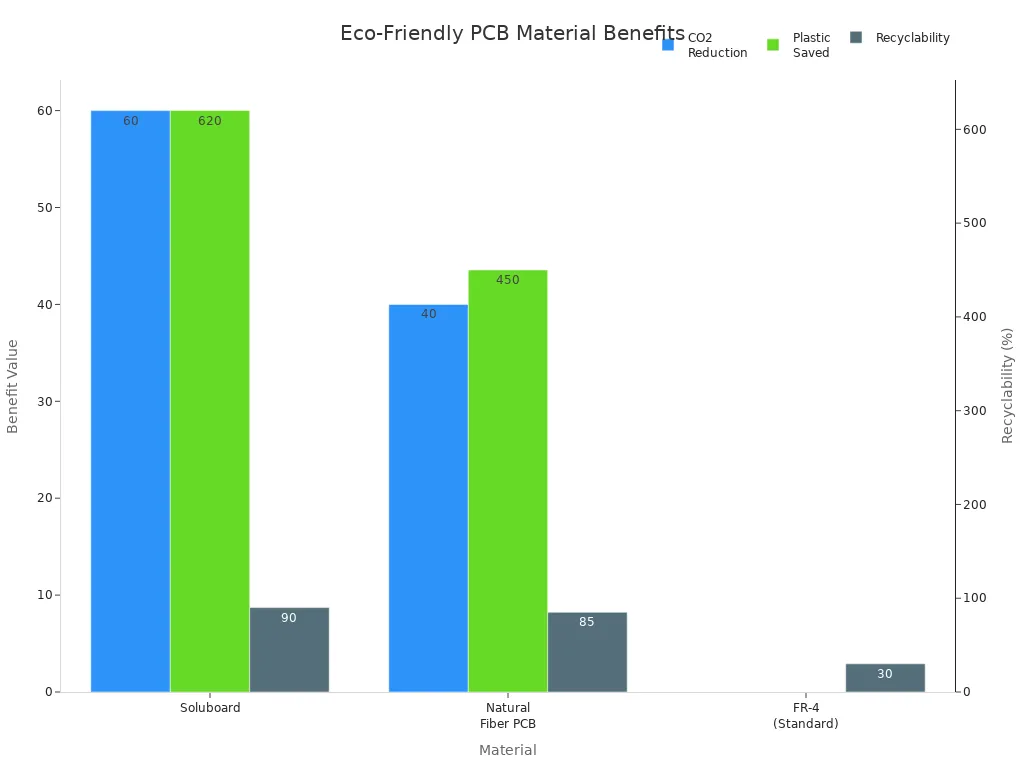
You see that Soluboard and natural fiber PCBs save more plastic and cut more CO2 than standard boards. You can recycle up to 90% of these boards. Standard boards only reach less than 30%. You help the planet when you pick recyclable printed circuit boards.
You also find that eco-friendly materials like PLA give you strong and flexible boards. You keep high performance and lower electronic waste by up to 60%. You may pay more for these boards because they need more research and development. You still get good value because you support sustainability and meet customer needs.
You can use lead-free components and rohs-compliant components to make your boards safer. You also make your products recyclable and ready for the future. You help your company lead in sustainable pcba and show your care for the earth.
Innovations and Trends in Sustainable PCB Manufacturing
Industry Adoption and Standards
Many new trends are changing sustainable pcb manufacturing. Companies use eco-friendly materials like lead-free options and bio-based laminates. Water-saving methods, like closed-loop systems and better filters, are now common. Green chemistry and chemical recycling help manage chemicals safely. Factories recycle scrap and use 3D printing to cut waste.
Stricter laws in the EU and North America push companies to use greener ways. People want products that are better for the earth. Using energy-saving machines can cut power use by half and save money.
You must follow important standards to show you care about sustainability. These include:
ISO makes sure products and services are good quality.
IPC sets rules for printed circuit boards, like IPC-6012 and IPC-6013.
RoHS limits dangerous substances in electronics and supports green practices.
ISO 14001 focuses on caring for the environment in factories.
RoHS compliance is now a must for most companies. Lead-free, halogen-free, and low-VOC materials are used a lot. Many factories now recycle over 95% of their tin slag.
Real-World Examples
You can learn from top companies using green practices. Apple has a recycling program and uses recycled aluminum in its products. Dell uses closed-loop recycling and makes products easy to recycle. Many companies use renewable energy and energy-saving machines to lower their impact.
These efforts show real results. The table below lists some outcomes:
Measurable Outcome | Description |
|---|---|
Reduction in hazardous substance use | Companies use fewer harmful materials when making products. |
Decreased energy consumption | Sustainable laminates save energy during board making. |
Lower embedded emissions | Getting parts from better producers lowers emissions in finished boards. |
Waterless etching now saves water and cuts down on bad chemicals. Bio-based substrates are used instead of old-style boards. Better designs make recycling easier. RoHS standards help you make safer and greener products.
Tip: Start by picking rohs-compliant materials and work with suppliers who follow these rules. This helps you follow the law and support green goals.
You help make electronics better for the earth. By following these trends, you help build a greener future.
Practical Steps for Sustainable PCBA
Sourcing Eco-Friendly Materials
You begin by picking materials that are good for the earth. Look for lead-free and RoHS-compliant choices. These keep harmful stuff out of your products. Try to recycle materials when you can. Choose suppliers who care about nature and follow fair rules. Use materials that make your products safer to throw away and recycle. You help the world reach net-zero goals by picking green materials.
Lead-free and RoHS-compliant materials
Recycled materials
Suppliers with strong environmental practices
Materials safe for recycling and disposal
You can check if your suppliers avoid toxic things like lead, mercury, and cadmium. This helps sustainable pcb manufacturing and makes your products safer.
Partnering with Sustainable Manufacturers
You need partners who care about the earth like you do. Pick companies such as NCAB Group and Indium Corporation. They focus on quality, delivery, and being green. Ask your suppliers about their environmental rules and certificates. Look for ISO 14001 and RoHS certificates. Choose local suppliers to cut travel pollution and help your community. Check your partners’ actions often to make sure they fit your green goals.
Environmental criteria and standards
Transparency in policies and certifications
Local sourcing
Regular sustainability audits
Tip: Ask for reports on energy use and waste. See how your partners run recycling programs and deal with pollutants.
Design for Sustainability
You can design boards to help the planet. Use halogen-free laminates to stop toxic fumes. Try bio-based materials like Soluboard to lower carbon. Make boards easy to take apart and recycle. Make boards smaller and use fewer layers to save materials. Pick parts that last longer to cut waste. Stay away from conflict minerals and pick energy-saving parts. Add water and chemical management to your designs. Help circular manufacturing by designing for material separation and using recycled content.
Design Practice | Benefit |
|---|---|
Halogen-free laminates | Lower toxic emissions |
Bio-based materials | Reduced carbon footprint |
Design for recycling | Easier component recycling |
Smaller boards | Less material waste |
Long-lifecycle parts | Less redesign and waste |
You balance speed, needs, and impact by using energy-saving ways, picking green materials, and cutting waste. You help the earth and save money too.
You can begin your path to sustainable pcba by taking simple steps.
Teach your team to design boards that are easy to recycle.
Work with certified recyclers to handle old boards.
Start programs to collect used boards from customers.
Buy new tools that help recover materials better.
Help customers and suppliers learn about green choices.
You save money, make your brand stronger, and get more customers. Using eco-friendly materials and green chemistry helps you cut waste and keep the planet safe. Working with others in the industry builds a good network for sharing ideas. You help shape the future by picking sustainable ways and encouraging others to do the same.
You help make things better when you use sustainable practices. What you do helps create a cleaner and smarter electronics industry.
FAQ
What does “RoHS-compliant” mean for PCBA?
RoHS-compliant means your circuit boards do not have harmful materials. These include things like lead, mercury, or cadmium. You follow rules that make electronics safer for people. These rules also help keep the planet safe.
How can you recycle old PCBs?
You can take old PCBs to special recyclers. They use machines to pull apart metals and plastics. This helps you get back useful materials. It also helps you make less waste.
Are eco-friendly PCBs as strong as regular ones?
Eco-friendly PCBs can be tough and work well. Some are made with plant-based plastics or natural fibers. They might not handle heat as well as regular ones. Still, most work fine for many electronics.
Why should you choose sustainable PCBA manufacturing?
You help take care of the earth. You use less energy and fewer resources. You also meet what customers and laws want. Sustainable PCBA can help your brand and save money over time.
See Also
Essential Materials Required For Effective PCBA Production
Enhancing Business Efficiency Through PCBA Contract Manufacturing
Sourcing Electronic Components For PCBA Manufacturing Success
Comprehensive PCBA Services From Production To Final Testing
Ensuring Quality Production With Advanced Turnkey PCBA Solutions
