How AOI Inspection Enhances Reliability in PCBA Manufacturing
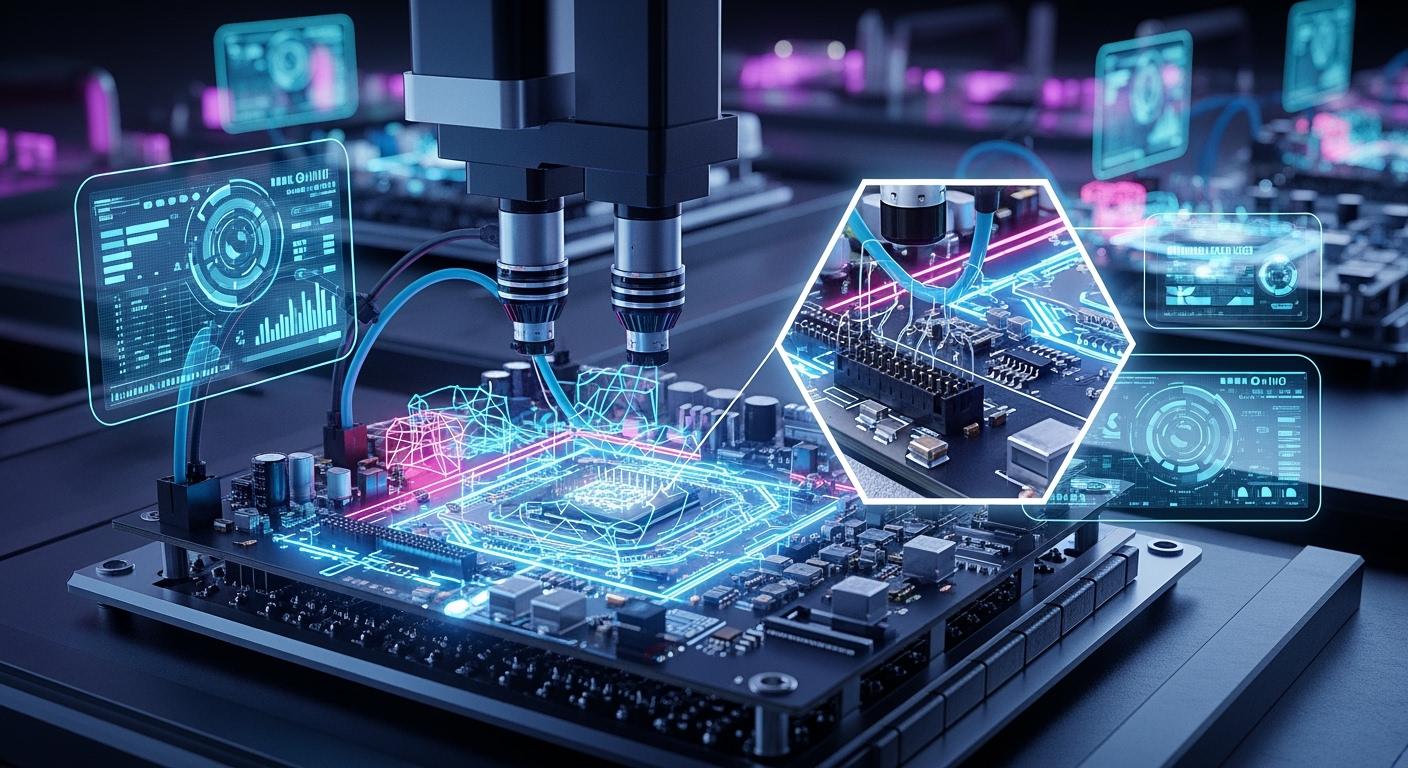
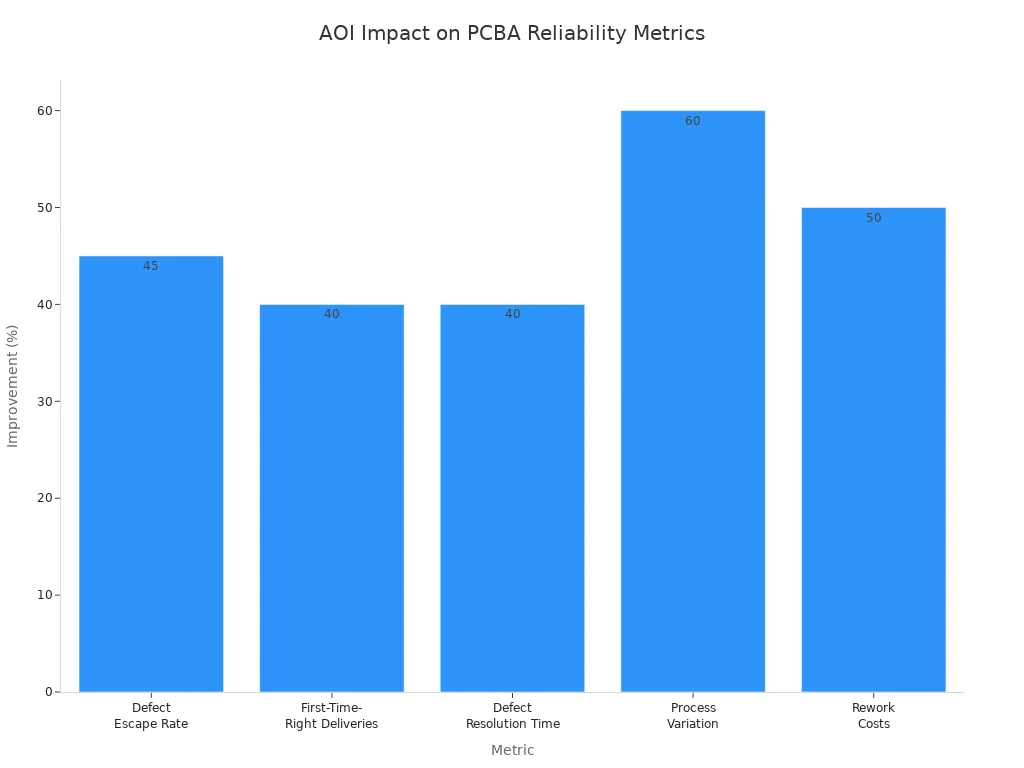
You can make PCBA manufacturing more reliable with aoi inspection. This method uses machines to look for problems without touching anything. It finds mistakes fast before they cause trouble. Finding problems early makes products better and stops failures. Using aoi gives great results like a 45% drop in missed defects and 40% faster fixing time.
Metric | Improvement |
|---|---|
Defect Escape Rate | 45% reduction |
First-Time-Right Deliveries | 40% improvement |
Defect Resolution Time | 40% reduction |
Process Variation | 60% reduction |
Rework Costs | 50% decrease |
You can count on aoi to help you reach your quality goals and keep your customers happy.
Key Takeaways
AOI inspection helps lower defects a lot. It causes 45% fewer missed problems. It also makes fixing issues 40% faster. Using AOI early in making things finds problems sooner. This stops them from getting worse. It saves both time and money. Automated Optical Inspection keeps quality the same every time. It cuts down on mistakes people make. It gives good data to make the process better. Training workers often makes AOI work better. This helps find problems right and keeps the system working well. AOI makes products more reliable. It also helps meet tough quality rules. This keeps customers happy.
AOI Inspection in PCB Manufacturing
What Is Automated Optical Inspection?
Automated optical inspection, or AOI, checks printed circuit boards during pcb manufacturing. AOI uses cameras and smart software to look for problems on pcbs. The process does not touch the board, so it keeps the board safe. AOI systems work quickly and can find tiny problems that people might miss. They work with many kinds of boards and can change for new designs or smaller parts. Some AOI systems use artificial intelligence to get better at finding defects as technology changes.
AOI’s Role in Quality Control
AOI inspection is important for quality control in pcb manufacturing. AOI helps find problems like misplaced parts or bad solder joints before they get worse. This keeps product quality high and helps you avoid expensive mistakes. AOI also helps you follow international rules, like IPC, by making clear records and using random checks to make sure your inspection works well. Here is a table that shows what AOI systems do:
Function | Description |
|---|---|
Quality Assurance | Makes sure only good assemblies move to the next step. |
Defect Detection | Finds big problems like parts in the wrong place or bad soldering. |
Process Improvement | Finds issues early so you can fix your process fast. |
High-Speed Inspection | Checks boards quickly and gives real-time data for better control. |
AOI helps you meet tough quality rules and keeps your customers happy.
Non-Contact Visual Testing
AOI inspection uses non-contact visual testing, so the board does not get damaged during checks. This method uses cameras and lights to take clear pictures of each pcb. You get the same results every time, unlike manual checks, which can miss problems if people get tired or make mistakes. AOI also works with other tools, like X-ray or ICT, to help you find more problems and lower defect rates. By using AOI, you make sure your boards are high quality and your manufacturing process gets better.
Defect Detection and Reliability Improvement
Types of Defects AOI Identifies
AOI can find many types of problems in PCBA manufacturing. It uses cameras and smart software to look for issues on PCBs. These problems can hurt the quality and reliability of your products. AOI is very good at finding things that people might miss. It can spot solder joint defects, parts that are not in the right place, and missing pieces. AOI also checks for alignment and solder bridges with better accuracy.
Here is a table that lists common defects AOI can find:
Defect Type | Description |
|---|---|
Solder Paste Issues | Finds smears, not enough paste, or dirt that can cause bad soldering. |
Solder Bridges | Sees extra solder that connects pads and can make short circuits. |
Insufficient Solder | Spots too little solder, which can make weak or open connections. |
Tombstoning | Finds parts standing up because the solder melted unevenly. |
AOI can also catch cold joints, lifted leads, and polarity mistakes. You can trust AOI to help make your PCBA products more reliable and high quality.
AOI checks boards quickly and makes inspections better, so you can make good boards faster.
Early Detection and Prevention
AOI works best when you use it to find problems early. It checks PCBs right after they are put together. This means you find defects before they move to the next step. It saves money and keeps your process running well. AOI stops hidden problems from reaching later tests, where fixing them costs more. You will have fewer problems in the field and better product quality.
One electronics company had 30% fewer returns after using AOI.
An auto parts supplier saw 45% fewer customer complaints with AOI.
AOI helps you avoid costly rework and waste. It makes your products more reliable and keeps customers happy. AOI also helps you reach your quality goals.
AOI finds bad boards early, so you get better results and spend less money.
Impact on Electrical Functionality
AOI is important for keeping your PCBA products working right. When AOI finds solder bridges or not enough solder, it stops short circuits and weak spots. AOI also checks for missing parts and makes sure everything lines up. This helps your boards work the way they should. AOI gives you better accuracy and checks boards the same way every time.
AOI cannot look inside vias or find problems in layers after lamination. You need other tools to find things like cracks in vias or thin copper. AOI also cannot test how well the board works or guess how long it will last. You should use AOI with other inspection tools for full quality checks.
AOI gives you confidence in your boards. You get better reliability and high accuracy. AOI helps you make PCBs that meet tough quality rules.
AOI and Consistent Quality in PCB Manufacturing
Reducing Human Error
You can count on AOI inspection to help stop mistakes in PCB manufacturing. Manual checks often miss tiny problems, especially when traces are very thin. People can get tired or lose focus, so they might not see every issue. AOI uses cameras and smart programs to find defects each time. This means you do not need to depend on what people notice. You get more accurate results and fewer mistakes.
AOI takes away the chance of people getting tired or making guesses.
Inspection machines find defects that are too small for people to see.
You always get the same good quality, even when making lots of boards.
Ensuring Inspection Consistency
AOI gives you the same results for every group of PCBs. You do not have to worry about different workers or work shifts. AOI acts like a guard, stopping bad boards from moving on. This helps you meet tough quality rules and get more good boards the first time. AOI can find tiny mistakes, even ones as small as 0.05mm, which matters for crowded boards. You can use AOI data to fix problems and learn why they happen, so your process stays strong.
AOI data helps you find and fix problems quickly.
Real-time maps show where problems are on the board.
Alerts let you know if defect numbers go up, so you can fix things fast.
Data-Driven Process Improvements
AOI gives you helpful data to make your process better. You can keep track of what kinds of defects happen and how often. This helps you change things like paste amount or where parts go. AOI systems have screens that show patterns and where training is needed. Over time, using this data can lower defect rates by up to 40% and help you make boards faster.
Evidence Type | Description |
|---|---|
Defect Tracking | Keeping track of defect types and how often they happen helps you find problems, like solder bridges. |
Process Adjustment | Changing things like paste amount can help lower defect numbers. |
Real-time Analytics | Dashboards show data, so you can see patterns and where training is needed. |
Continuous Improvement Impact | Using data can lower defect rates by up to 40% and help you make boards better and faster. |
AOI inspection helps you check boards faster, make them more reliable, and give better quality. You can use AOI to keep your PCB manufacturing strong and ahead of others.
Practical Integration of AOI in PCB Manufacturing
Implementation Considerations
When you add smt aoi inspection to your pcb manufacturing line, you need to plan carefully. Place automated inspection systems at important spots, like after pick and place or before reflow. This helps you find defects, such as not enough solder or parts that are not lined up, before they cause bigger problems. Use data-driven quality control by making feedback loops. These loops help you fix root causes and make your boards more reliable. Keep your inspection systems clean and calibrated. Regular checks make sure your automated inspection equipment works well.
Here are some important steps for successful integration:
Look at data from smt aoi inspection to make your process better.
Teach your team how to use automated inspection tools and understand results.
Put inspection systems at different steps to find more defects.
Plan regular maintenance and calibration for all automated inspection equipment.
Add automated inspection right after pick and place to catch misplaced parts early. This saves time and materials in pcba production.
Cost and ROI
You might worry about the cost of smt aoi inspection, but automated inspection can save money over time. The first price for an online system is about $75,000. Installation and maintenance add to the total cost. But you avoid defect-related losses, which can reach $200,000. This means you gain $30,000 in the end.
Cost Component | Amount |
|---|---|
Initial Purchase Price | $75,000 |
Installation Costs | $10,000 |
Maintenance Costs (5 years) | $50,000 |
Software Licensing (5 years) | $15,000 |
Downtime-related Losses | $20,000 |
Total Cost of Ownership | $170,000 |
Defect-related Losses Avoided | $200,000 |
Net Gain | $30,000 |
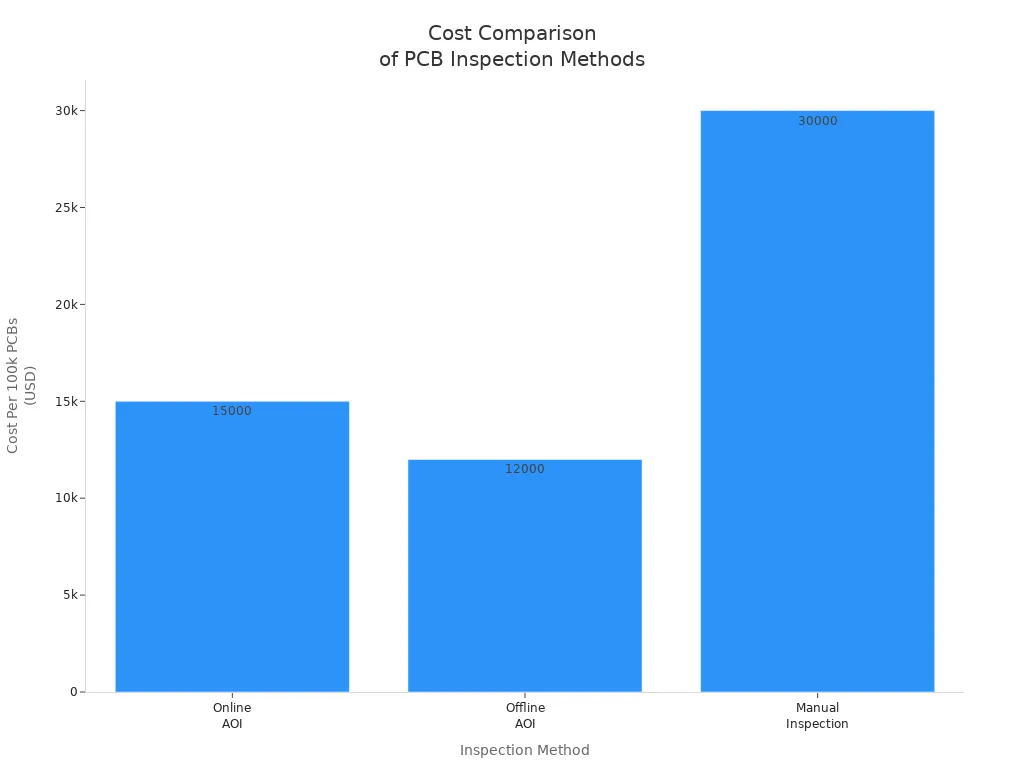
Smt aoi inspection also costs less for every 100,000 boards than manual inspection. Automated inspection makes checking boards faster and helps you reach your quality goals.
Operator Training and Optimization
Operator training is very important for smt aoi inspection to work well. Well-trained staff can set up solder paste inspection, spot real defects, and avoid false alarms. They also know how to change automated inspection settings for different products.
Operator training is crucial for using AOI systems in PCB manufacturing. Well-trained workers can set inspection settings, tell real defects from cosmetic issues, and keep the system working well. This makes AOI inspection more effective.
Training helps operators tell real defects from cosmetic issues.
Skilled staff can set up solder paste inspection for each board type.
Understanding automated inspection data helps you fix problems and keep quality high.
With good training and process optimization, you get better alignment, fewer defects, and higher reliability in your inspections. Smt aoi inspection, when used with solder paste inspection, makes your pcb manufacturing process stronger and your products more reliable.
You can make PCBA manufacturing better by using AOI inspection. Finding problems early and checking often helps you save money and keep customers happy. Companies use these KPIs to see how well they are doing:
KPI | Description |
|---|---|
Defect Detection Rate (DDR) | Tells what percent of problems AOI finds out of all problems. |
False Rejection Rate (FRR) | Shows how many good boards AOI says are bad by mistake. |
Escape Rate | Tells what percent of problems AOI misses during checks. |
Customer Returns Due to Visual Defects | Counts how many boards come back because AOI missed a problem. |
To get the best results, you need to train workers, use AOI with other tools, keep machines in good shape, and update software. In the future, AOI will use smart computers, work with smart factories, and be easier to move. Picking AOI helps you make strong boards and keeps customers coming back.
FAQ
What does AOI stand for in PCB manufacturing?
AOI means Automated Optical Inspection. It checks printed circuit boards for problems. AOI uses cameras and software to look for defects. It helps you find problems early. This makes your products better.
How does AOI improve product reliability?
AOI finds problems like missing parts or bad solder joints. It does this before the boards leave your factory. You can fix these problems right away. This helps you give good boards to your customers.
Can AOI replace manual inspection completely?
AOI means you do not need as many manual checks. But people are still needed for hard or strange problems. AOI works best when you use it with other ways to check boards.
What types of defects can AOI detect?
Solder bridges
Misaligned components
Missing parts
Not enough solder
Tombstoning
You can count on AOI to find most visible problems on your boards.
Is AOI hard to set up and use?
You can set up AOI systems with simple training. Most machines are easy to use. Your team can learn to run and take care of AOI equipment fast.
See Also
The Importance of AOI in Ensuring PCBA Quality Control
Enhancing PCBA Quality Control Through X-Ray Inspection Techniques
Essential Strategies for Boosting PCBA Reliability Over Time
Importance of SPI Visual Inspection Post-SMT Solder Paste Application
Comprehensive PCBA Services from Production to Final Testing
