AI Applications in PCBA Manufacturing
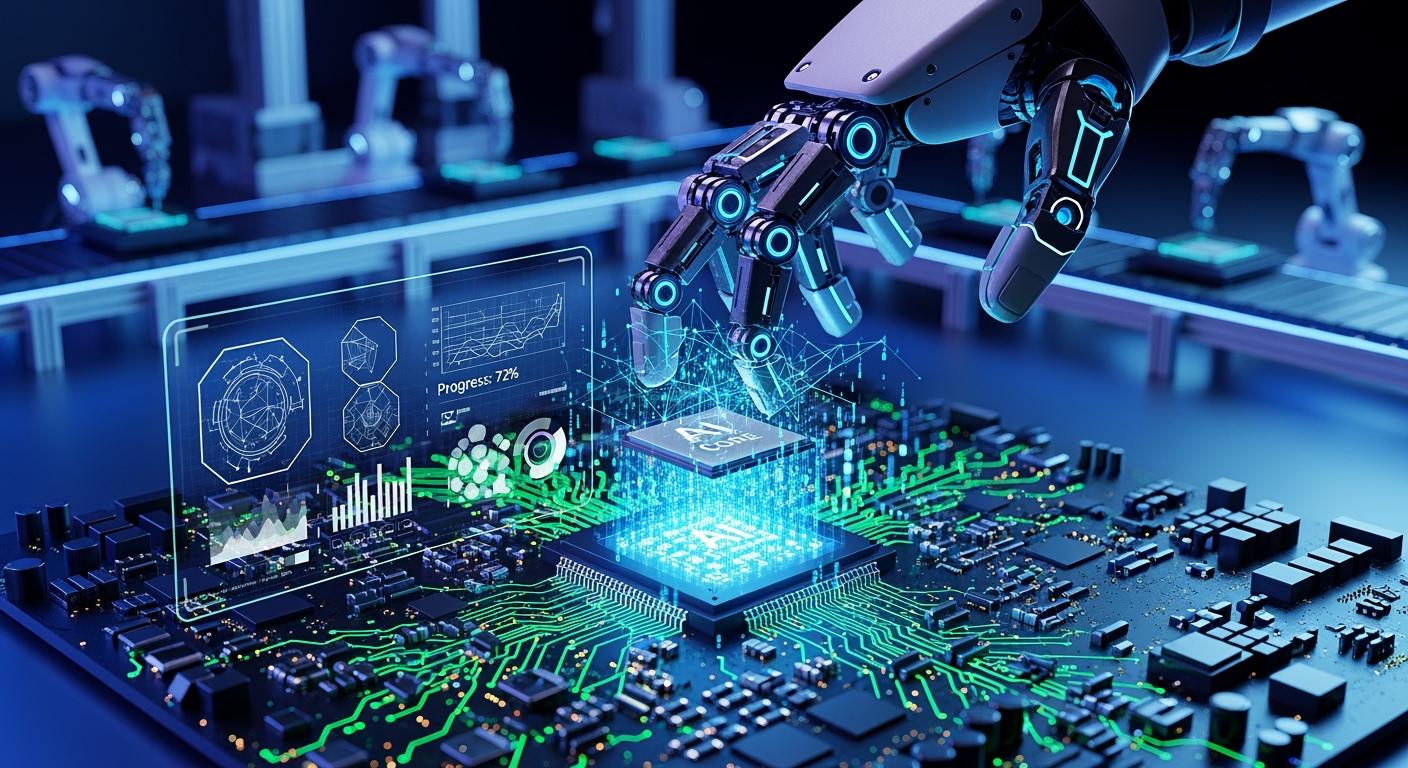
Artificial intelligence makes big changes in PCBA manufacturing. AI Applications help do simple jobs and make things more accurate. Many companies around the world use these new tools. About half of all organizations use artificial intelligence in manufacturing now. Last year, only one out of five used it. You get better quality control, quicker design times, and better supply chains. AI helps stop delays and lowers the amount of wasted materials. Manufacturers work faster and save more money.
Does the same tasks over and over
Makes design and checking go faster
Finds machine problems early so they can be fixed
Makes PCB designs use less material and cost less
Key Takeaways
AI helps quality control by using computer vision to find defects. It can spot problems with 98% accuracy. This lowers the number of bad boards a lot.
Predictive maintenance uses AI to cut machine downtime by half. This helps you stop expensive breakdowns from happening.
AI tools make PCB design faster. You can get many layout choices in one day. Before, it took weeks to do this.
Automated inspection with AI makes checking boards quicker. It also makes the process more efficient. This means more good boards are made.
Using AI in manufacturing helps you make better choices. It also cuts waste and keeps you ahead in the industry.
AI Applications in PCBA Manufacturing
AI applications have changed how you make PCBA. You use artificial intelligence to boost quality and speed. These tools help you find problems early. They keep machines working well. You make better choices every day. Let’s see how these technologies help you at work.
Computer Vision for Quality Control
Computer vision systems check PCBs with great accuracy. These AI tools scan each board and spot tiny defects. They find things like parts that are not lined up or small solder mistakes. AI inspection systems can see defects as small as 5 micrometers. This detail helps you catch problems that people might miss.
Computer vision makes inspection ten times faster than doing it by hand. You reach 98% accuracy in finding defects. This means the defect rate drops from 5% to 0.8%. You get fewer returns from customers and save millions every year.
Metric | Value |
|---|---|
Defect detection accuracy | 98% |
Speed vs. manual inspection | 10x faster |
Defect rate reduction | 5% to 0.8% |
Annual savings | $4.5M |
Reduction in customer returns | 75% |
AI vision systems set new standards for quality control. You can trust them to check every step in manufacturing. They help you get steady results.
Deep Learning in Defect Detection
Deep learning is a strong AI tool for finding defects. You use machine learning models that learn from many images. These models adjust to new defects and changes on the line. Old methods have trouble with changes, but deep learning handles them well.
You get high precision and strong performance. Deep learning improves the whole process. It finds features and sorts defects. You get real-time results. This is great for busy factories.
Metric | Description |
|---|---|
Precision | Shows how well the model avoids false positives in defect detection. |
Recall | Measures the model’s ability to find most defects, ensuring full coverage. |
AUC-PR | Balances precision and recall for strong, reliable performance. |
You see fewer mistakes and more correct results. Deep learning helps you keep high quality and cut waste.
Predictive Maintenance with AI
Predictive maintenance is another big area for AI. You use artificial intelligence to study data from sensors on your machines. These sensors track things like heat, shaking, and speed. AI spots patterns and warns you before a machine breaks.
You can fix problems before they stop your work. This way, you work more efficiently and save money. Predictive maintenance can cut machine downtime by half. It can make machines last longer by up to 40%. You also see a 30% drop in test time and a 50% drop in test time for failures.
Evidence Type | Value/Impact |
|---|---|
Potential value impact | $0.5 trillion to $0.7 trillion |
Reduction in machine downtime | Up to 50% |
Increase in machine life | Up to 40% |
Reduction in test time | 30% overall |
Reduction of test time in failures | 50% |
With predictive maintenance, your lines keep running smoothly. You avoid expensive breakdowns and get more done.
AI applications in PCBA manufacturing help you get better quality, faster production, and lower costs. You get real-time information, make fewer mistakes, and make smarter choices every day.
PCB Manufacturing Process Overview
Key Steps in PCB Assembly
You help make pcb manufacturing successful. The process starts with planning. It ends with delivery. Each step checks quality. Here is a simple overview of the main steps:
Step Number | Step Name | Description |
|---|---|---|
1 | Forecasting and Build Planning | Figure out what you need to make and plan with suppliers so you do not run out of parts. |
2 | BOM Verification and Approved Parts Checks | Make sure the BOM is right and ready to buy so you do not make mistakes that stop work. |
3 | Component Sourcing and Order Tracking | Find parts based on what you have and how long they take to arrive, so you get them on time. |
4 | Bare Board Procurement | Buy bare PCBs that fit the rules so they match the assembly schedule. |
5 | Kitting and Incoming Material Control | Check that parts match the BOM and count them to make sure you are ready to build. |
6 | Assembly | Put and solder parts onto the board using different ways. |
7 | Inspection and Testing | Test the board to check quality and find problems early. |
8 | Packaging and Delivery | Keep PCBAs safe when shipping and make sure you have the right papers for tracking. |
Each step builds on the one before it. You must check everything, from the BOM to the last test. This careful work helps you avoid mistakes and keeps the pcb manufacturing process running well.
Traditional Challenges in PCB Manufacturing
You face many problems in pcb manufacturing. When you work with printed circuit board designs, you deal with harder layouts and faster deadlines. Here are some common issues:
Challenge | Description |
|---|---|
Complexity | Electronic devices are more complicated now. PCBs need more parts and connections, so mistakes can happen in design. |
Signal Integrity | Keeping signals strong is important, especially for fast circuits, so you do not have performance problems. |
Time Constraints | Electronics move fast. Long design times can slow down product launches and hurt your chances to compete. |
You must handle complexity as designs get harder. Signal integrity matters more for fast circuits. Time limits make you finish projects quickly but still keep quality high. By knowing these problems, you can make your pcb manufacturing process better and get good results.
AI in PCB Design
AI-Powered Design Tools
AI-powered tools help you design PCBs much faster. These tools do many steps for you, like drawing and placing parts. You get feedback right away as you work. AI shows you risks and gives ideas to fix them early. This helps you fix fewer mistakes later.
You can try many layouts in a short time. You do not need to wait long for results. You can look at different choices and pick the best one. The table below shows how your work changes with these tools:
Aspect | Before AI Tools | After AI Tools |
|---|---|---|
Design Time | 3–5 weeks for placement and routing | 1 day for multiple viable candidates |
Trace Routing Efficiency | Manual, often inefficient | 90% of traces routed on first attempt |
Design-to-Production Timeline | Longer due to rework | Reduced by up to 30% |
Error Detection | Late in design cycle | Catches issues before fabrication |
You can see that AI makes PCB design faster and more correct.
Automated Layout and Routing
AI makes layout and routing much easier for you. You can make many PCB designs in just minutes. New AI tools test lots of ways to place parts. You do not need to spend days doing it by hand. For example, auto-routing in KiCAD is over 13 times faster than doing it yourself.
You can try more design ideas in less time.
You do not need to redo work as much and can solve bigger problems.
You get better layouts for a smoother process.
AI tools help you finish PCB designs quickly and with fewer errors.
Design Verification and Optimization
You use AI to check and improve your PCB design before making it. AI models find risks and catch mistakes early. You get tips for better layouts and signal paths. This helps you avoid expensive changes later.
AI tools still need you to check their work. You must make sure AI designs follow all the rules. Training AI also needs good data. You are important for the final checks and saying yes to the design.
AI in PCB design gives you speed, better accuracy, and smarter ways to work. You can make better products and stay ahead in the field.
Benefits of AI in PCB Manufacturing
Enhanced Defect Detection
AI helps you find defects better than old ways. Automated inspection uses smart computer programs to spot tiny flaws. These systems work well with small parts and crowded PCBs. You get better results and see more details. The table below shows how AI does compared to older methods:
Method | Detection Rate | Resolution Detected | Complexity Handling |
|---|---|---|---|
Traditional Inspection | Varies | Limited | Struggles with small components |
AI-Driven Automated Inspection | Up to 98% | Up to 5 micrometers | Handles high-density PCBs efficiently |
You lower the chance of sending bad boards to customers. AI helps you keep high quality during every step.
Increased Efficiency and Precision
AI makes your work faster and more exact. Smart programs plan drilling and part placement. This saves time and stops mistakes. You see fewer errors and more finished boards. AI also cuts down on changes in the process by 23% compared to people doing it.
You finish work quicker.
You make less mistakes.
You get more done and keep things steady.
AI lets you do important jobs while machines do the boring ones.
Reduced Inspection and Downtime
AI makes checking boards faster and cuts waiting time. Smart cameras and computers speed up checks and make them more correct. Automation means people make fewer mistakes, so there are fewer delays. Machine learning looks at lots of data and finds problems fast, so you fix less.
Checks take less time.
Waiting time is shorter.
You spend less money making boards.
More good boards are made.
AI makes finding problems easier, so making boards costs less and works better.
Data-Driven Decision Making
AI helps you make better choices in the factory. You gather lots of data from machines. AI looks at this data, finds patterns, and tells you what to do next. You can see what is happening and act right away.
AI finds links between design choices.
Machine learning spots problems like crosstalk before you build.
Smart models help keep signals strong and make design faster.
AI turns big piles of data into simple steps. You can react fast and stop problems before they start.
AI gives you big benefits in making PCBs: better problem finding, faster work, less waiting, and smarter choices. You stay ahead of others in the business.
Future Trends and Challenges
Emerging AI Technologies
New AI technologies are growing fast in PCBA manufacturing. These new tools will help you work faster and make fewer mistakes. The table below lists the main technologies and what they do:
Technology | Impact Description |
|---|---|
Automation | Makes manufacturing smoother, saves time, and lowers worker costs. |
Machine Learning | Makes work better and checks quality by looking at data right away. |
Predictive Maintenance | Stops machines from breaking by warning you early and planning fixes. |
Advanced Computer Vision | Finds tiny problems, makes products better, and checks boards faster. |
The AI server PCB market will grow more than 25% each year from 2023 to 2028. This means you will see even better tools in your factory soon.
Integration with Industry 4.0
AI now works with Industry 4.0 systems. This helps you make almost perfect products. You use IoT and AI to watch machines and check quality all the time. The table below shows how old ways and AI ways are different:
Area | Traditional Process | AI-Driven Process |
|---|---|---|
Design Time | Slow, done by hand | Fast, uses smart tools |
Quality Control | People check for mistakes | AI finds problems |
Yield Rate | Fixes problems after they happen | Stops problems before they start |
Cost Efficiency | Costs more to fix mistakes | Less waste and less waiting |
You can fix problems faster and throw away less.
Barriers to Adoption
You might have some problems when you start using AI in your PCBA work:
Not sure if you will save money
Not enough good data to use
Workers may not know how to use AI
Hard to connect AI to old machines
Hard to trust what AI does
Plans may not match what you need
You need to think ahead to solve these problems and get the best results.
Evolving Workforce Skills
You need to learn new skills to work with AI in factories. Learning about data, AI, and smart machines helps you keep your job. AI does the hard data work, but you are still needed to check results and follow rules.
You are important for the future of PCBA manufacturing. By learning new things and using new tools, you help your company stay strong.
AI changes the way you make and run PCBA manufacturing. You get faster work, spend less money, and control your parts better. In the future, you will see more machines doing jobs, smarter tools for design, and feedback that helps your systems change quickly. To get the best results, you should use predictive maintenance, let machines check quality, and use AI to make your supply chain better. Watch for market changes and use new technology to keep your factory working well.
FAQ
What is the main benefit of using AI in PCBA manufacturing?
You gain faster production and higher quality. AI finds defects early and helps you make better decisions. You save money and reduce waste.
How does AI improve quality control?
AI uses computer vision to scan boards. You spot tiny defects that humans miss. Inspection becomes faster and more accurate.
Tip: Use AI systems to check every board for steady results.
Can AI help reduce downtime in factories?
You use predictive maintenance to track machine health. AI warns you before breakdowns. You fix issues early and keep lines running.
Do you need special skills to use AI tools?
You need basic knowledge of data and machines. AI handles complex tasks, but you check results and follow rules. Training helps you stay updated.
See Also
Essential Processing Needs for Medical Equipment PCBA
Manufacturing, Quality Control, And Applications of DIP PCBA
Sourcing Electronic Components for Effective PCBA Production
